Overview
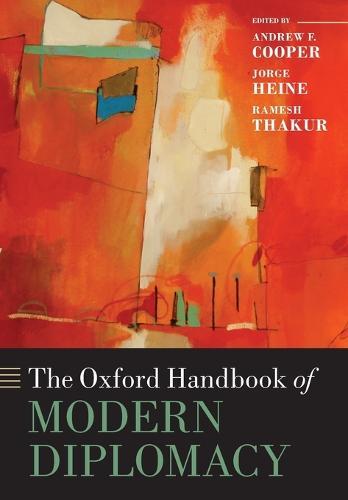
At a time when diplomatic practices and the demands imposed on diplomats are changing quite radically, and many foreign ministries feel they are being left behind, there is a need to understand the various forces that are affecting the profession. Diplomacy remains a salient activity in today's world in which the basic authoritative actor is still the state. At the same time, in some respects the practice of diplomacy is undergoing significant, even radical, changes to the context, tools, actors and domain of the trade. These changes spring from the changing nature of the state, the changing nature of the world order, and the interplay between them. One way of describing this is to say that we are seeing increased interaction between two forms of diplomacy, 'club diplomacy' and 'network diplomacy'. The former is based on a small number of players, a highly hierarchical structure, based largely on written communication and on low transparency; the latter is based on a much larger number of players (particularly of civil society), a flatter structure, a more significant oral component, and greater transparency. The Oxford Handbook of Modern Diplomacy is an authoritative reference tool for those studying and practicing modern diplomacy. It provides an up-to-date compendium of the latest developments in the field. Written by practitioners and scholars, the Handbook describes the elements of constancy and continuity and the changes that are affecting diplomacy. The Handbook goes further and gives insight to where the profession is headed in the future. Co-edited by three distinguished academics and former practitioners, the Handbook provides comprehensive analysis and description of the state of diplomacy in the 21st Century and is an essential resource for diplomats, practitioners and academics.
Full Product Details
Author: Andrew F. Cooper (Associate Director and Distinguished Fellow, Centre for International Governance Innovation, Canada) ,
Jorge Heine (CIGI Chair in Global Governance, Balsillie School of International Affairs, Distinguished Fellow, Centre for International Governance Innovation) ,
Ramesh Thakur (Director, Balsillie School of International Affairs, Distinguished Fellow, Centre for International Governance Innovation, Canada)
Publisher: Oxford University Press
Imprint: Oxford University Press
Dimensions:
Width: 17.60cm
, Height: 5.40cm
, Length: 24.40cm
Weight: 1.687kg
ISBN: 9780198743668
ISBN 10: 0198743661
Pages: 990
Publication Date: 09 April 2015
Audience:
College/higher education
,
Professional and scholarly
,
Undergraduate
,
Postgraduate, Research & Scholarly
Format: Paperback
Publisher's Status: Active
Availability: To order

Stock availability from the supplier is unknown. We will order it for you and ship this item to you once it is received by us.
Reviews
Together the 49 contributors show an extraordinary continuity, that ties the work together. In terms of depth and breadth of information on the changing practice of twenty-first century diplomacy, The Oxford Handbook of Modern Diplomacy deserves a well-earned spot on the bookshelf of any scholar or practitioner of international relations. Melissa Conley Tyler, The Hague Journal of Diplomacy
Author Information
Andrew F. Cooper was previously a visiting scholar at Harvard University, University of Southern California, Australian National University, Stellenbosch University and the Department of Foreign Affairs and International Trade. He has led training sessions on trade issues, governance and diplomacy in Canada, South Africa and at the World Trade Organization. He is a member of the International Advisory Board of both the GARNET Network of Excellence and the Hague Journal of Diplomacy, and has been a member of the Warwick Commission. Andrew Cooper's most recent publications focus on emerging powers, G8 reform, small states, Latin America, global health governance, and the phenomenon of celebrity diplomacy. He is Associate Director and Distinguished Fellow at CIGI. He is Professor of Political Science at the University of Waterloo where he teaches in the areas of International Political Economy, Global Governance, and Comparative Politics. Jorge Heine is a former (2006-2009) vice-president of the International Political Science Association (IPSA) , he was previously Ambassador of Chile to India, Bangladesh, and Sri Lanka (2003-2007), and Ambassador to South Africa (1994-1999) as well as a Cabinet Minister and Deputy Minister in the Chilean Government. A lawyer and political scientist, he has been a visiting fellow at St Antony's College, Oxford and a research associate at The Wilson Center in Washington D.C. He has held postdoctoral fellowships from the Social Science Research Council and the John Simon Guggenheim Memorial Foundation and has been a consultant to the United Nations, the Ford Foundation, and Oxford Analytica. He is CIGI Chair of Global Governance at the Balsillie School of International Affairs, Professor of Political Science at Wilfrid Laurier University, and Distinguished Fellow at CIGI. Ramesh Thakur was Vice Rector and Senior Vice Rector of the United Nations University (and Assistant Secretary-General of the United Nations) from 1998-2007. Educated in India and Canada, he was a Professor of International Relations at the University of Otago in New Zealand and Professor and Head of the Peace Research Centre at the Australian National University, during which time he was also a consultant/adviser to the Australian and New Zealand governments on arms control, disarmament, and international security issues. He was a Commissioner and one of the principal authors of The Responsibility to Protect(2001), and Senior Adviser on Reforms and Principal Writer of the United Nations Secretary-General's second reform report (2002). He is Director of the Centre for Nuclear Non-proliferation and Disarmament (CNND) in the Crawford School, Australian National University and Adjunct Professor in the Institute of Ethics, Governance and Law at Griffith University.