Overview
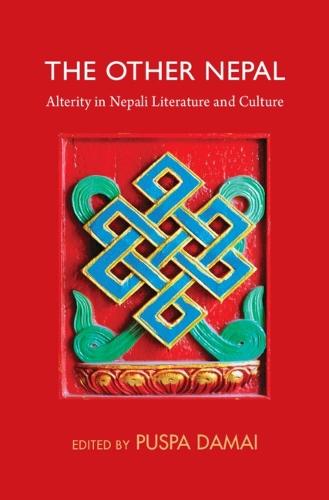
This book revisits a rich but overlooked field of Nepali literature and culture. Compared to the extensive research available on Nepal's South Asian neighbors, there is a notable scarcity of published scholarship devoted to Nepali literature and society. This book addresses the gap by offering groundbreaking scholarship by a global collective of researchers specializing in Himalayan Studies, South Asian Studies, Cultural Studies and Critical Theory. It offers a nuanced and complex picture of Nepali society and history, focusing on caste, geography, gender, sexuality and ethnicity as sites of discrimination, exclusion and othering. It exposes orientalist discourses which portray Nepal as a Himalayan Shangri La and it critiques neoliberal narratives which focus on Nepal's dismal developmental indices. Switching gears by exploring a diverse body of canonical and contemporary multi-genre literary works, the book presents an alternative picture of Nepal from the perspective of those silenced by nationalism, patriarchy and casteism.
Full Product Details
Author: Puspa Damai (Marshall University, West Virginia)
Publisher: Cambridge University Press
Imprint: Cambridge University Press
Weight: 0.545kg
ISBN: 9781009704199
ISBN 10: 1009704192
Pages: 250
Publication Date: 11 June 2026
Audience:
College/higher education
,
Postgraduate, Research & Scholarly
Format: Hardback
Publisher's Status: Forthcoming
Availability: Not yet available

This item is yet to be released. You can pre-order this item and we will dispatch it to you upon its release.
Reviews
'Since 1990, Nepal has deployed means both peaceful and, at times, violent, in an urgent quest for a just and equitable democracy. The Other Nepal meets this moment of the nation's civil rights reckoning, upending long-held assumptions about its history, language, discourse, and artistic expression. The scholarship here is rigorous, wide-ranging, and timely, critically examining, and also expanding, myriad alterities within the nation. This is a valuable new contribution to global scholarship on Nepal.' Manjushree Thapa 'This book is a milestone in the study of Nepali literature and society. While dominant narratives in Nepal often rely on singular myths of nationalism, marginalized groups have largely been excluded from the cultural landscape. Contemporary decolonization theories challenge the established elite systems and advocate for a reimagined socio-political environment that includes diverse religious, caste, and ethnic backgrounds. Puspa Damai's edited volume highlights the ongoing feudal oppression in Nepal and how many individuals remain alienated due to processes of othering that exploit hierarchies of caste, ethnicity, and gender. The essays in this volume are significant academic contributions that call for the deconstruction of dominant narratives, exposing the mechanisms of marginalization and injustice. This book reflects Nepal's current state, which is restlessly awaiting transformative change.' Govinda Raj Bhattarai, Tribhuvan University 'This book, 'The Other Nepal,' bravely addresses many of the unexamined spaces and issues left out of most academic and public narratives of Nepal. It brings out of the shadows the Other Nepal, in fact, many Others. The 14 chapters illuminate the realities of numerous human experiences subdued by the dominant narratives that promote a Nepal defined by so-called high caste culture, patriarchy, a single national language and a Khas-Parbatiya focused nationalism. In many ways the authors highlight unexplored territories of resistance, resilience and strength not glossed over by thin veneers of romanticism. Readers of all stripes, particularly those interested in issues of Other narratives of caste, indigeneity, ethnicity, gender, language, geography and polity, should read this stellar collection.' Steve Folmar, Wake Forest University
Author Information
Puspa Damai is Assistant Professor in the Department of English at Marshall University, USA. His academic interests have been shaped by this transnational movement of people, disciplines, ideas and ideologies. He studies and teaches post-colonial literature (including multi-ethnic American literature) in order to investigate the issues of colonialism, empire and cosmopolitanism.