Overview
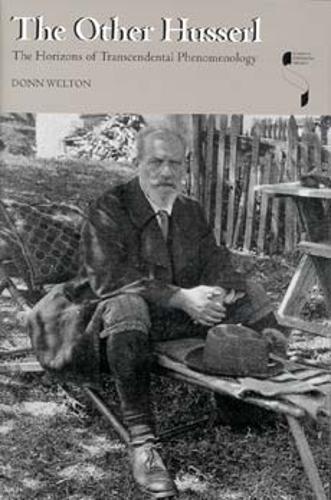
In this thorough study of Edmund Husserl's phenomenological method, Donn Welton presents a unique interpretation of the development of Husserl's philosophy from both a systematic and a historical perspective.
Full Product Details
Author: Donn Welton
Publisher: Indiana University Press
Imprint: Indiana University Press
Dimensions:
Width: 15.60cm
, Height: 3.00cm
, Length: 23.50cm
Weight: 0.685kg
ISBN: 9780253215581
ISBN 10: 0253215587
Pages: 520
Publication Date: 31 July 2002
Audience:
Professional and scholarly
,
Professional & Vocational
Format: Paperback
Publisher's Status: Active
Availability: In Print

This item will be ordered in for you from one of our suppliers. Upon receipt, we will promptly dispatch it out to you. For in store availability, please contact us.
Reviews
In this significant work, Edmund Husserl, the founder of 20th-century phenomenology, a highly influential theory of knowledge, receives a thorough and excellent analysis. Welton (SUNY, Stony Brook) surveys Husserl's published and unpublished complex writings in order to develop an alternative interpretation to the standard one promulgated by Husserl's critics and supporters. To accomplish this task, Welton undertakes to evaluate or reconstruct the phenomenological method as a whole. Although primarily very supportive, he also reviews some of the critiques or limits to the method. (Deeper criticisms could have been dealt with, though, especially from the analytic movement.) Husserl's relationship to Heidegger's Being and Time is also explored, and Cartesian and Kantian influences are discussed through Husserl's foundational philosophy. This technical study is an important contribution to phenomenology, to be read by specialists and perhaps by their students. Only those well versed in the field can determine whether Welton succeeds in offering a viable logical alternative to the standard Husserl, or if such a standard exists; this reviewer would have liked more concrete examples. Over 60 pages of notes and lengthy bibliography. Black and white photos. Recommended for Continental philosophy collections.M. P. Maller, Columbia College Chicago, Choice, December 2001 In this significant work, Edmund Husserl, the founder of 20th-century phenomenology, a highly influential theory of knowledge, receives a thorough and excellent analysis...This technical study is an important contribution to phenomenology... -Choice, December 2001
With provocations on every page, this book is a philosophical feast. The specialist will find familiar ingredients assembled here in a perspicuous and compelling way, while the non-specialist will discover a Husserl whose philosophy is made of flesh and blood. -Journal of the History of Philosophy
Author Information
Donn Welton is Professor of Philosophy at the State University of New York at Stony Brook. He is editor of The Essential Husserl: Basic Writings in Transcendental Phenomenology (Indiana University Press).