Overview
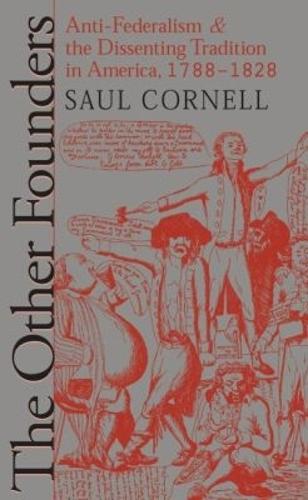
Fear of centralized authority is deeply rooted in American history. The struggle over the U.S. Constitution in 1788 pitted the Federalists, supporters of a stronger central government, against the Anti-Federalists, the champions of a more localist vision of politics. But, argues Saul Cornell, while the Federalists may have won the battle over ratification, it is the ideas of the Anti-Federalists that continue to define the soul of American politics. While no Anti-Federalist party emerged after ratification, Anti-Federalism continued to help define the limits of legitimate dissent within the American constitutional tradition for decades. Anti-Federalist ideas also exerted an important influence on Jeffersonianism and Jacksonianism. Exploring the full range of Anti-Federalist thought, Cornell illustrates its continuing relevance in the politics of the early Republic. A new look at the Anti-Federalists is particularly timely given the recent revival of interest in this once neglected group, notes Cornell. Now widely reprinted, Anti-Federalist writings are increasingly quoted by legal scholars and cited in Supreme Court decisions--clear proof that their authors are now counted among the ranks of America's founders. |Reconsiders the role that Anti-Federalists played during the debate over ratification of the Constitution and traces their political legacy in the half-century that followed.
Full Product Details
Author: Saul Cornell
Publisher: The University of North Carolina Press
Imprint: The University of North Carolina Press
Edition: New edition
Dimensions:
Width: 15.50cm
, Height: 2.20cm
, Length: 23.40cm
Weight: 0.560kg
ISBN: 9780807847862
ISBN 10: 0807847860
Pages: 352
Publication Date: 30 September 1999
Audience:
College/higher education
,
Professional and scholarly
,
Undergraduate
,
Postgraduate, Research & Scholarly
Format: Paperback
Publisher's Status: Active
Availability: Out of stock

The supplier is temporarily out of stock of this item. It will be ordered for you on backorder and shipped when it becomes available.
Reviews
A rich guide. The Historian This highly readable, comprehensive, and original work deserves to be placed alongside The Federalist Papers on Americans' bookshelves. Historian This highly readable, comprehensive, and original work deserves to be placed alongside The Federalist Papers on Americans' bookshelves. Historian Cornell . . . heightens our understanding of Anti-Federalism by placing it in social and intellectual context. Law and History Review An extremely well-researched and well-written work. Journal of American Studies Cornell provides us with crucial insights. American Quarterly
A rich guide. The Historian
This highly readable, comprehensive, and original work deserves to be placed alongside The Federalist Papers on Americans' bookshelves.<p> Historian
Cornell provides us with crucial insights. American Quarterly Cornell . . . heightens our understanding of Anti-Federalism by placing it in social and intellectual context. Law and History Review An extremely well-researched and well-written work. Journal of American Studies This highly readable, comprehensive, and original work deserves to be placed alongside The Federalist Papers on Americans' bookshelves. Historian This highly readable, comprehensive, and original work deserves to be placed alongside The Federalist Papers on Americans' bookshelves. Historian A rich guide. The Historian
"A rich guide.""The Historian"" This highly readable, comprehensive, and original work deserves to be placed alongside ""The Federalist Papers"" on Americans' bookshelves.""Historian"" ""This highly readable, comprehensive, and original work deserves to be placed alongside ""The Federalist Papers"" on Americans' bookshelves.""Historian"""" An extremely well-researched and well-written work.""Journal of American Studies"" Cornell . . . heightens our understanding of Anti-Federalism by placing it in social and intellectual context.""Law and History Review"" Cornell provides us with crucial insights.""American Quarterly"""
Author Information
Saul Cornell is associate professor of history at Ohio State University in Columbus.