Overview
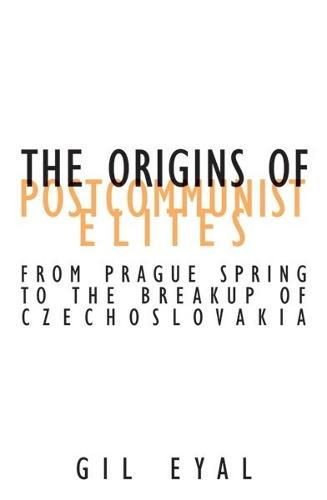
How is it that Czechoslovakia's separation into two countries in 1993 was accomplished so peacefully-especially when compared with the experiences of its neighbors Russia and Yugoslavia? This book provides a sociological answer to this question-and an empirical explanation for the breakup of Czechoslovakia-by tracing the political processes begun in the Prague Spring of 1968. Gil Eyal's main argument is that Czechoslovakia's breakup was caused by a struggle between two fractions of what sociologists call the ""new class,"" which consisted primarily of intellectuals and technocrats. Focusing on the process of polarization that created these two distinct political elites, Eyal shows how, in response to the events of the ill-fated Prague Spring, Czech and Slovak members of the ""new class"" embarked on divergent paths and developed radically different, even opposed, identities, worldviews, and interests. Unlike most accounts of postcommunist nationalist conflict, this book suggests that what bound together each of these fractions-and what differentiated each from the other-were not national identities and nationalist sentiments per se, but their distinctive visions of the social role of intellectuals.
Full Product Details
Author: Gil Eyal
Publisher: University of Minnesota Press
Imprint: University of Minnesota Press
Dimensions:
Width: 14.90cm
, Height: 1.50cm
, Length: 22.90cm
Weight: 0.360kg
ISBN: 9780816640324
ISBN 10: 0816640327
Pages: 272
Publication Date: 21 May 2003
Audience:
General/trade
,
General
Format: Paperback
Publisher's Status: Active
Availability: Temporarily unavailable

The supplier advises that this item is temporarily unavailable. It will be ordered for you and placed on backorder. Once it does come back in stock, we will ship it out to you.
Reviews
Eyal's book brings a fresh perspective . . . compelling, original insight . . . An intellectually significant book, whose claim to address wider questions of power should be taken seriously. -Europe-Asia Studies Eyal's analysis is a provocative one . . . a novel and challenging perspective on the events and key actors of the critical period that ended in the demise of the Czechoslovak federation. -Slavic Review
""Eyal’s book brings a fresh perspective . . . compelling, original insight . . . An intellectually significant book, whose claim to address wider questions of power should be taken seriously.""—Europe-Asia Studies ""Eyal’s analysis is a provocative one . . . a novel and challenging perspective on the events and key actors of the critical period that ended in the demise of the Czechoslovak federation.""—Slavic Review
"""Eyal’s book brings a fresh perspective . . . compelling, original insight . . . An intellectually significant book, whose claim to address wider questions of power should be taken seriously.""—Europe-Asia Studies ""Eyal’s analysis is a provocative one . . . a novel and challenging perspective on the events and key actors of the critical period that ended in the demise of the Czechoslovak federation.""—Slavic Review"
Author Information
Gil Eyal is associate professor of sociology at Columbia University.