Overview
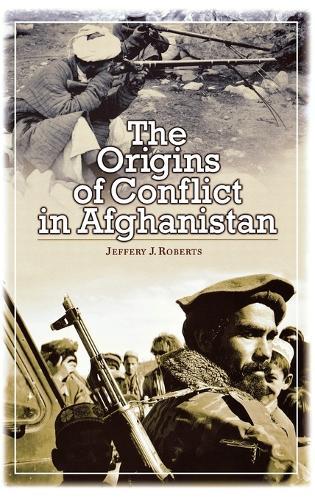
Focusing on Afghanistan's relations with the West during the latter half of the 20th century, this study offers new insights on the long-term origins of the nation's recent tragedies. Roberts finds that, since the 1930s in particular, Afghanistan pursued policies far more complex, and considerably more pro-Western, than previous studies have surmised. By the end of the Second World War, Britain and Afghanistan seemed headed toward an extensive partnership in military and economic affairs. Opportunities to cement Afghanistan to the West existed, but ultimately ran afoul of regional politics, shortsighted policy, and indifference. The rise of the Indian nationalist movement and the eventual partition of India would have strategic ramifications for Afghanistan. Pakistan and India, weakened and poised against each other, saw no reason to aid the Kabul regime, leaving only the United States as a potential benefactor. Successive American administrations, however, denied most Afghan requests. When the Eisenhower administration extended support to Pakistan, it alienated Afghan leaders, who then chose to broker a deal with the Soviet Union. Roberts analyzes recent American policy toward Afghanistan and its neighbors, clarifying the current situation and offering guidelines for future relations.
Full Product Details
Author: Jeffery Roberts
Publisher: Bloomsbury Publishing Plc
Imprint: Praeger Publishers Inc
Dimensions:
Width: 15.50cm
, Height: 2.50cm
, Length: 23.50cm
Weight: 0.590kg
ISBN: 9780275978785
ISBN 10: 0275978788
Pages: 288
Publication Date: 30 December 2003
Recommended Age: From 7 to 17 years
Audience:
General/trade
,
Professional and scholarly
,
College/higher education
,
General
,
Professional & Vocational
Format: Hardback
Publisher's Status: Active
Availability: Manufactured on demand

We will order this item for you from a manufactured on demand supplier.
Reviews
[A] historical synopsis of Afghanistan's tortuous history from the beginning of the First Afghan War (1836-1842) through the eve of the Soviet invasion of Afghanistan in December 1979. The strength of this book is obvious from the start. Dr. Roberts provides a clear, concise background on how Afghanistan fragmented due largely in part to its geographic co-location with British-controlled India and the expanding Russian empire....Dr. Roberts is to be commended for writing this excellent book....This is, undoubtedly, the single best book on U.S.-Afghan relations and should be in every diplomat's library that deals with Afghanistan. -Journal of Slavic Military Studies ?Historian Jeffery Roberts has written a detailed, fully researched political and diplomatic study.... With a scholarly thoroughness and attention to detail, Roberts documents the tentative, post-WWII steps taken by the United States to address a regional power vacuum created by the fading of the British Empire. He outlines the missed opportunities and limited visions of U.S. diplomacy and strategic thinking that contributed to the political context of Afghanistan's recent tragic past.?-Middle East Journal ?Unlike many other recent books on the past 26 years of conflict and warfare in Afghanistan, this historical account begins well before the 1978 revolution. Roberts does not consider the three Anglo-Afghan wars and subsequent isolation of Afghanistan to be mere historical background for understanding alleged Afghan xenophobia and a stereotypical (and frequently invidious) reputation for 'ferocity.' Instead, he presents the thesis that Afghanistan might have become a willing ally of the West if more attention had been devoted to its national interests and economic needs.... This excellent historical study is a valuable antidote to the spate of instant-analysis publications that have typically underanalyzed the U.S.'s role in allowing the Taliban to take over Afghanistan and remain in power for six years. Highly recommended. All levels and libraries.?-Choice Historian Jeffery Roberts has written a detailed, fully researched political and diplomatic study.... With a scholarly thoroughness and attention to detail, Roberts documents the tentative, post-WWII steps taken by the United States to address a regional power vacuum created by the fading of the British Empire. He outlines the missed opportunities and limited visions of U.S. diplomacy and strategic thinking that contributed to the political context of Afghanistan's recent tragic past. -Middle East Journal Unlike many other recent books on the past 26 years of conflict and warfare in Afghanistan, this historical account begins well before the 1978 revolution. Roberts does not consider the three Anglo-Afghan wars and subsequent isolation of Afghanistan to be mere historical background for understanding alleged Afghan xenophobia and a stereotypical (and frequently invidious) reputation for 'ferocity.' Instead, he presents the thesis that Afghanistan might have become a willing ally of the West if more attention had been devoted to its national interests and economic needs.... This excellent historical study is a valuable antidote to the spate of instant-analysis publications that have typically underanalyzed the U.S.'s role in allowing the Taliban to take over Afghanistan and remain in power for six years. Highly recommended. All levels and libraries. -Choice
[A] historical synopsis of Afghanistan's tortuous history from the beginning of the First Afghan War (1836-1842) through the eve of the Soviet invasion of Afghanistan in December 1979. The strength of this book is obvious from the start. Dr. Roberts provides a clear, concise background on how Afghanistan fragmented due largely in part to its geographic co-location with British-controlled India and the expanding Russian empire....Dr. Roberts is to be commended for writing this excellent book....This is, undoubtedly, the single best book on U.S.-Afghan relations and should be in every diplomat's library that deals with Afghanistan. -Journal of Slavic Military Studies
Author Information
JEFFERY J. ROBERTS is Professor of History at Tennessee Technological University.