Overview
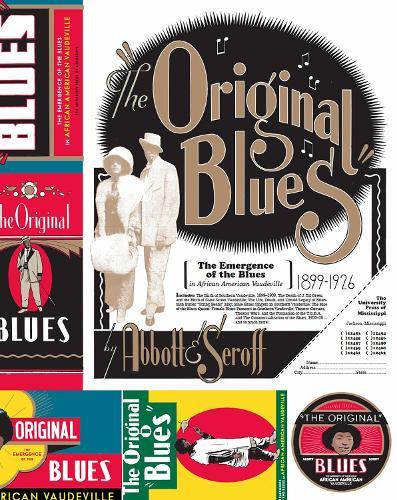
Blues Book of the Year —Living Blues With this volume, Lynn Abbott and Doug Seroff complete their groundbreaking trilogy on the development of African American popular music. Fortified by decades of research, the authors bring to life the performers, entrepreneurs, critics, venues, and institutions that were most crucial to the emergence of the blues in black southern vaudeville theaters; the shadowy prehistory and early development of the blues is illuminated, detailed, and given substance. At the end of the nineteenth century, vaudeville began to replace minstrelsy as America's favorite form of stage entertainment. Segregation necessitated the creation of discrete African American vaudeville theaters. When these venues first gained popularity ragtime coon songs were the standard fare. Insular black southern theaters provided a safe haven, where coon songs underwent rehabilitation and blues songs suitable for the professional stage were formulated. The process was energized by dynamic interaction between the performers and their racially-exclusive audience. The first blues star of black vaudeville was Butler “String Beans” May, a blackface comedian from Montgomery, Alabama. Before his bizarre, senseless death in 1917, String Beans was recognized as the “blues master piano player of the world.” His musical legacy, elusive and previously unacknowledged, is preserved in the repertoire of country blues singer-guitarists and pianists of the race recording era. While male blues singers remained tethered to the role of blackface comedian, female “coon shouters” acquired a more dignified aura in the emergent persona of the “blues queen.” Ma Rainey, Bessie Smith, and most of their contemporaries came through this portal; while others, such as forgotten blues heroine Ora Criswell and her protégé Trixie Smith, ingeniously reconfigured the blackface mask for their own subversive purposes. In 1921 black vaudeville activity was effectively nationalized by the Theater Owners Booking Association (T.O.B.A.). In collaboration with the emergent race record industry, T.O.B.A. theaters featured touring companies headed by blues queens with records to sell. By this time the blues had moved beyond the confines of entertainment for an exclusively black audience. Small-time black vaudeville became something it had never been before—a gateway to big-time white vaudeville circuits, burlesque wheels, and fancy metropolitan cabarets. While the 1920s was the most glamorous and remunerative period of vaudeville blues, the prior decade was arguably even more creative, having witnessed the emergence, popularization, and early development of the original blues on the African American vaudeville stage.
Full Product Details
Author: Lynn Abbott ,
Doug Seroff
Publisher: University Press of Mississippi
Imprint: University Press of Mississippi
Dimensions:
Width: 19.50cm
, Height: 3.00cm
, Length: 24.60cm
Weight: 0.955kg
ISBN: 9781496823267
ISBN 10: 1496823265
Pages: 432
Publication Date: 30 March 2019
Audience:
Professional and scholarly
,
Professional & Vocational
Format: Paperback
Publisher's Status: Active
Availability: Manufactured on demand

We will order this item for you from a manufactured on demand supplier.
Reviews
[Abbott and Seroff] now complete their trilogy with The Original Blues: The Emergence of the Blues in African American Vaudeville capping a rigorously researched and academic body of work that goes a long way to telling the true story of the blues.--C. Michael Bailey, All About Jazz Their work, based on meticulous and far-ranging research, is invaluable for its documentation of the history of African American music of the late nineteenth and early twentieth centuries, as well as for the authors' astute and politically engaged interpretations of their research findings.--George De Stefano PopMatters This huge piece of work revives not only old times but gives the vivid background (in the idiom of the times) to the additional research that enlarges on band arrangements, travel and show schedules, the introduction of new songs and themes as well as changing management of theaters, booking organizations and marketing personnel.--Jive Talk I can't imagine a more complete assessment of this complex topic at this point in the twenty-first century: all the old performers are no longer with us to be interviewed. And there are a finite number of 'negro' newspapers to be read. The authors have done all the necessary research for us.--Living Blues An invaluable musical history of the advent of the blues for those who want to dig in deep.--Gary von Tersch Big City Rhythm and Blues It's hard not to resort to hyperbole in writing about this book. There is much more between these covers than a review can mention, and all logically and elegantly organized. It breaks ground over which there has previously been nothing more than theorizing, much of it in pursuit of predetermined agendas with more than a hint of cultural colonialism in them. No one can ever again credibly write about the origins and early history of blues (or jazz) without taking account of the contents of this book. How much more essential than that can you get?--Howard Rye Blues & Rhythm
[Abbott and Seroff] now complete their trilogy with The Original Blues: The Emergence of the Blues in African American Vaudeville capping a rigorously researched and academic body of work that goes a long way to telling the true story of the blues.--C. Michael Bailey, All About Jazz I can't imagine a more complete assessment of this complex topic at this point in the twenty-first century: all the old performers are no longer with us to be interviewed. And there are a finite number of 'negro' newspapers to be read. The authors have done all the necessary research for us.--Living Blues Their work, based on meticulous and far-ranging research, is invaluable for its documentation of the history of African American music of the late nineteenth and early twentieth centuries, as well as for the authors' astute and politically engaged interpretations of their research findings.--George De Stefano PopMatters It's hard not to resort to hyperbole in writing about this book. There is much more between these covers than a review can mention, and all logically and elegantly organized. It breaks ground over which there has previously been nothing more than theorizing, much of it in pursuit of predetermined agendas with more than a hint of cultural colonialism in them. No one can ever again credibly write about the origins and early history of blues (or jazz) without taking account of the contents of this book. How much more essential than that can you get?--Howard Rye Blues & Rhythm An invaluable musical history of the advent of the blues for those who want to dig in deep.--Gary von Tersch Big City Rhythm and Blues This huge piece of work revives not only old times but gives the vivid background (in the idiom of the times) to the additional research that enlarges on band arrangements, travel and show schedules, the introduction of new songs and themes as well as changing management of theaters, booking organizations and marketing personnel.--Jive Talk
[Abbott and Seroff] now complete their trilogy with The Original Blues: The Emergence of the Blues in African American Vaudeville capping a rigorously researched and academic body of work that goes a long way to telling the true story of the blues.--C. Michael Bailey, All About Jazz I can't imagine a more complete assessment of this complex topic at this point in the twenty-first century: all the old performers are no longer with us to be interviewed. And there are a finite number of 'negro' newspapers to be read. The authors have done all the necessary research for us.--Living Blues An invaluable musical history of the advent of the blues for those who want to dig in deep.--Gary von Tersch Big City Rhythm and Blues Their work, based on meticulous and far-ranging research, is invaluable for its documentation of the history of African American music of the late nineteenth and early twentieth centuries, as well as for the authors' astute and politically engaged interpretations of their research findings.--George De Stefano PopMatters This huge piece of work revives not only old times but gives the vivid background (in the idiom of the times) to the additional research that enlarges on band arrangements, travel and show schedules, the introduction of new songs and themes as well as changing management of theaters, booking organizations and marketing personnel.--Jive Talk It's hard not to resort to hyperbole in writing about this book. There is much more between these covers than a review can mention, and all logically and elegantly organized. It breaks ground over which there has previously been nothing more than theorizing, much of it in pursuit of predetermined agendas with more than a hint of cultural colonialism in them. No one can ever again credibly write about the origins and early history of blues (or jazz) without taking account of the contents of this book. How much more essential than that can you get?--Howard Rye Blues & Rhythm
I can't imagine a more complete assessment of this complex topic at this point in the twenty-first century: all the old performers are no longer with us to be interviewed. And there are a finite number of 'negro' newspapers to be read. The authors have done all the necessary research for us.--Living Blues An invaluable musical history of the advent of the blues for those who want to dig in deep.--Gary von Tersch Big City Rhythm and Blues It's hard not to resort to hyperbole in writing about this book. There is much more between these covers than a review can mention, and all logically and elegantly organized. It breaks ground over which there has previously been nothing more than theorizing, much of it in pursuit of predetermined agendas with more than a hint of cultural colonialism in them. No one can ever again credibly write about the origins and early history of blues (or jazz) without taking account of the contents of this book. How much more essential than that can you get?--Howard Rye Blues & Rhythm [Abbott and Seroff] now complete their trilogy with The Original Blues: The Emergence of the Blues in African American Vaudeville capping a rigorously researched and academic body of work that goes a long way to telling the true story of the blues.--C. Michael Bailey, All About Jazz Their work, based on meticulous and far-ranging research, is invaluable for its documentation of the history of African American music of the late nineteenth and early twentieth centuries, as well as for the authors' astute and politically engaged interpretations of their research findings.--George De Stefano PopMatters This huge piece of work revives not only old times but gives the vivid background (in the idiom of the times) to the additional research that enlarges on band arrangements, travel and show schedules, the introduction of new songs and themes as well as changing management of theaters, booking organizations and marketing personnel.--Jive Talk The Original Blues . . . is a must-read for anyone with a collection of blues by the Smiths (Trixie, Clara, Mamie and, of course, Bessie) as well as those interested in early vaudeville, mustical theater (think Shuffle Along and Blackbirds) and even Burlesque.--Steve Ramm The Antique Phonograph, JUNE 2019
Author Information
Lynn Abbott is an independent scholar living in New Orleans. His work has been published in American Music, 78 Quarterly, American Music Research Center Journal, and The Jazz Archivist. Doug Seroff is an independent scholar living in Greenbrier, TN. His work has appeared in American Music, Black Music Research Newsletter, Blues Unlimited, and Record Exchanger, among others. A leading expert on black gospel quartet singing for twenty-five years, he has written chapters published in anthologies and many scholarly essays for a wide variety of journals. Lynn Abbott works at the Hogan Jazz Archive, Tulane University, in New Orleans.