Overview
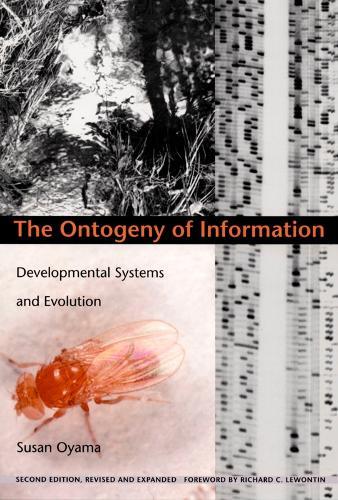
A critical intervention into the ongoing and perpetually troubling nature-nurture debates surrounding human development. Originally published in 1985, in this revised edition Susan Oyama argues that nature and nurture are not alternative influences on human development but, rather, developmental products and the developmental processes that produce them. Information, says Oyama, is thought to reside in molecules, cells, tissues and the environment. When something wondrous occurs in the world, we tend to question whether the information guiding the transformation was pre-encoded in the organism or installed through experience or instruction. She shows that developmental information does depend on what is already in place and what alternatives are available. She terms this process ""constructive interactionism"", whereby each combination of genes and environmental influences simultaneously interact to produce an unpredictable result. Ontogeny, then, is the result of dynamic and complex interactions in multilevelled developmental systems.
Full Product Details
Author: Susan Oyama ,
Richard C. Lewontin
Publisher: Duke University Press
Imprint: Duke University Press
Edition: Second Edition, Revised
Dimensions:
Width: 15.20cm
, Height: 2.40cm
, Length: 23.50cm
Weight: 0.431kg
ISBN: 9780822324669
ISBN 10: 0822324660
Pages: 296
Publication Date: 16 March 2000
Audience:
College/higher education
,
Professional and scholarly
,
Undergraduate
,
Postgraduate, Research & Scholarly
Format: Paperback
Publisher's Status: Active
Availability: In Print

This item will be ordered in for you from one of our suppliers. Upon receipt, we will promptly dispatch it out to you. For in store availability, please contact us.
Reviews
""The publication of this revised edition of The Ontogeny of Information is timely and welcome, especially given the current dominance of simplistic views about genetic causation, aided by constant misuse of the ideas of information, coding, and programming. Oyama's classic discussion of these concepts combines patient, subtle dissection with bold and novel moves. The Ontogeny of Information is a work of brilliant originality and enduring relevance.""- Peter Godfrey-Smith, Stanford University ""This is among the most important books on developmental theory published in the last several decades. It continues to be cited regularly in work from several different disciplines, including developmental biology, evolutionary biology, neuroscience, and psychology.""- Robert Lickliter, Virginia Polytechnic Institute ""It is no exaggeration to claim that [Oyama] has resolved the nature-nurture dispute and provided an altogether new vision of the processes of development and evolution.""- Peter Klopfer, Duke University
The publication of this revised edition of The Ontogeny of Information is timely and welcome, especially given the current dominance of simplistic views about genetic causation, aided by constant misuse of the ideas of information, coding, and programming. Oyama's classic discussion of these concepts combines patient, subtle dissection with bold and novel moves. The Ontogeny of Information is a work of brilliant originality and enduring relevance. - Peter Godfrey-Smith, Stanford University This is among the most important books on developmental theory published in the last several decades. It continues to be cited regularly in work from several different disciplines, including developmental biology, evolutionary biology, neuroscience, and psychology. - Robert Lickliter, Virginia Polytechnic Institute It is no exaggeration to claim that [Oyama] has resolved the nature-nurture dispute and provided an altogether new vision of the processes of development and evolution. - Peter Klopfer, Duke University
"""The publication of this revised edition of The Ontogeny of Information is timely and welcome, especially given the current dominance of simplistic views about genetic causation, aided by constant misuse of the ideas of information, coding, and programming. Oyama's classic discussion of these concepts combines patient, subtle dissection with bold and novel moves. The Ontogeny of Information is a work of brilliant originality and enduring relevance.""- Peter Godfrey-Smith, Stanford University ""This is among the most important books on developmental theory published in the last several decades. It continues to be cited regularly in work from several different disciplines, including developmental biology, evolutionary biology, neuroscience, and psychology.""- Robert Lickliter, Virginia Polytechnic Institute ""It is no exaggeration to claim that [Oyama] has resolved the nature-nurture dispute and provided an altogether new vision of the processes of development and evolution.""- Peter Klopfer, Duke University"
The publication of this revised edition of The Ontogeny of Information is timely and welcome, especially given the current dominance of simplistic views about genetic causation, aided by constant misuse of the ideas of information, coding, and programming. Oyama's classic discussion of these concepts combines patient, subtle dissection with bold and novel moves. The Ontogeny of Information is a work of brilliant originality and enduring relevance. - Peter Godfrey-Smith, Stanford University This is among the most important books on developmental theory published in the last several decades. It continues to be cited regularly in work from several different disciplines, including developmental biology, evolutionary biology, neuroscience, and psychology. - Robert Lickliter, Virginia Polytechnic Institute It is no exaggeration to claim that [Oyama] has resolved the nature-nurture dispute and provided an altogether new vision of the processes of development and evolution. - Peter Klopfer, Duke University
Author Information
Susan Oyama is Professor of Psychology at the John Jay College of Criminal Justice, as well as in the Subprogram in Developmental Psychology at the CUNY Graduate School and University Center.