Overview
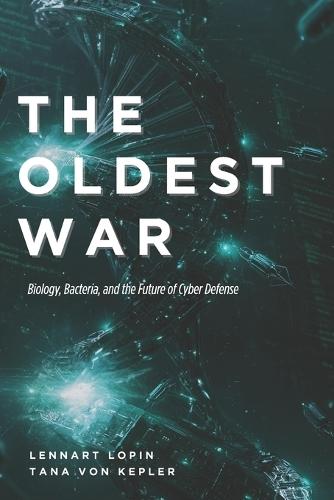
Every second, ten sextillion viruses attack bacteria in the world's oceans. The bacteria survived. Your network might not. In 2024, CrowdStrike pushed a routine update and crashed 8.5 million computers. The defense attacked the body it was meant to protect. Flights grounded. Hospitals dark. Five billion dollars in damage. Biology solved that problem 450 million years ago - with layered safeguards the cybersecurity industry still hasn't built. Bacteria have been at war with viruses called bacteriophages for four billion years. In that time they evolved over 150 families of defense systems - molecular memory arrays, alarm signals that cannot be dismissed, cells that sacrifice themselves to stop an epidemic, enzymes that measure DNA with a molecular ruler. Most of these systems were discovered after 2018. Almost nobody in cybersecurity has heard of them. This book changes that. What You'll Discover: - CRISPR as immune memory: How bacteria store structural fragments of past attackers and prime themselves for variants - and why your hash-based signatures can't do the same - CBASS defection-resistant signaling: An alarm that, once triggered, forces every cell to respond. Translated into a concrete distributed alerting protocol - Retron liveness proofs: A molecular dead man's switch that fires when something that should be running stops - detecting intrusion through the absence of normalcy - The DIMS specification: A framework for packaging, signing, and distributing modular defense components the way bacteria share defense islands through horizontal gene transfer - 35 defense systems explained from first principles and translated into tools, protocols, and architectures security engineers can build today - The Standard of Care audit: Every real-world security tool - firewalls, EDR, SIEM, MFA, patching - graded against its biological equivalent Inside This 500+ Page Book: → Part I: Why the previous attempt to learn from biology failed - and why this approach is different → Part II: The biological arsenal, taught from first principles for readers with no biology background → Part III: System-by-system translation into software security engineering → Part IV: The three AI-era threats - the supercharged arms race, the cancer-like insider threat, and the identity-fluidity problem biology has never faced → Part V: How to build your first defense module, evolve detection rules with AI, and what the SOC of 2036 looks like → Part VI: Why the same defense architectures emerge in carbon and silicon Who This Book Is For: - Security architects and engineers looking for defense patterns beyond signatures and firewalls - CISOs and security leaders rethinking defense posture for the AI era - Biologists and microbiologists curious how their research translates to cybersecurity - General readers who love science that changes how they see the world Why Now: The gap between these two fields is real and temporary. The biology was discovered after 2018. The cybersecurity community hasn't found it yet. This book is the bridge - 220 citations from Nature, Science, and Cell, with a 174-term glossary and a complete systems catalog. Bacteria have had four billion years of R&D and microbiologist keep adding more defense discoveries by the day. Time for cybersecurity practitioners to study, re-think and build.
Full Product Details
Author: Tana M Von Kepler ,
Lennart Lopin
Publisher: Independently Published
Imprint: Independently Published
Dimensions:
Width: 15.20cm
, Height: 3.00cm
, Length: 22.90cm
Weight: 0.699kg
ISBN: 9798197635952
Pages: 530
Publication Date: 20 May 2026
Audience:
General/trade
,
General
Format: Paperback
Publisher's Status: Active
Availability: Available To Order

We have confirmation that this item is in stock with the supplier. It will be ordered in for you and dispatched immediately.