Overview
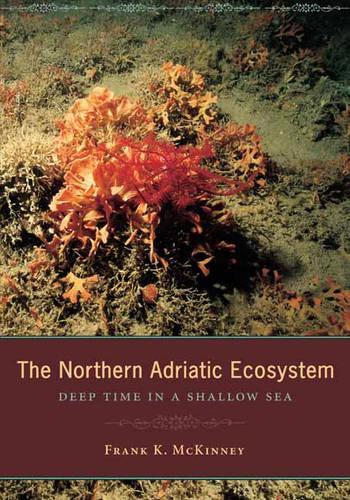
The northern Adriatic Sea is transient, most recently flooded between 18,000 to 6,000 years ago following the last glacial maximum, and it will drain again with the onset of the next glacial period. Despite its youth, uniformly shallow depth, and flat sediment floor, it hosts a broad range of bottom-dwelling sea life ecologically resembling communities that have existed in the shallow sea since the Ordovician Period, some 500 million years ago. The northern Adriatic is a natural laboratory in which to test hypotheses concerning the shift from the Paleozoic prevalence of stationary suspension-feeders living on the surface of the sediment and feeding from the overlying waters to, more recently, bottom-dwelling animals living dominantly in or actively seeking temporary refuge within the sediments of the sea floor, regardless of where they feed. Across the northern Adriatic Sea there is an ecological gradient from Paleozoic-style surface-dwelling communities in the east to ""modern"" communities living almost exclusively within the sediments in the west. Therefore, within the relatively small area of the northern Adriatic, there is an existing gradient similar to the profound ecological change from Paleozoic to more modern marine life. During the early twentieth century, life at the bottom of the Adriatic was systematically sampled from the east to the west coasts, revealing the most common animals and their distribution. In this book Frank K. McKinney combines these findings with more recent, local studies to understand better the ecological structure of the Adriatic's floor. Specifically, he uses the predation, sediment textures and deposition rates, currents, and nutrients of northern Adriatic bottom communities to evaluate hypotheses concerning the conditions that drove surface-dwelling animals to seek long-term refuge within sea floor sediment. Though the northern Adriatic has been well studied since the advent of the marine sciences, it is not widely known by paleontologists. With this volume, McKinney illuminates what this ""living laboratory"" can tell us about the evolution of multicellular life on Earth.
Full Product Details
Author: Frank McKinney (Appalachian State University)
Publisher: Columbia University Press
Imprint: Columbia University Press
Dimensions:
Width: 17.80cm
, Height: 2.50cm
, Length: 25.40cm
Weight: 0.771kg
ISBN: 9780231132428
ISBN 10: 0231132425
Pages: 328
Publication Date: 05 June 2007
Audience:
Professional and scholarly
,
Professional & Vocational
Format: Hardback
Publisher's Status: Active
Availability: Manufactured on demand

We will order this item for you from a manufactured on demand supplier.
Reviews
""[A] remarkable book."" -- Mark A. Wilson, Paleontology Newsletter ""Highly recommended"" -- Choice
[A] remarkable book. -- Mark A. Wilson, Paleontology Newsletter Highly recommended -- Choice
[A] remarkable book. -- Mark A. Wilson Paleontology Newsletter Vol. 65 Highly recommended Choice 1/1/08
Author Information
Frank K. McKinney, Emeritus Professor of Geology at Appalachian State University, is a paleontologist who studies evolution and ecology of marine invertebrates, primarily Bryozoa. He has held long-term research associate appointments at the Natural History Museum, London; American Museum; Field Museum; and Virginia Museum of Natural History. With Jeremy Jackson he is the author of Bryozoan Evolution.