Overview
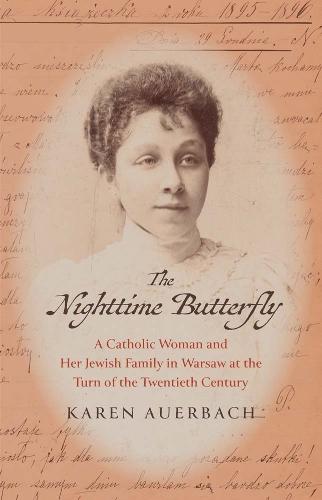
A dynamic history of life in turn-of-the-century Warsaw through the eyes of a young woman and her Jewish family who converted to Catholicism When Alicja Lewental's parents came of age in the middle of the nineteenth century, they believed they did not have to choose between two communities, one Polish and the other Jewish. But by the time Alicja was growing up in the 1890s, it seemed that for some Polish nationalists there was little Jews could do to be accepted unequivocally as Poles. As Alicja entered young womanhood and her father, a prominent publisher, became the target of polemics casting him as an outsider in Polish culture, her mother came to believe that only through her daughters' conversion to Catholicism and marriage to Catholic men could their family achieve acceptance in Polish society. The Lewentals' lives and their aspirations for belonging played out in Warsaw's homes, salons, and bookstores in a modernizing city. Drawing on Alicja Lewental's diary and other sources, historian Karen Auerbach provides a unique window onto how the Lewentals and their circle navigated a time of increasing ambivalence about the possibility for Jewish belonging to the Polish nation. As exclusionary notions of what it meant to be Polish gained traction in politics, Alicja and her family encountered these ideas in their private lives.
Full Product Details
Author: Karen Auerbach
Publisher: Yale University Press
Imprint: Yale University Press
ISBN: 9780300270839
ISBN 10: 0300270836
Pages: 272
Publication Date: 23 September 2025
Audience:
College/higher education
,
Postgraduate, Research & Scholarly
Format: Hardback
Publisher's Status: Active
Availability: Available To Order

We have confirmation that this item is in stock with the supplier. It will be ordered in for you and dispatched immediately.
Reviews
“Auerbach’s rich, insightful case study of one Polish family’s experiences across generations offers powerful evidence that the ambiguities of Jewish self-understandings could both inhibit and expand possibilities for Central Europeans.”—Lisa Silverman, author of The Postwar Antisemite: Culture and Complicity after the Holocaust “If not for the prodigious research and deep analytic perspective, one might think that Karen Auerbach has written a novel. The individuals on these pages are vivid and soulful, real people faced with circumstances which they thought they could control doing their best in a complex new reality. As readers, we share with their hopes and agonies. More historians should be writing like this.”—Hasia Diner, New York University “A nuanced account of the tragic story of the unrequited love of the Warsaw Jewish elite for the Polish nation. Auerbach's focus on the shattered hopes of one family endows its tribulations with concrete immediacy.”—Todd M. Endelman, University of Michigan “A masterful use of the diary of Alicja Lewental to narrate the story of prominent members of Warsaw’s late nineteenth-century Jewish economic elite and their ultimately futile efforts to be perceived as ‘Poles’ against the rising tide of ethnonationalism.”—Robert Blobaum, West Virginia University ""A sensitive, exquisitely drawn portrait of a young Jewish woman’s embrace of Polish culture and identity at the turn of the twentieth century, a time of increasingly exclusionary nationalist sentiment. Alicja Lewental’s quest for belonging is explored through the dual lens of her own unpublished diary and the ceaseless efforts of Warsaw Jewry’s economic and social elites to achieve integration, and—more precariously—acceptance."" —Hillel J. Kieval, author of Blood Inscriptions: Science, Modernity, and Ritual Murder at Europe's Fin de Siècle
Author Information
Karen Auerbach is associate professor at the University of North Carolina, where she specializes in Jewish history, the Holocaust, and Eastern Europe. She is the author of The House at Ujazdowskie 16: Jewish Families in Warsaw after the Holocaust. She lives in Durham, NC.