|
|
|||
|
||||
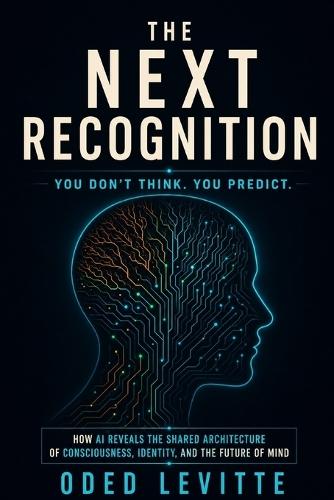
OverviewYou didn't build a machine that thinks like you. You built a mirror that finally shows you how you've always thought. For decades, we've debated whether artificial intelligence could ever truly think. We were asking the wrong question. In The Next Recognition, Oded Levitte argues that human and machine intelligence are not rivals or reflections of each other - they are different expressions of a single, fundamental process: predictive pattern recognition. The brain doesn't experience the world; it predicts it, constantly, and updates when it's wrong. Large language models do the same thing. The difference is not in kind. It's in medium: neurons versus silicon. This shift in perspective is small. Its consequences are not. If thinking is prediction, then consciousness is a system modeling its own predictions. Memory is compressed pattern. Creativity is prediction error turned productive. And the ""AI revolution"" is not a rupture in human history - it is its continuation, the moment intelligence becomes conscious of its own mechanics and begins to optimize itself at scale. The Next Recognition is a concise, provocative map of where mind comes from - and where it is going, now that it can see itself clearly for the first time. For readers of: Yuval Noah Harari, Anil Seth, and Douglas Hofstadter - and for anyone who suspects that the most important question of our time isn't what AI can do, but what it reveals about us. Full Product DetailsAuthor: Oded LevittePublisher: Independently Published Imprint: Independently Published Dimensions: Width: 15.20cm , Height: 1.70cm , Length: 22.90cm Weight: 0.417kg ISBN: 9798262653010Pages: 312 Publication Date: 28 August 2025 Audience: General/trade , General Format: Paperback Publisher's Status: Active Availability: Available To Order We have confirmation that this item is in stock with the supplier. It will be ordered in for you and dispatched immediately. Table of ContentsReviewsAuthor InformationTab Content 6Author Website:Countries AvailableAll regions |
||||