Overview
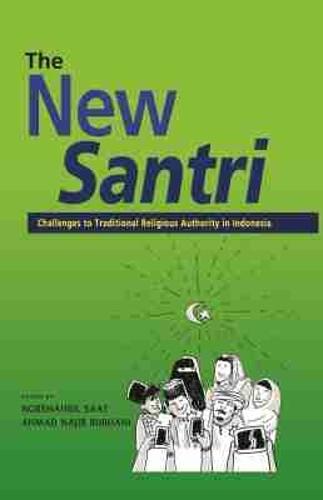
Just like the Gutenberg revolution in the fifteenth century, which led to the emergence of non-conventional religious authority in the Christian world, the current information technology revolution, particularly through mediums such as Facebook, Instagram, YouTube, and Twitter, has triggered the re-construction and decentralization of religious authority in Islam. New santri (pious individuals) and preachers emerged from the non-conventional religious educational system. They not only challenged the traditional authorities, but also redefine and re-conceptualize old religious terminologies, such as hijra and wasatiyya. This book explores the dynamics of religious authority in Indonesia with special attention to the challenges from the ""new santri"". It is a rich and important book on religion. I recommend students of religion in Indonesia and other countries to read it. Ahmad Syafi'i Maarif Professor Emeritus of History at Yogyakarta State University An important and timely volume that addresses the changing nature of Islamic leadership in the world's most popular Muslim country. This book debunks many (mis)perceptions that Indonesia Islam is monolithic. It also redefines dominant characterization of Islam by Orientalist scholars, such as santri and abangan Muslims. Haedar Nashir Chairman of Muhammadiyah This edited volume evaluates the new development of Islamic scholarship and authority in Indonesia. Things have changed significantly in recent times that make many observers and researchers wondering: has Indonesia moved from traditional authorities, mainstream Islamic organizations, and the established scholarship to the new actors, movements and platforms? Has the change occurs owing to the democratization and political reforms that took place in the last twenty years or are there other factors we need to take into account? The contributors in this book provide possible answers from many different areas and perspectives. It's a must-read! Nadirsyah Hosen Monash University, Australia
Full Product Details
Author: Norshahril Saat ,
Ahmad Najib Burhani
Publisher: ISEAS
Imprint: ISEAS
Dimensions:
Width: 15.20cm
, Height: 2.00cm
, Length: 22.80cm
Weight: 0.491kg
ISBN: 9789814881470
ISBN 10: 9814881473
Pages: 369
Publication Date: 31 August 2020
Audience:
Professional and scholarly
,
Professional & Vocational
Format: Paperback
Publisher's Status: Active
Availability: Out of stock

The supplier is temporarily out of stock of this item. It will be ordered for you on backorder and shipped when it becomes available.
Reviews
Just like the Gutenberg revolution in the fifteenth century, which led to the emergence of non-conventional religious authority in the Christian world, the current information technology revolution, particularly through mediums such as Facebook, Instagram, YouTube, and Twitter, has triggered the re-construction and decentralization of religious authority in Islam. New santri (pious individuals) and preachers emerged from the non-conventional religious educational system. They not only challenged the traditional authorities, but also redefine and re-conceptualize old religious terminologies, such as hijra and wasatiyya. This book explores the dynamics of religious authority in Indonesia with special attention to the challenges from the new santri . It is a rich and important book on religion. I recommend students of religion in Indonesia and other countries to read it. - Ahmad Syafi'i Maarif, Professor Emeritus of History at Yogyakarta State University; An important and timely volume that addresses the changing nature of Islamic leadership in the world's most popular Muslim country. This book debunks many (mis)perceptions that Indonesia Islam is monolithic. It also redefines dominant characterization of Islam by Orientalist scholars, such as santri and abangan Muslims. - Haedar Nashir, Chairman of Muhammadiyah; This edited volume evaluates the new development of Islamic scholarship and authority in Indonesia. Things have changed significantly in recent times that make many observers and researchers wondering: has Indonesia moved from traditional authorities, mainstream Islamic organizations, and the established scholarship to the new actors, movements and platforms? Has the change occurs owing to the democratization and political reforms that took place in the last twenty years or are there other factors we need to take into account? The contributors in this book provide possible answers from many different areas and perspectives. It's a must-read! - Nadirsyah Hosen, Monash University, Australia
Author Information
Norshahril Saat (Editor) Norshahril Saat (PhD) is Senior Fellow at the ISEAS - Yusof Ishak Institute, Singapore. He is Coordinator of the Regional Social and Cultural Studies Programme. Ahmad Najib Burhani (Editor) Ahmad Najib Burhani is Visiting Senior Fellow at ISEAS - Yusof Ishak Institute, Singapore and Research Professor at the National Research and Innovation Agency (BRIN), Jakarta.