Overview
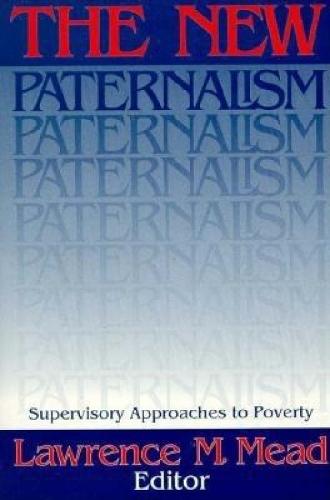
If government tells dependent people how to live today, will we have a more self-reliant society tomorrow? That's the critical question as government increasingly seeks to supervise the lives of poor citizens who are dependent on it, often in return for supporting them. This trend is most visible in welfare policy, where """"welfare reform"""" largely means attempts to require adults receiving assistance to work or stay in school in return for aid. However, it can also be seen in policy toward the homeless, where shelters increasingly set rules for their residents; in education, where states have instituted tougher standards for children; and in drug programs that test addicts for compliance. The drift in antipoverty policy is toward paternalismthe close supervision of the dependent. Paternalism has been a major trend in social policy for the past decade, and it has support from the public. But it has received little attention from researchers and policy analystsuntil now. The New Paternalism opens up a serious discussion of supervisory methods in antipoverty policy. The book assembles noted policy experts to examine whether programs that set standards for their clients and supervise them closely are better able to help them than traditional programs that leave clients free to live as they please. Separate chapters discuss programs to promote work in welfare, prevent teen pregnancy, improve fathers' payment of child support, shelter homeless men in New York City, deter drug addiction, and improve the education of the disadvantaged. Cross-cutting chapters address the management of paternalism, the psychological needs of poor adults, and the tension between paternalism and American politics. The authors consider both sides of the debate over this controversial issue. Several chapters address the sensitive question of whether government or private organizations are best able to implement supervisory programs. The conclusions are optimistic but cautious. Most of the authors believe that paternalism can make an important contribution to overcoming poverty. But paternalism is not a panacea, and it makes severe demands on the capacities of government. Supervisory programs are difficult to justify politically and to implement well.
Full Product Details
Author: Lawrence M. Mead ,
John P. Lewis ,
Richard C. Webb
Publisher: Bloomsbury Publishing Plc
Imprint: Brookings Institution
Dimensions:
Width: 15.20cm
, Height: 2.50cm
, Length: 22.90cm
Weight: 0.510kg
ISBN: 9780815756514
ISBN 10: 0815756518
Pages: 366
Publication Date: 01 October 1997
Audience:
College/higher education
,
Professional and scholarly
,
Undergraduate
,
Postgraduate, Research & Scholarly
Format: Paperback
Publisher's Status: Active
Availability: Manufactured on demand

We will order this item for you from a manufactured on demand supplier.
Author Information
Lawrence M. Mead is a professor of politics at New York University and was a visiting fellow at the Hoover Institute. He was deputy director of research, Republican National Committee; policy scientist, the Urban Institute; and policy analyst, U