Overview
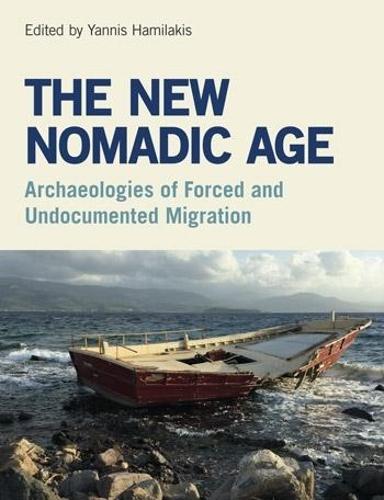
It can be suggested that today we live in a new nomadic age, an age of global movement and migration. For the majority of people on earth, however, especially from the global south, crossing national borders and moving from the global south to the global north is risky, perilous, often lethal. Many are forced or compelled to migrate due to war, persecution, or the structural violence of poverty and deprivation. The phenomenon of forced and undocumented migration is one of the defining features of our era. And while the topic is at the centre of attention and study in many scholarly fields, the materiality of the phenomenon and its sensorial and mnemonic dimensions are barely understood and analysed. In this regard, contemporary archaeology can make an immense contribution. This book, the first archaeological anthology on the topic, takes up the challenge and explores the diverse intellectual, methodological, ethical, and political frameworks for an archaeology of forced and undocumented migration in the present. Matters of historical depth, theory, method, ethics and politics as well as heritage value and public representation are investigated and analysed, adopting a variety of perspectives. The book contains both short reflections and more substantive treatments and case studies from around the world, from the Mexico-USA border to Australia, and utilizes a diversity of narrative formats, including several photographic essays.
Full Product Details
Author: Yannis Hamilakis
Publisher: Equinox Publishing Ltd
Imprint: Equinox Publishing Ltd
Weight: 0.734kg
ISBN: 9781781797112
ISBN 10: 1781797110
Pages: 268
Publication Date: 12 November 2018
Audience:
College/higher education
,
General/trade
,
Postgraduate, Research & Scholarly
,
General
Format: Paperback
Publisher's Status: Active
Availability: Available To Order 
We have confirmation that this item is in stock with the supplier. It will be ordered in for you and dispatched immediately.
Table of Contents
Preface Yannis Hamilakis Introduction: Archaeologies of Forced and Undocumented Migration Yannis Hamilakis 1. The 1947 Partition of India and Pakistan: Migration, Material Landscapes, and the Making of Nations Erin P. Riggs (Binghamton University) and Zahida Rehman Jat (University of Sindh, Pakistan) 2. We Palestinian Refugees - Heritage Rites and/as the Clothing of Bare Life: Reconfiguring Paradox, Obligation, and Imperative in Palestinian Refugee Camps in Jordan Beverley Butler (UCL Institute of Archaeology) and Fatima Al-Nammari (Petra University, Jordan) 3. Surveilling Surveillance: Countermapping Undocumented Migration in the USA-Mexico Borderlands Haeden Eli Stewart (University of Chicago),Ian Osterreicher (University of Cambridge),Cameron Gokee (Appalachian State University) and Jason De Leon (University of Michigan) 4. Place Making in Non-Places: Migrant Graffiti in Rural Highway Box Culverts Gabriella Soto (University of Arizona) 5. Lessons from the Bakken Oil Patch William Caraher (University of North Dakota),Bret Weber (University of North Dakota) and Richard Rothaus (Trefoil Cultural and Environmental) 6. Empty Migrant Rooms: An Anthropology of Absence through the Camera Lens Eckehard Pistrick (Martin-Luther Universitat Halle-Wittenberg) and Florian Bachmeier (n-Ost Network for Reporting on Eastern Europe, Germany) 7. If Place Remotely Matters: Camped in Greece's Contingent Countryside Kostis Kourelis (Franklin and Marshall College) 8. Orange Life Jackets: Materiality and Narration in Lesvos, One Year after the Eruption of the Refugee Crisis George Tyrikos-Ergas (University of Ioannina/ University of Durham) 9. Interrupted Journeys: Drawings by Refugees at the Kara Tepe Camp, Lesvos, Greece Angela Maria Arbelaez Arbelaez (Angels Relief Team) and Edward Mulholland (Benedictine College, Kansas) 10. Abandoned Refugee Vehicles In the Middle of Nowhere : Reflections on the Global Refugee Crisis from the Northern Margins of Europe Oula Ilari Seitsonen (University of Helsinki),Vesa-Pekka Herva (University of Oulu) and Mika Kunnari (University of Lapland) 11. The Garden of Refugees Rui Gomes Coelho (Binghamton University) 12. Reframing the Lampedusa Cross: The British Museum's Display of the Mediterranean Migrant Crisis Morgan Lynn Breene (University of Southampton) 13. What Anchors the Tu Do? Denis Byrne (Western Sydney University) 14. Heritage on Exile : Reflecting on the Roles and Responsibilities of Heritage Organizations towards Those Affected by Forced Migration John Schofield (University of York) 15. The Materiality of the State of Exception: Components of the Experience of Deportation from the United States Agnieszka Radziwinowiczowna (University of Warsaw) 16. Digging up Sounds, Images and Words together in Athens: Conversations with Kurosh Dadgar (Hossein Shabani) and Saeid Ghasemi on Refugee Experiences and Self-representation through Art and Heritage Management Christina Thomopoulos (National Center of Scientific Research Demokritos ),Kurosh Dadgar,Esra Dogan,Saeid Ghasemi and Sophia Thomopoulos Afterword: Commentaries by Rodney Harrison (UCL), Parker VanValkenburgh (Brown University) and Elisabeth Kirtsoglou (Durham University)
Reviews
Moving is a keyword for this timely collection of papers: The authors focus on people and their things moving through landscapes and material culture as symbols of movement and barriers. Some of the papers also emphasize a need to move the discourse of forced migration. Furthermore, the papers in this book contribute to move the scope of archaeology by documenting how archaeological methodology is highly favourable to the study of ongoing processes in addition to past phenomena. Lastly, these papers are also moving in a different sense; it is emotional to read about migrant deaths, a child drawing floating bodies, orange lifejackets spread along the shore, and people searching for a permanent situation. The New Nomadic Age provides detailed and diverse perspectives on moving in all these senses of the word and is a highly recommended read. Archaologische Informationen An incredible transdisciplinary and transcultural study of the global phenomenon of migration, the collected texts cover a wide range of political, cultural, and geographical sites and subjects, bringing together essays, documents, and photographs from such places as Mexico, the US, Finland, Palestine, Syria, India and Pakistan, and Australia. The contributors tackle complex topics such as surveilling surveillance, the drawings and gardens of refugees, the relationship between belonging and belongings, and more. The book also interrogates our complicity in how the migrant is often perceived as either a threat or a figure lacking agency, transforming these toxic misconceptions by foregrounding the migrant-refugee experience--and the inclusion is devastating. Timely, and an interdisciplinary prototype, this text should be necessary reading for curators, editors, and educators. Artforum (Best Books of 2019)
This collection of papers is well put together and demonstrate a range of issues concerning forced migration. The book illustrates how archaeology is of use to ongoing processes and is recommended both to archaeologists and people in other sectors. --Silje Evjenth Bentsen, Silje Evjenth, University of Bergen, Norway
Author Information
Yannis Hamilakis is Joukowsky Family Professor of Archaeology and Professor of Modern Greek Studies at the Joukowsky Institute for Archaeology and the Ancient World, Brown University, and Co-Director of the Koutroulou Magoula Archaeology and Archaeological Ethnography Project. His research interests include the socio-politics of the past in the present, archaeological ethnography, the archaeology of bodily senses, zooarchaeology, and Aegean prehistory. Recent publications include Archaeology and European Modernity: Producing and Consuming the 'Minoans' (Padua: Also Ausilio/Bottega D'Erasmo, 2006) (co-edited with N. Momigliano), The Nation and its Ruins: Antiquity, Archaeology and National Imagination in Greece (Oxford: Oxford University Press, 2007-winner of the 2009 Edmund Keeley Book Prize) and Archaeological Ethnographies, Public Archaeology, special double issue, Volume 8, 2-3 (London: Maney, 2009), co-edited with Aris Anagnostopoulos.
Tab Content 6
Author Website:
Countries Available
All regions
|