Overview
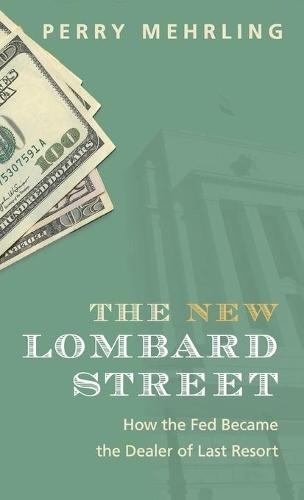
Walter Bagehot's Lombard Street, published in 1873 in the wake of a devastating London bank collapse, explained in clear and straightforward terms why central banks must serve as the lender of last resort to ensure liquidity in a faltering credit system. Bagehot's book set down the principles that helped define the role of modern central banks, particularly in times of crisis--but the recent global financial meltdown has posed unforeseen challenges. The New Lombard Street lays out the innovative principles needed to address the instability of today's markets and to rebuild our financial system. Revealing how we arrived at the current crisis, Perry Mehrling traces the evolution of ideas and institutions in the American banking system since the establishment of the Federal Reserve in 1913. He explains how the Fed took classic central banking wisdom from Britain and Europe and adapted it to America's unique and considerably more volatile financial conditions. Mehrling demonstrates how the Fed increasingly found itself serving as the dealer of last resort to ensure the liquidity of securities markets--most dramatically amid the recent financial crisis.Now, as fallout from the crisis forces the Fed to adapt in unprecedented ways, new principles are needed to guide it. In The New Lombard Street, Mehrling persuasively argues for a return to the classic central bankers' ""money view,"" which looks to the money market to assess risk and restore faith in our financial system.
Full Product Details
Author: Perry Mehrling
Publisher: Princeton University Press
Imprint: Princeton University Press
Dimensions:
Width: 14.00cm
, Height: 2.30cm
, Length: 21.60cm
Weight: 0.340kg
ISBN: 9780691143989
ISBN 10: 0691143986
Pages: 192
Publication Date: 28 November 2010
Audience:
College/higher education
,
Professional and scholarly
,
Tertiary & Higher Education
,
Professional & Vocational
Format: Hardback
Publisher's Status: Active
Availability: In Print

This item will be ordered in for you from one of our suppliers. Upon receipt, we will promptly dispatch it out to you. For in store availability, please contact us.
Language: English
Reviews
With lucid precision, Mehrling traces the history of how Fed policy makers became biased toward 'excessive elasticity'... Mehrling saves the best for the end, where he describes the Fed's battle to save the system with an alphabet soup of lending programs. -- James Pressley, Bloomberg News I continue to ponder Mehrling's main claims, but in any case this is an important book about the new Fed. -- Tyler Cowen, Marginal Revolution In The New Lombard Street, Perry Mehrling ... provides a lucid account of how the system worked when it was working--and of the growing role assumed by the Fed in an era of global economic volatility and 'credit-fueled bubbles.' -- Glenn C. Altschuler, Tulsa World [A] fantastic book. -- Brad DeLong blog
A well-written, scholarly dissection that should be required reading for all graduate courses (and perhaps some advanced undergraduate) in macroeconomics or monetary economics. -- Choice With lucid precision, Mehrling traces the history of how Fed policy makers became biased toward 'excessive elasticity'... Mehrling saves the best for the end, where he describes the Fed's battle to save the system with an alphabet soup of lending programs. -- James Pressley, Bloomberg News I continue to ponder Mehrling's main claims, but in any case this is an important book about the new Fed. -- Tyler Cowen, Marginal Revolution In The New Lombard Street, Perry Mehrling ... provides a lucid account of how the system worked when it was working--and of the growing role assumed by the Fed in an era of global economic volatility and 'credit-fueled bubbles.' -- Glenn C. Altschuler, Tulsa World [A] fantastic book. -- Rortybomb, Mike Konczal blog [I]mportant... Mehrling's new book tries to do just what Bagehot did: to give an account both of how and why the Fed acted when it reinvented the rules in the middle of a financial crisis, and of what the implications for future monetary policy will be. -- Harold James, Central Banking Journal
With lucid precision, Mehrling traces the history of how Fed policy makers became biased toward 'excessive elasticity'... Mehrling saves the best for the end, where he describes the Fed's battle to save the system with an alphabet soup of lending programs. -- James Pressley, Bloomberg News I continue to ponder Mehrling's main claims, but in any case this is an important book about the new Fed. -- Tyler Cowen, Marginal Revolution [A] fantastic book. -- Brad DeLong blog
A well-written, scholarly dissection that should be required reading for all graduate courses (and perhaps some advanced undergraduate) in macroeconomics or monetary economics. -- Choice With lucid precision, Mehrling traces the history of how Fed policy makers became biased toward 'excessive elasticity'... Mehrling saves the best for the end, where he describes the Fed's battle to save the system with an alphabet soup of lending programs. -- James Pressley, Bloomberg News I continue to ponder Mehrling's main claims, but in any case this is an important book about the new Fed. -- Tyler Cowen, Marginal Revolution In The New Lombard Street, Perry Mehrling ... provides a lucid account of how the system worked when it was working--and of the growing role assumed by the Fed in an era of global economic volatility and 'credit-fueled bubbles.' -- Glenn C. Altschuler, Tulsa World [A] fantastic book. -- Rortybomb, Mike Konczal blog
A well-written, scholarly dissection that should be required reading for all graduate courses (and perhaps some advanced undergraduate) in macroeconomics or monetary economics. Choice With lucid precision, Mehrling traces the history of how Fed policy makers became biased toward 'excessive elasticity'... Mehrling saves the best for the end, where he describes the Fed's battle to save the system with an alphabet soup of lending programs. -- James Pressley Bloomberg News I continue to ponder Mehrling's main claims, but in any case this is an important book about the new Fed. -- Tyler Cowen Marginal Revolution In The New Lombard Street, Perry Mehrling ... provides a lucid account of how the system worked when it was working--and of the growing role assumed by the Fed in an era of global economic volatility and 'credit-fueled bubbles.' -- Glenn C. Altschuler Tulsa World [A] fantastic book. -- Rortybomb Mike Konczal blog [I]mportant... Mehrling's new book tries to do just what Bagehot did: to give an account both of how and why the Fed acted when it reinvented the rules in the middle of a financial crisis, and of what the implications for future monetary policy will be. -- Harold James Central Banking Journal
Author Information
Perry Mehrling is professor of economics at Barnard College, Columbia University. He is the author of Fischer Black and the Revolutionary Idea of Finance and The Money Interest and the Public Interest: American Monetary Thought, 1920-1970.