Overview
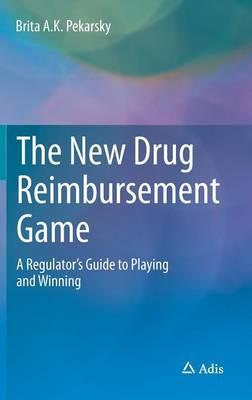
This comprehensive text presents a rigorous framework from within which regulators can respond strategically to the claim by the pharmaceutical industry that lower drug prices today lead to a loss for the population’s future health due to less innovation. It starts with a critical review of the empirical evidence of the return to consumers on their ongoing investment into high drug prices in order to increase future innovation. The implicit, critical and unrealistic assumption inherent in these studies is identified, namely that the health budget can be expanded to purchase drugs at higher prices without an opportunity cost, for example, the foregone benefits of alternative investments in health care infrastructure. Price effectiveness analysis (PEA), is introduced. PEA informs the question of how the innovative surplus from the new drug should be allocated between the manufacturer and the consumer so as to optimise society’s welfare. The method allows the decisions by theregulator and the firm to be analysed jointly by specifying the firm’s production and revenue functions in terms of the clinical innovation of a new drug; the incremental effect used in the summary metric of cost effectiveness analysis. An economic value of innovation that takes into account opportunity cost under conditions of economic efficiency in the health system is proposed: the health shadow price. The limitations of the non-strategic methods that currently inform the highly contested new drug subsidy game are presented and the relative strengths of PEA are demonstrated. Health technology assessment quantifies both the clinical innovation of a new drug and its financial impact on the health system. Cost effectiveness analysis tests the relationship between the incremental cost and incremental effect of a new drug for target patients, at a given price. PEA tests the relationship between the price of a new drug and the health of the whole population, now and into thefuture. It achieves this by taking into account current inefficiency in both resource allocation and the displacement process, and the relationship between price and future innovation.
Full Product Details
Author: Brita A.K. Pekarsky
Publisher: Springer International Publishing AG
Imprint: Adis
Edition: 2015 ed.
Dimensions:
Width: 15.50cm
, Height: 2.00cm
, Length: 23.50cm
Weight: 5.207kg
ISBN: 9783319089027
ISBN 10: 3319089021
Pages: 248
Publication Date: 27 October 2014
Audience:
Professional and scholarly
,
Professional & Vocational
Format: Hardback
Publisher's Status: Active
Availability: Manufactured on demand

We will order this item for you from a manufactured on demand supplier.
Reviews
I like this book ... and would recommend it to anyone who wishes to understand the negotiations between health-care payers and biopharmaceutical companies. ... Pekarsky provides useful overviews of the many academic fields that contribute to debates on the appropriate price to pay for new drugs ... . (Christopher J. McCabe, Applied Health Economics and Health Policy, October, 2015)
Author Information
Brita Pekarsky is a Senior Research Fellow at the School of Population Health, University of South Australia. Dr Pekarsky’s research is in the areas of pharmacoeconomics, pharmaceutical regulation and Aboriginal health care financing. She received her PhD from the University of Adelaide, jointly in Economics and Population Health. Dr Pekarsky is on the Editorial Board for Applied Health Economics and Health Policy. She was a member of the Economic Subcommittee of the Australian Pharmaceutical Benefits Advisory Committee from 1997 to 2013.