Overview
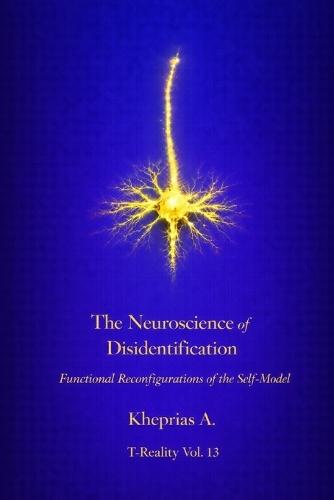
The Neuroscience of Disidentification Functional Reconfigurations of the Self-Model T-Reality Series - Volume 13 This volume presents a strictly analytical study of disidentification as a functional phenomenon within contemporary cognitive science and philosophy of mind. Disidentification is examined as a configuration in which the self-model loses its central coordinating role within cognitive dynamics, without implying subjective insight, spiritual realization, therapeutic outcome, or normative transformation. The self is treated exclusively as an operational construct, not as an ontological entity, experiential core, or psychological goal. The analysis is grounded in established theoretical frameworks, including predictive processing and the free-energy principle as developed by Karl Friston, the self-model theory of subjectivity articulated by Thomas Metzinger, the narrative and functional account of the self proposed by Daniel Dennett, and contemporary work in cognitive inference and epistemic agency by Jakob Hohwy. Network-level and systems-theoretic aspects of cognitive organization are addressed with reference to research by Olaf Sporns and related work in network neuroscience. Within this framework, the book introduces the concept of non-self-referential cognitive regimes, defined as functional configurations in which information processing, control, and inference operate without identity functioning as a privileged reference point. These regimes are described in structural, computational, and dynamical terms, independently of phenomenological interpretation. A dedicated section examines depersonalization, derealization, and dissociation as limit cases within the same functional space. These phenomena are analyzed as unstable or fragmented configurations resulting from loss of self-model centrality without successful systemic reorganization, clearly distinguished from structurally coherent forms of disidentification. The book does not advance spiritual, clinical, or therapeutic claims. It does not propose practices, methods, or paths. Its sole aim is to provide a formal, non-normative description of how self-related cognitive models can lose dominance within complex systems, and how cognition reorganizes under those conditions. This volume is intended for researchers and advanced readers in neuroscience, philosophy of mind, cognitive science, and systems theory who are interested in formal models of identity, self-representation, agency, and cognitive architecture.
Full Product Details
Author: Kheprias A
Publisher: Independently Published
Imprint: Independently Published
Volume: 9
Dimensions:
Width: 15.20cm
, Height: 0.80cm
, Length: 22.90cm
Weight: 0.195kg
ISBN: 9798247111610
Pages: 138
Publication Date: 05 February 2026
Audience:
General/trade
,
General
Format: Paperback
Publisher's Status: Active
Availability: Available To Order

We have confirmation that this item is in stock with the supplier. It will be ordered in for you and dispatched immediately.