Overview
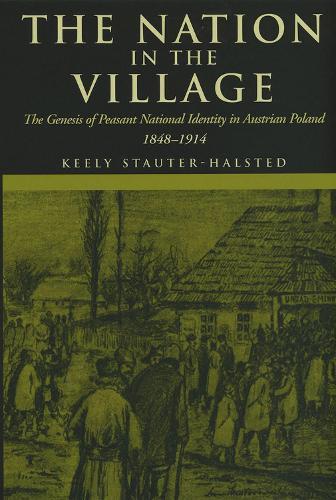
How do peasants come to think of themselves as members of a nation? The widely accepted argument is that national sentiment originates among intellectuals or urban middle classes, then ""trickles down"" to the working class and peasants. Keely Stauter-Halsted argues that such models overlook the independent contribution of peasant societies. She explores the complex case of the Polish peasants of Austrian Galicia, from the 1848 emancipation of the serfs to the eve of the First World War. In the years immediately after emancipation, Polish-speaking peasants were more apt to identify with the Austrian Emperor and the Catholic Church than with their Polish lords or the middle classes of the Galician capital, Cracow. Yet by the end of the century, Polish-speaking peasants would cheer, ""Long live Poland"" and celebrate the centennial of the peasant-fueled insurrection in defense of Polish independence. The explanation for this shift, Stauter-Halsted says, is the symbiosis that developed between peasant elites and upper-class reformers. She reconstructs this difficult, halting process, paying particular attention to public life and conflicts within the rural communities themselves. The author's approach is at once comparative and interdisciplinary, drawing from literature on national identity formation in Latin America, China, and Western Europe. The Nation in the Village combines anthropology, sociology, and literary criticism with economic, social, cultural, and political history.
Full Product Details
Author: Keely Stauter-Halsted
Publisher: Cornell University Press
Imprint: Cornell University Press
Dimensions:
Width: 15.20cm
, Height: 2.70cm
, Length: 22.90cm
Weight: 0.907kg
ISBN: 9780801438448
ISBN 10: 0801438446
Pages: 288
Publication Date: 28 June 2001
Audience:
College/higher education
,
Professional and scholarly
,
Undergraduate
,
Postgraduate, Research & Scholarly
Format: Hardback
Publisher's Status: Active
Availability: Manufactured on demand

We will order this item for you from a manufactured on demand supplier.
Reviews
This study makes an important contribution to the growing literature on nationalism in Eastern Central Europe. --Polish Review Insightful and innovative... Stauter-Halsted's book is a fine example that draws on a dazzling array of printed and archival sources to reveal what peasants themselves were saying, writing, thinking, and dreaming about any future Polish nation.... The fresh approach to the village and identity will make a strong contribution to the literature on nationalism, peasant studies, and the public sphere. it should be essential reading for anyone interested in modern Europe, the peasantry, and national identity. --H-Net Reviews This volume makes a major contribution to the ever-growing literature of nationalism by emphasizing the plurality and dynamism of the process. It is well illustrated and indexed and includes an excellent bibliography. --Choice Keely Stauter-Halsted's new monograph combines the best of intellectual worlds: it is not only richly informed by theoretical and historical works on identity formation, civil society, subaltern studies, peasant nationalism, and cultural studies but by extensive materials from archives in Warsaw, Krakow, and Lvov. The result of her intellectual efforts in an insightful study of the political, social, and cultural transformation of Galician serfs into members of the Polish nation during the postemancipation period and how the peasants themselves were instrumental in this transformation.... She set the bar quite high for those who wish to investigate the creation, establishment, and maintenance of a Polish national identity. --Slavic Review The Nation in the Village prompts a generous run of intriguing questions pertinent to (and often challenging) the prevailing historiography of nationalism and the peasantry in Poland. --Slavic and Eastern European Review What this impressive book does so effectively is to describe the changes in the mentality of the Galician peasantry in relation to changes in its socio-economic and political environment. Subtly argued and eminently readable, The Nation in the Village takes a dynamic approach to an important issue. --John-Paul Himka, University of Alberta
This volume makes a major contribution to the ever-growing literature of nationalism by emphasizing the plurality and dynamism of the process. It is well illustrated and indexed and includes an excellent bibliography. --Choice This study makes an important contribution to the growing literature on nationalism in Eastern Central Europe. --Polish Review Keely Stauter-Halsted's new monograph combines the best of intellectual worlds: it is not only richly informed by theoretical and historical works on identity formation, civil society, subaltern studies, peasant nationalism, and cultural studies but by extensive materials from archives in Warsaw, Krakow, and Lvov. The result of her intellectual efforts in an insightful study of the political, social, and cultural transformation of Galician serfs into members of the Polish nation during the postemancipation period and how the peasants themselves were instrumental in this transformation.... She set the bar quite high for those who wish to investigate the creation, establishment, and maintenance of a Polish national identity. --Slavic Review Insightful and innovative... Stauter-Halsted's book is a fine example that draws on a dazzling array of printed and archival sources to reveal what peasants themselves were saying, writing, thinking, and dreaming about any future Polish nation.... The fresh approach to the village and identity will make a strong contribution to the literature on nationalism, peasant studies, and the public sphere. it should be essential reading for anyone interested in modern Europe, the peasantry, and national identity. --H-Net Reviews The Nation in the Village prompts a generous run of intriguing questions pertinent to (and often challenging) the prevailing historiography of nationalism and the peasantry in Poland. --Slavic and Eastern European Review What this impressive book does so effectively is to describe the changes in the mentality of the Galician peasantry in relation to changes in its socio-economic and political environment. Subtly argued and eminently readable, The Nation in the Village takes a dynamic approach to an important issue. --John-Paul Himka, University of Alberta
Keely Stauter-Halsted's new monograph combines the best of intellectual worlds: it is not only richly informed by theoretical and historical works on identity formation, civil society, subaltern studies, peasant nationalism, and cultural studies but by extensive materials from archives in Warsaw, Krakow, and Lvov. The result of her intellectual efforts in an insightful study of the political, social, and cultural transformation of Galician serfs into members of the Polish nation during the postemancipation period and how the peasants themselves were instrumental in this transformation.... She set the bar quite high for those who wish to investigate the creation, establishment, and maintenance of a Polish national identity. --Slavic Review This volume makes a major contribution to the ever-growing literature of nationalism by emphasizing the plurality and dynamism of the process. It is well illustrated and indexed and includes an excellent bibliography. --Choice This study makes an important contribution to the growing literature on nationalism in Eastern Central Europe. --Polish Review Insightful and innovative... Stauter-Halsted's book is a fine example that draws on a dazzling array of printed and archival sources to reveal what peasants themselves were saying, writing, thinking, and dreaming about any future Polish nation.... The fresh approach to the village and identity will make a strong contribution to the literature on nationalism, peasant studies, and the public sphere. it should be essential reading for anyone interested in modern Europe, the peasantry, and national identity. --H-Net Reviews The Nation in the Village prompts a generous run of intriguing questions pertinent to (and often challenging) the prevailing historiography of nationalism and the peasantry in Poland. --Slavic and Eastern European Review What this impressive book does so effectively is to describe the changes in the mentality of the Galician peasantry in relation to changes in its socio-economic and political environment. Subtly argued and eminently readable, The Nation in the Village takes a dynamic approach to an important issue. --John-Paul Himka, University of Alberta
This volume makes a major contribution to the ever-growing literature of nationalism by emphasizing the plurality and dynamism of the process. It is well illustrated and indexed and includes an excellent bibliography. --Choice Insightful and innovative... Stauter-Halsted's book is a fine example that draws on a dazzling array of printed and archival sources to reveal what peasants themselves were saying, writing, thinking, and dreaming about any future Polish nation.... The fresh approach to the village and identity will make a strong contribution to the literature on nationalism, peasant studies, and the public sphere. it should be essential reading for anyone interested in modern Europe, the peasantry, and national identity. --H-Net Reviews This study makes an important contribution to the growing literature on nationalism in Eastern Central Europe. --Polish Review Keely Stauter-Halsted's new monograph combines the best of intellectual worlds: it is not only richly informed by theoretical and historical works on identity formation, civil society, subaltern studies, peasant nationalism, and cultural studies but by extensive materials from archives in Warsaw, Krakow, and Lvov. The result of her intellectual efforts in an insightful study of the political, social, and cultural transformation of Galician serfs into members of the Polish nation during the postemancipation period and how the peasants themselves were instrumental in this transformation.... She set the bar quite high for those who wish to investigate the creation, establishment, and maintenance of a Polish national identity. --Slavic Review The Nation in the Village prompts a generous run of intriguing questions pertinent to (and often challenging) the prevailing historiography of nationalism and the peasantry in Poland. --Slavic and Eastern European Review What this impressive book does so effectively is to describe the changes in the mentality of the Galician peasantry in relation to changes in its socio-economic and political environment. Subtly argued and eminently readable, The Nation in the Village takes a dynamic approach to an important issue. --John-Paul Himka, University of Alberta
Author Information
Keely Stauter-Halsted is Professor of History and Stefan & Lucy Hejna Family Chair in the History of Poland at the University of Illinois at Chicago. She is the author of The Devil's Chain: Prostitution and Social Control in Partitioned Poland and The Nation in the Village: The Genesis of Peasant National Identity in Austrian Poland, 1848–1914.