Overview
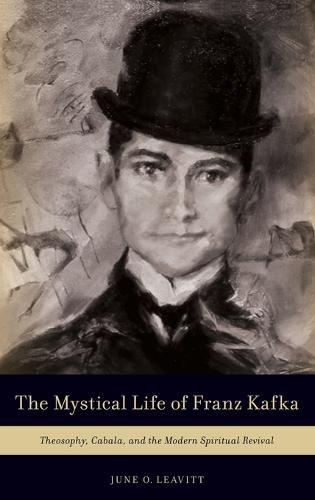
In a long-overlooked diary entry, Franz Kafka admitted to suffering from ''bouts of clairvoyance.'' These bouts of clairvoyance can be seen in his writing, in moments when the solid basis of human cognition totters, the dissolution of matter seems imminent, and objects are jarringly severed from physical referents. June O. Leavitt offers a fascinating examination of the mystical in Kafka's life and writings, showing that Kafka's understanding of the occult was not only a product of his own clairvoyant experiences but of the age in which he lived.Kafka lived during the modern Spiritual Revival, a powerful movement which resisted materialism, rejected the adulation of science and Darwin, and idealized clairvoyant modes of consciousness. Kafka's contemporaries - such theosophical ideologues as Madame H.P. Blavatsky, Annie Besant, and Dr. Rudolph Steiner - encouraged the counterculture to seek the true, spiritual essence of reality by inducing out-of-body experiences and producing visions of higher disembodied beings through meditative techniques. Leaders of the Spiritual Revival also called for the adoption of certain lifestyles, such as vegetarianism, in order to help transform consciousness and return humanity to its divine nature. Interweaving the occult discourse on clairvoyance, the divine nature of animal life, vegetarianism, the spiritual sources of dreams, and the eternal nature of the soul with Kafka's dream-chronicles, animal narratives, diaries, letters, and stories, Leavitt takes the reader on a journey through the texts of a great psychic writer and the fascinating epoch of the Spiritual Revival.
Full Product Details
Author: June O. Leavitt (Adjunct Lecturer, Adjunct Lecturer, Ben Gurion University of the Negev in Israel)
Publisher: Oxford University Press Inc
Imprint: Oxford University Press Inc
Dimensions:
Width: 23.90cm
, Height: 2.00cm
, Length: 16.00cm
Weight: 0.465kg
ISBN: 9780199827831
ISBN 10: 0199827834
Pages: 224
Publication Date: 08 December 2011
Audience:
College/higher education
,
Undergraduate
,
Postgraduate, Research & Scholarly
Format: Hardback
Publisher's Status: Active
Availability: Manufactured on demand

We will order this item for you from a manufactured on demand supplier.
Reviews
<br> June Leavitt leads us through ethereal and esoteric realms of theosophy and the occult in a pathbreaking attempt to situate Kafka within Europe's Modern Spiritual Revival, associated with the names of Rudolf Steiner, Madame Blatavsky, Annie Besant, W.B. Yeats, Gustav Meyrink, T.S. Eliot, and others. Benefiting from Leavitt's scholarship, we can now understand better Kafka's clairvoyance, dream-life, and mystical experience and their inner relationship to his writings. Contextualizations she provides derived from Jewish and Christian Cabala, Freemasonry, and Gnosticism inform Kafka's notions of reincarnation, transcendence, and transmigration of the soul, as well as the mystical life of animals. Nothing short of a new way of 'experiencing' Kafka is achieved here. <br>---Mark H. Gelber, Director of the Center for Austrian and German Studies, Ben-Gurion University, Beer Sheva <br><p><br> This is a book that gets better and better as it goes along. Through her theosophical framing, L
June Leavitt leads us through ethereal and esoteric realms of theosophy and the occult in a pathbreaking attempt to situate Kafka within Europe's Modern Spiritual Revival, associated with the names of Rudolf Steiner, Madame Blatavsky, Annie Besant, W.B. Yeats, Gustav Meyrink, T.S. Eliot, and others. Benefiting from Leavitt's scholarship, we can now understand better Kafka's clairvoyance, dream-life, and mystical experience and their inner relationship to his writings. Contextualizations she provides derived from Jewish and Christian Cabala, Freemasonry, and Gnosticism inform Kafka's notions of reincarnation, transcendence, and transmigration of the soul, as well as the mystical life of animals. Nothing short of a new way of 'experiencing' Kafka is achieved here. -Mark H. Gelber, Director of the Center for Austrian and German Studies, Ben-Gurion University, Beer Sheva an engaging and innovative view on a notoriously oblique author and his texts Katja Neumann, Literature and Theology
June Leavitt leads us through ethereal and esoteric realms of theosophy and the occult in a pathbreaking attempt to situate Kafka within Europe's Modern Spiritual Revival, associated with the names of Rudolf Steiner, Madame Blatavsky, Annie Besant, W.B. Yeats, Gustav Meyrink, T.S. Eliot, and others. Benefiting from Leavitt's scholarship, we can now understand better Kafka's clairvoyance, dream-life, and mystical experience and their inner relationship to his writings. Contextualizations she provides derived from Jewish and Christian Cabala, Freemasonry, and Gnosticism inform Kafka's notions of reincarnation, transcendence, and transmigration of the soul, as well as the mystical life of animals. Nothing short of a new way of 'experiencing' Kafka is achieved here. -Mark H. Gelber, Director of the Center for Austrian and German Studies, Ben-Gurion University, Beer Sheva
<br> June Leavitt leads us through ethereal and esoteric realms of theosophy and the occult in a pathbreaking attempt to situate Kafka within Europe's Modern Spiritual Revival, associated with the names of Rudolf Steiner, Madame Blatavsky, Annie Besant, W.B. Yeats, Gustav Meyrink, T.S. Eliot, and others. Benefiting from Leavitt's scholarship, we can now understand better Kafka's clairvoyance, dream-life, and mystical experience and their inner relationship to his writings. Contextualizations she provides derived from Jewish and Christian Cabala, Freemasonry, and Gnosticism inform Kafka's notions of reincarnation, transcendence, and transmigration of the soul, as well as the mystical life of animals. Nothing short of a new way of 'experiencing' Kafka is achieved here. <br>---Mark H. Gelber, Director of the Center for Austrian and German Studies, Ben-Gurion University, Beer Sheva <br><p><br> This is a book that gets better and better as it goes along. Through her theosophical framing, Leavitt illuminates some of Kafka's lesser known works and brings his more famous texts, such as 'Investigations of a Dog, ' to new life. She convincingly interweaves Kafka's dreams, his Nietzsche readings, his early involvement with synaesthesia and modernism - and, of course, his vegetarianism. Kafka declared that he was 'nothing but literature.' The Mystical Life of Franz Kafka broadens that life into its full, fascinating cultural context. <br>-- James Rolleston, Professor Emeritus of German & Literature, Duke University <br><p><br> June Leavitt's original study explores neglected moments in Kafka's spiritual landscape and mystical experiences early in his life, and enables a better understanding of some of the uncanny dimensions of his later oeuvre. She describes fascinating aspects of the Prague intellectual ambiance that was permeated with Rudolph Steiner's theories and of Freemasonic approaches at the beginning of the twentieth century, contributing thereby to a new picture of
Author Information
June Leavitt is a freelance writer and researcher who has published fiction, scholarly works, and critically-acclaimed memoirs as well as articles that have appeared in major newspapers and magazines. She frequently teaches courses on mystical literature in religious traditions in the Overseas Program at Ben Gurion University of the Negev in Israel.