Overview
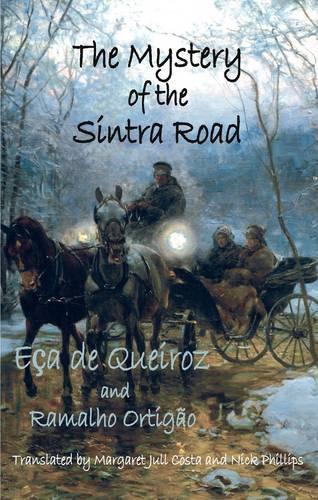
Eca de Queiroz's first novel and Portugal's first mystery-come-detective novel in its first English translation Two friends are kidnapped by several masked men, who, to judge by their manners and their accents are men of the best society. One of the friends is a doctor, and the masked men say that they need him to assist a noblewoman, who is about to give birth. When they reach the house, they find no such noblewoman, only a dead man. Another man, known only as A.M.C., bursts in at this point and declares that the man died of opium poisoning. The doctor writes a letter to a newspaper editor, setting out the facts as he knows them. These facts are rebutted first by a friend of A.M.C. and then by the first masked man, who explains the whole story... Eca de Queiroz wrote this spoof 'mystery' with his friend Ramalho Ortigao, publishing it in the form of a series of anonymous letters in the Diario de Noticias between 24 July and 27 September 1870. Many readers believed the letters to be genuine. As the book progresses, one sees Eca gradually getting into his stride as a novelist, equally at home with humour and with human drama. AUTHOR: Jose Duarte Ramalho Ortigqo (1836 1915) studied law at Coimbra University, but failed to complete his degree. He then became a teacher of French in a school run by his father, and among his pupils was Eca de Queiroz. From 1862 on, he worked as a journalist and literary critic, contributing to various literary magazines, and in 1870, he and Eca decided to write a spoof romantic novel, purportedly based on a genuine murder case, and which appeared in instalments in the Lisbon daily newspaper Diario de Noticias. The serial proved extremely popular and was subsequently published in book form. Ramalho Ortigao and Eca continued to collaborate on a satirical journal called As Farpas, and Ramalho Ortigao continued to work on this alone when Eca began his diplomatic career. Eca de Queiroz (1845-1900) is considered to be Portugal's greatest novelist. Dedalus has embarked on a project to make all his major works available in English in new translations by Margaret Jull Costa. SELLING POINTS: Recently turned into a major Portuguese feature film it will delight avid Eca fans and lovers of mysteries.
Full Product Details
Author: Jose Maria Eca De Queiroz ,
Ramalho Ortigao ,
Margaret Jull Costa ,
Nick Phillips
Publisher: Dedalus Ltd
Imprint: Dedalus Ltd
Dimensions:
Width: 12.60cm
, Height: 2.10cm
, Length: 19.80cm
Weight: 0.272kg
ISBN: 9781909232297
ISBN 10: 1909232297
Pages: 288
Publication Date: 30 April 2025
Audience:
General/trade
,
General
Format: Paperback
Publisher's Status: Active
Availability: In Print

This item will be ordered in for you from one of our suppliers. Upon receipt, we will promptly dispatch it out to you. For in store availability, please contact us.
Language: Portuguese
Reviews
'Queiroz is far greater than my own dear master, Flaubert.'-- Emile Zola
Author Information
Eca de Queiroz (1845-1900) is considered to be Portugal's greatest novelist. Dedalus has embarked on a project to make all his major works available in English in new translations by Margaret Jull Costa. Published so far are: The Mandarin, The Relic, The Tragedy of the Street of Flowers, The Crime of Father Amaro, Cousin Bazilio, The Maias, The City and The Mountains, Alves & Co and The Mystery of Sintra Road. Dedalus will publish The Illustrious House of Ramires in 2016. Ramalho OrtigaGBPo (1836 --1915) studied law at Coimbra University, but failed to complete his degree. He then became a teacher of French in a school run by his father, and among his pupils was Eca de Queiroz. From 1862 on, he worked as a journalist and literary critic, contributing to various literary magazines, and in 1870, he and Eca decided to write a spoof romantic novel, purportedly based on a genuine murder case, and which appeared in instalments in the Lisbon daily newspaper Dia!rio de Nota-cias. The serial proved extremely popular and was subsequently published in book form. Margaret Jull Costa has translated the works of many Spanish and Portuguese writers. She won the Portuguese Translation Prize for The Book of Disquiet by Fernando Pessoa in 1992 and for The Word Tree by Teolinda Gersao in 2012, and her translations of Eca de Queiroz's novels The Relic(1996) and The City and the Mountains(2009) were shortlisted for the prize; with Javier Marias, she won the 1997 International IMPAC Dublin Literary Award for A Heart So White, and, in 2000, she won the Weidenfeld Prize for Jose Saramago's All the Names.In 2008 she won the Pen Book-of-the Month-Club Prize and The