Overview
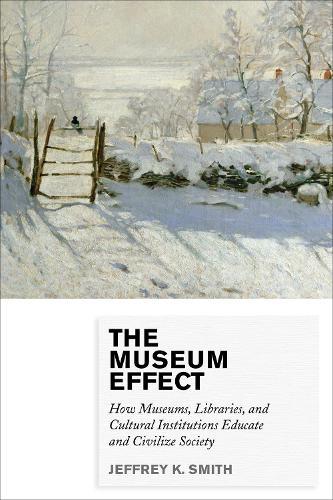
Museums, libraries, and cultural institutions provide opportunities for people to understand and celebrate who they are, were, and might be. These institutions educate the public and civilize society in a variety of ways, ranging from community events to a single child making a first visit. The Museum Effect documents this phenomenon, explains how it happens, and shows how institutions can facilitate this process. Cultural institutions vary dramatically in size, nature and purpose, but they all allow visitors to hold conversations with artists and authors perhaps long dead. These conversations, sometimes with others present, and sometimes with artists, scientists, explorers, or authors not present, allow visitors to explore their lives and their “possible selves.” Cultural institutions inspire personal reflection, and help visitors better themselves, in that they leave having contemplated what is noble, excellent, or exemplary about the society in which they live. The “museum effect” is a process through which cultural institutions educate and civilize us as individuals and as societies. These institutions allow visitors to spend some time with their thoughts elevated, and leave the institution better people in some meaningful fashion than when they entered. This visionary book presents the underlying idea and the argument for the museum effect, along with empirical research supporting that argument. It will help those working in museums, libraries, and archivists to facilitate this process, and study how this is working in their own institutions.
Full Product Details
Author: Jeffrey K. Smith
Publisher: Bloomsbury Publishing Plc
Imprint: Rowman & Littlefield
Dimensions:
Width: 16.10cm
, Height: 2.10cm
, Length: 23.40cm
Weight: 0.454kg
ISBN: 9780759122949
ISBN 10: 0759122946
Pages: 216
Publication Date: 29 May 2014
Audience:
Professional and scholarly
,
Professional & Vocational
Format: Hardback
Publisher's Status: Active
Availability: Manufactured on demand

We will order this item for you from a manufactured on demand supplier.
Reviews
What a wonderful book! Jeff Smith has done an amazing job of capturing the museum experience in a totally engaging way, interweaving research data with real-life anecdotes so compellingly that the book is, indeed, a page-turner. Writing fluidly and with both wit and respect, he takes us on a first-person tour through how people respond to art, what they do in museums, and how these findings can help us make museums even better. Though his research is based in art museums, he connects his findings to museums of all kinds as well as to libraries, music, and astronomy; he even includes a reference to Monty Python. It's a pleasure to read research on museum visitors' experiences that presents the questions, the methods, the findings and their implications so enjoyably. This is a book that every current and would-be museum professional and every teacher about museums should read, enjoy, and use. It's a treasure. -- Elizabeth (Beau) Vallance, associate professor emeritus, Art Education, Indiana University With his idea of the museum effect, Smith provides one of the most compelling explanations for what makes art such a fundamental and profound aspect of our personal lives, our societies, our cultures, and our shared human history. Smith is a museum insider and empirical researcher, and in this piece he successfully bridges psychological science and art as well as artist and viewer, while along the way revealing to us why cultural institutions, museums in particular, affect us in positive ways. An essential book for anyone wanting the why and how of art. -- Pablo P. L. Tinio, professor, Education, Queens College of the City University of New York, and editor, Psychology of Aesthetics, Creativity, and the Arts
Author Information
Jeffrey K. Smith is professor and associate dean for research in the College of Education at the University of Otago, New Zealand