Overview
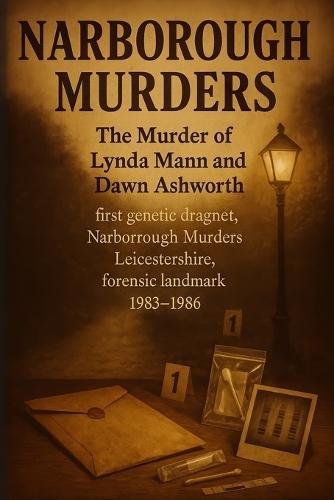
Two girls. Two footpaths. One pattern that changed the history of forensic science. On a cold November night in 1983, fifteen-year-old Lynda Mann took a familiar shortcut along the Black Pad in Narborough, Leicestershire-and never came home. Three years later, another fifteen-year-old, Dawn Ashworth, disappeared on a summer evening near Ten Pound Lane in neighboring Enderby. Both schoolgirls were found raped and strangled along rural paths less than a mile apart, their deaths echoing each other with chilling precision. In a small CID office, their case files thickened with interviews and enzyme reports but no suspect. In a nearby university lab, geneticist Alec Jeffreys was staring at bar-coded bands of DNA on X-ray film, realizing he could distinguish one human being from another with unprecedented clarity. When Detective Chief Superintendent David Baker carried the Mann and Ashworth samples into that lab, the Narborough murders became the proving ground for DNA fingerprinting-and for British true crime itself. This narrative follows the investigation step by step: the first grim mornings on the footpaths; the early forensic limits of Type A semen and enzyme typing; the reopening of a stalled file when Dawn's body is found; and the growing conviction that one offender is hunting teenage girls on the edges of two quiet villages. It traces how a wrong turn, a missing scarf, and a handful of preserved swabs became the core of a forensic science history that still shapes investigations today. As suspicion falls on vulnerable teenager Richard Buckland-and then DNA excludes him-the story confronts a painful question: what happens when the system believes a confession that the evidence does not? When thousands of local men are called to give blood or saliva in the world's first mass DNA screening, the case shifts from rumor and fear to a methodical search for one matching pattern. The Narborough murders draw an entire community into the laboratory light. Along the way, you'll meet the people who carried the weight of these crimes: the Mann and Ashworth families; the detectives and forensic scientists who refused to shelve the file; and the colleagues whose pub conversations finally exposed how Colin Pitchfork tricked the test by sending Ian Kelly in his place. From the quiet courage of witness Jackie Foggin to the relentless logic of DNA fingerprinting, this book reveals how a faceless pattern on film became a name, an arrest, and the first DNA-based conviction in criminal history. This book contains no images-only cinematic narrative written in the style of a detective-investigator. This book is for readers who: Want a meticulous, scene-by-scene reconstruction of the Narborough murders and their investigation. Are fascinated by mass DNA screening and how a community became part of a forensic experiment. Care about wrongful suspicion, and how Richard Buckland's exoneration changed the rules of evidence. Look for crime narratives that center victims and families, not just offenders. Are curious how Colin Pitchfork hid in plain sight between Narborough and Enderby for years. Perfect for fans of: The Blooding by Joseph Wambaugh Forensic Files (especially ""The Footpath Murder"") ITV's Code of a Killer Real Crime: Cracking the Killers Code Step into the evidence room, walk the Black Pad and Ten Pound Lane, and decide for yourself what justice should look like when DNA, memory, and fear collide.
Full Product Details
Author: Ricky Indrawan
Publisher: Independently Published
Imprint: Independently Published
Dimensions:
Width: 15.20cm
, Height: 1.40cm
, Length: 22.90cm
Weight: 0.354kg
ISBN: 9798244160659
Pages: 262
Publication Date: 16 January 2026
Audience:
General/trade
,
General
Format: Paperback
Publisher's Status: Active
Availability: Available To Order

We have confirmation that this item is in stock with the supplier. It will be ordered in for you and dispatched immediately.