Overview
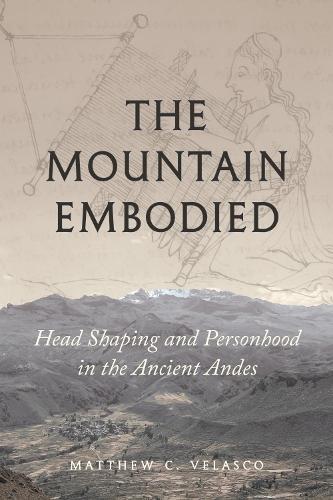
A study of the ancient practice of Andean head shaping and its cultural connotations. In the late sixteenth century, Spanish conquerors in Peru’s Colca Valley encountered the Collaguas and Cavanas, Indigenous people who undertook a striking form of body modification: Collaguas bound the heads of infants and children so that their skulls grew narrow and elongated, and Cavanas so that their skulls became wide and squat. Head shaping resulted in craniums that resembled two specific mountains associated with the groups. For Europeans, shaped skulls immediately and durably became a marker of territorialized ethnic difference. The Mountain Embodied offers a more nuanced story. Having studied hundreds of samples of human remains, bioarchaeologist Matthew Velasco argues that reducing head shape to a mere ethnic marker is a colonial invention. Instead, the social significance of head shaping was protean and intersected with other structures of difference, such as gender, kinship, and status, influencing experience within the community. Head shaping, then, was one factor in the construction of a locally embedded kind of subjectivity. An outsider could deduce group identity from head shape, but for practitioners, head shaping reflected something else: nothing less than personhood itself.
Full Product Details
Author: Matthew C. Velasco
Publisher: University of Texas Press
Imprint: University of Texas Press
Dimensions:
Width: 15.20cm
, Height: 3.00cm
, Length: 22.90cm
Weight: 0.567kg
ISBN: 9781477331514
ISBN 10: 1477331514
Pages: 264
Publication Date: 15 July 2025
Audience:
Professional and scholarly
,
College/higher education
,
Professional & Vocational
,
Postgraduate, Research & Scholarly
Format: Hardback
Publisher's Status: Active
Availability: Out of stock

The supplier is temporarily out of stock of this item. It will be ordered for you on backorder and shipped when it becomes available.
Reviews
Rather than simply reducing head shaping to a typological category or effect of ethnicity, The Mountain Embodied contemplates this bodily practice’s connection to social processes, landscapes, political powers, and sacred worldviews. This is an extensively researched and highly interesting read. While Velasco focuses on the prehispanic Colca Valley of Perú, his bioarchaeological case study provides an instructive model for the investigation of communities from other cultures and historic periods. -- Pamela L. Geller, University of Miami, author of Theorizing Bioarcheology Velasco weaves together an astonishing range of evidentiary threads from the bodies and tombs of the late pre-Columbian Colca Valley, interpreting them through an Andean ontology of personhood and groups. His study complicates the truism that Andean cranial modification was an ethnic marker, showing how multi-layered social identities were formed over time through the intentional shaping of children’s heads, diverse experiences of feeding, violence and movement, and the postmortem care of the dead body. This groundbreaking, beautifully written book sets a high bar for what bioarchaeology can be. -- Elizabeth N. Arkush, University of Pittsburgh, author of War, Spectacle, and Politics in the Ancient Andes
Author Information
Matthew C. Velasco is an assistant professor of anthropology and codirector of the Human and Animal Bone Laboratory at Cornell University.