Overview
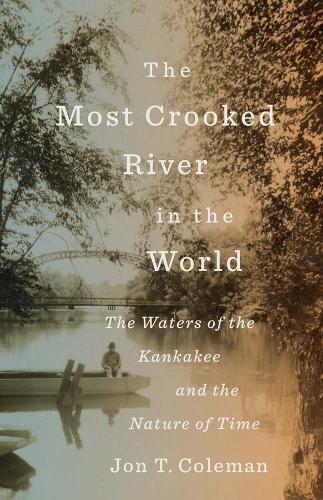
An imaginative history of the Kankakee River, told in reverse chronological order, that examines the ecological losses caused as people transformed the river and its wetlands The Kankakee River, whose waters gathered west of present-day South Bend, Indiana, and meandered through the loose sediment left by Pleistocene glaciers, used to drain one of the largest wetlands in North America. In its prime, it had hundreds of bends and spilled everywhere, generating hundreds of thousands of acres of permanent and semipermanent marshes brimming with life. This landscape amazed, entertained, and fed human beings for centuries until a small group of reformers usurped the waters and drained them in a matter of decades. By 1917, steam dredges had cut through the bends of the river; ditches and underground drain tiles emptied the marshes. A fascinating and vibrant place was thus transformed into a monotonous and forgettable one. Jon T. Coleman travels backward through time to recover the grandeur of the Kankakee River and its wetlands, asking why American settlers would dismantle an environment in which they delighted. Starting in the present, Coleman unwinds the history of the Kankakee, offering a wide-ranging and imaginative look at what was lost when the Kankakee was transformed, in a narrative that challenges our ideas about time and inevitability.
Reviews
“Although there are other explorations of riparian and wetland change, Jon Coleman's unique reverse chronological perspective is original and compelling.”— Nancy Langston, author of Sustaining Lake Superior and Distinguished Professor Emerita, Michigan Tech University “A landmark contribution in environmental history.”— Emily O'Gorman, author of Wetlands in a Dry Land “Remarkably creative in exposition and analysis, Jon Coleman's authoritative and thoroughly elegaic account moves seamlessly among energy, space, and time.”— Frederick Rowe Davis, author of Banned: A History of Pesticides and the Science of Toxicology
“Although there are other explorations of riparian and wetland change, Jon T. Coleman’s unique reverse chronological perspective is original and compelling.”—Nancy Langston, author of Sustaining Lake Superior: An Extraordinary Lake in a Changing World and Distinguished Professor Emerita, Michigan Tech University “A landmark contribution in environmental history.”—Emily O’Gorman, author of Wetlands in a Dry Land: More-Than-Human Histories of Australia’s Murray-Darling Basin “Most historians start their stories in the past and walk us toward the present. Jon T. Coleman departs from this itinerary, starting in the present and taking us backward through time to the wonderland of a river long since ditched, diverted, and drained beyond recognition. Along this circuitous route, The Most Crooked River in the World invites us to reimagine the past without nostalgia and to contemplate the liberatory possibilities of a future unbound to progress. A tour de force of environmental history.”—Louis S. Warren, W. Turrentine Jackson Distinguished Professor of Western U.S. History, University of California, Davis “Remarkably creative in exposition and analysis, Jon T. Coleman’s authoritative and thoroughly elegaic account moves seamlessly among energy, space, and time.”—Frederick Rowe Davis, author of Banned: A History of Pesticides and the Science of Toxicology
Author Information
Jon T. Coleman is Andrew V. Tackes College Professor of History at the University of Notre Dame. He is the author of several books, including Nature Shock: Getting Lost in America. He lives in South Bend, IN.