Overview
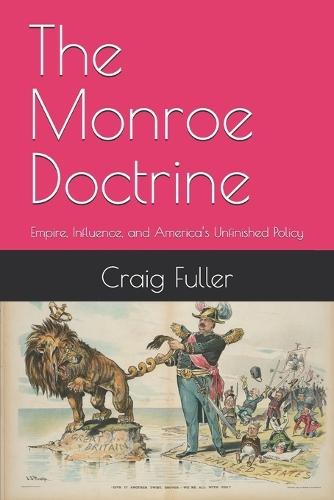
In 1823, a young and audacious United States delivered a deceptively simple message to the great powers of Europe: the Western Hemisphere was no longer open for colonization or intervention. This bold declaration, which would become known as the Monroe Doctrine, drew a line down the middle of the Atlantic, creating two distinct spheres of influence and setting the stage for two centuries of American foreign policy. This book traces the remarkable life of this foundational policy, from its audacious origins in an age of fledgling republics and mighty empires to its complex and contested role in the twenty-first century. The story of the Monroe Doctrine is one of extraordinary elasticity, revealing how a principle conceived as a protective shield was repeatedly reshaped to serve America's changing ambitions. Explore how the doctrine was used to justify the nation's westward expansion under the banner of Manifest Destiny and how it was fundamentally inverted by Theodore Roosevelt's ""Big Stick"" corollary. This dramatic reinterpretation transformed the doctrine from a warning to Europe to stay out into a license for the United States to step in, ushering in an era of military interventions and financial control in the Caribbean and Central America that would leave a deep and lasting legacy of resentment. As the world plunged into global conflict, the doctrine was adapted once again. During World War II, it became the foundation for a policy of collective hemispheric defense against the Axis powers. In the decades that followed, it was repurposed as a primary weapon in the Cold War, providing the rationale for covert action against governments deemed susceptible to Soviet influence, from the CIA-backed coup in Guatemala to the terrifying nuclear brinkmanship of the Cuban Missile Crisis. The fight against communism gave the old doctrine a new and fearsome purpose, recasting it as a tool for ideological containment in America's ""backyard."" With the end of the Cold War, the Monroe Doctrine seemed destined for the archives, a relic in search of a purpose. Yet, this book reveals how it has been reawakened in the twenty-first century to confront a new set of challenges. The rise of new global actors, particularly the economic and political expansion of China and a resurgent Russia into Latin America, has prompted a modern reassertion of the doctrine. Uncover how this two-hundred-year-old policy continues to shape contemporary events, from the use of economic sanctions against the ""Troika of Tyranny"" in Cuba, Nicaragua, and Venezuela, to the new great power competition that defines the geopolitical landscape of the Americas today.
Full Product Details
Author: Craig Fuller
Publisher: Independently Published
Imprint: Independently Published
Dimensions:
Width: 15.20cm
, Height: 0.90cm
, Length: 22.90cm
Weight: 0.240kg
ISBN: 9798245614717
Pages: 174
Publication Date: 25 January 2026
Audience:
General/trade
,
General
Format: Paperback
Publisher's Status: Active
Availability: Available To Order

We have confirmation that this item is in stock with the supplier. It will be ordered in for you and dispatched immediately.