Overview
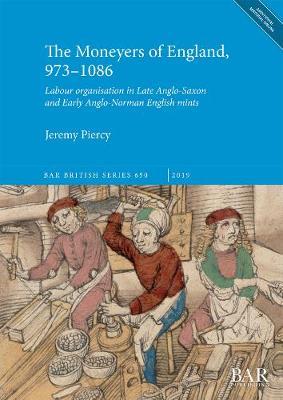
The book examines the moneyers, those men responsible for minting the king's coinage, within developing urban society in England during the tenth and eleventh centuries to address both their status and whether the internal workplace organisation of the mints might reflect the complexity of an Anglo-Saxon 'state'. In reviewing the minting operation of late Anglo-Saxon England, and the men in charge of those mints, a better picture of the social history of pre-Conquest England is realised. These men were likely part of the thegnly or burgess class and how they organised themselves might reflect broader trends in how those outside of the aristocracy acted in response to royal directives. The book outlines a new and innovative method of analysing the organisation of labour in Medieval England. These new techniques and methodologies provide support for a previously unknown level of complexity in English minting. Accompanying the book are several digital downloads, including the Moneyers of England Database, 973-1086, consisting of information on 3,646 periods of moneyer activity derived from 28,576 individual coins produced at ninety-nine geographic locations.
Full Product Details
Author: Jeremy Piercy
Publisher: BAR Publishing
Imprint: BAR Publishing
Weight: 0.945kg
ISBN: 9781407353746
ISBN 10: 1407353748
Pages: 380
Publication Date: 30 August 2019
Audience:
Professional and scholarly
,
Professional & Vocational
Format: Mixed media product
Publisher's Status: Active
Availability: Available To Order

We have confirmation that this item is in stock with the supplier. It will be ordered in for you and dispatched immediately.
Reviews
'This is an original piece of work which takes the study of late Anglo-Saxon moneyers to a new level.' Prof. J.L. Bolton, Queen Mary University of London 'There are many discussions of moneyers and their part in the coinage, but this is by far the most sustained and important treatment of the topic in over thirty years, since E. A. Freeman's study of moneyers under Edward the Confessor in the 1980s.' Dr. Rory Naismith, King's College London 'To my knowledge there are no existing works that catalogue and examine the moneyers of late Anglo-Saxon England as a group. This work not only furthers our understanding of late Anglo-Saxon mints and the activities of the moneyers, but it will also prepare the ground for future studies on moneyers, coinage and the economy. . This work will be of interest to historians and numismatists working on late Anglo-Saxon England as well as other parts of the early medieval world. In particular, it makes information about moneyers and mints accessible to those outside the field of numismatics.' Dr Chelsea Shields-Mas, SUNY
Author Information
Jeremy Piercy completed his PhD in History at the University of Edinburgh in 2018. His research is in medieval social and economic history with concentrations in Anglo-Saxon and Viking cultures. His work addresses the intersection of history, linguistics, numismatics, and material culture.