|
|
|||
|
||||
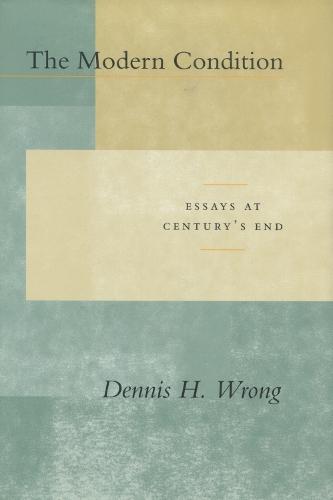
OverviewIn this collection, a leading sociologist brings his distinctive method of social criticism to bear on some of the most significant ideas, political and social events, and thinkers of the late twentieth century. Of the seventeen essays, two are published for the first time, and several of the previously published essays have been expanded and updated for this volume. In the first section, the author critiques several concepts that have figured prominently in political-ideological controversies capitalism, rationality, totalitarianism, power, alienation, left and right, and cultural relativism/multiculturalism. He considers their origins, historical shifts in their meaning and the myths surrounding them, and their subtle resonance beyond their formal definitions. Full Product DetailsAuthor: Dennis H. WrongPublisher: Stanford University Press Imprint: Stanford University Press Edition: New edition Dimensions: Width: 12.70cm , Height: 1.50cm , Length: 20.30cm Weight: 0.308kg ISBN: 9780804732413ISBN 10: 0804732418 Pages: 264 Publication Date: 01 March 1998 Audience: College/higher education , Professional and scholarly , Undergraduate , Postgraduate, Research & Scholarly Format: Paperback Publisher's Status: Active Availability: In Print This item will be ordered in for you from one of our suppliers. Upon receipt, we will promptly dispatch it out to you. For in store availability, please contact us. Table of ContentsReviewsFor almost fifty years, Wrong may well have been the single most consistent voice for good sense and moderation in both the fevered circles of the New York intelligentsia and the discipline of sociology. He brings to his analyses a unique combination of historical perspective and a temperamental inclination to cut through the hype. As a result, whether he is reconsidering past events or arguments (McCarthyism, Hannah Arendt's characterization of totalitarianism, David Riesman's The Lonely Crowd) or assessing current events and fads (rational choice theory, postmodernism, Allan Bloom's lament about the state of the 'American Mind'), Wrong invariably ends up providing a new, balanced perspective where none existed before. --Axel van den Berg, McGill University Author InformationTab Content 6Author Website:Countries AvailableAll regions |
||||