Overview
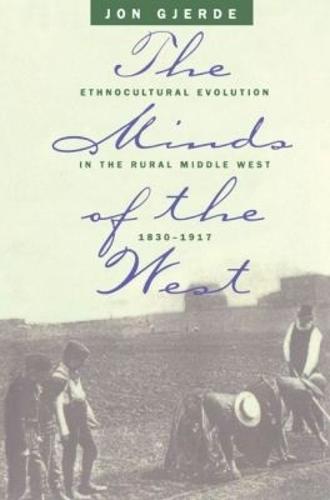
In the century preceding World War I, the American Middle West drew thousands of migrants both from Europe and from the northeastern United States. In the American mind, the region represented a place where social differences could be muted and a distinctly American culture created. Many of the European groups, however, viewed the Midwest as an area of opportunity because it allowed them to retain cultural and religious traditions from their homelands. Jon Gjerde examines the cultural patterns, or """"minds,"""" that those settling the Middle West carried with them. He argues that such cultural transplantation could occur because patterns of migration tended to reunite people of similar pasts and because the rural Midwest was a vast region where cultural groups could sequester themselves in tight-knit settlements built around familial and community institutions. Gjerde compares patterns of development and acculturation across immigrant groups, exploring the frictions and fissures experienced within and between communities. Finally, he examines the means by which individual ethnic groups built themselves a representative voice, joining the political and social debate on both a regional and national level. |A social history of the Middle West, as it evolved from a patchwork of isolated immigrant cultures into a region of coalesced ethnic groups within a pluralist American society. (Please see cloth edition, published 3/97.)
Full Product Details
Author: Jon Gjerde
Publisher: The University of North Carolina Press
Imprint: The University of North Carolina Press
Edition: New edition
Dimensions:
Width: 15.60cm
, Height: 2.70cm
, Length: 23.50cm
Weight: 0.666kg
ISBN: 9780807848074
ISBN 10: 0807848077
Pages: 442
Publication Date: 28 February 1999
Audience:
College/higher education
,
Professional and scholarly
,
Undergraduate
,
Postgraduate, Research & Scholarly
Format: Paperback
Publisher's Status: Active
Availability: Awaiting stock

The supplier is currently out of stock of this item. It will be ordered for you and placed on backorder. Once it does come back in stock, we will ship it out for you.
Reviews
This book will be essential for anyone studying the Middle West and American social, cultural, and intellectual history.<p> American Anthropologist
This book will be essential for anyone studying the Middle West and American social, cultural, and intellectual history. American Anthropologist This is a valuable contribution to ethnic, social, and regional history and should receive a wide audience. Western Historical Quarterly Its lens gives a more complicated, more interesting West and nation. Southwestern Historical Quarterly Surely Ythis is among the very best studies of ethnicity we have. Reviews in American History It is, in many ways, ground-breaking. Rural History This book will be essential for anyone studying the Middle West and American social, cultural, and intellectual history. American Anthropologist This is a valuable contribution to ethnic, social, and regional history and should receive a wide audience. Western Historical Quarterly Its lens gives a more complicated, more interesting West and nation. Southwestern Historical Quarterly Surely [this is] among the very best studies of ethnicity we have. Reviews in American History It is, in many ways, ground-breaking. Rural History
This book will be essential for anyone studying the Middle West and American social, cultural, and intellectual history. American Anthropologist
Author Information
Jon Gjerde, author of the award-winning From Peasants to Farmers, is professor of history at the University of California, Berkeley.