Overview
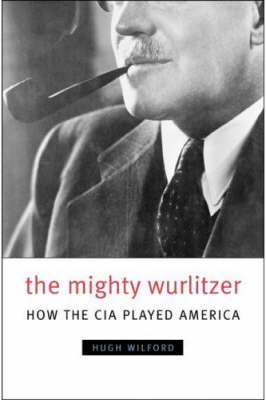
In 1967, the magazine Ramparts ran an expose revealing that the Central Intelligence Agency had been secretly funding and managing a wide range of citizen front groups intended to counter communist influence around the world. In addition to embarrassing prominent individuals caught up, wittingly or unwittingly, in the secret superpower struggle for hearts and minds, the revelations of 1967 were one of the worst operational disasters in the history of American intelligence and presaged a series of public scandals from which the CIA's reputation has arguably never recovered.CIA official Frank Wisner called the operation his ""mighty Wurlitzer,"" on which he could play any propaganda tune. In this illuminating book, Hugh Wilford provides the first comprehensive account of the clandestine relationship between the CIA and its front organizations. Using an unprecedented wealth of sources, he traces the rise and fall of America's Cold War front network from its origins in the 1940s to its Third World expansion during the 1950s and ultimate collapse in the 1960s.Covering the intelligence officers who masterminded the CIA's fronts as well as the involved citizen groups - emigres, labour, intellectuals, artists, students, women, Catholics, African Americans, and journalists - Wilford provides a surprising analysis of Cold War society that contains valuable lessons for our own age of global conflict.
Full Product Details
Author: Hugh Wilford
Publisher: Harvard University Press
Imprint: Harvard University Press
Dimensions:
Width: 16.90cm
, Height: 3.20cm
, Length: 24.20cm
Weight: 0.738kg
ISBN: 9780674026810
ISBN 10: 0674026810
Pages: 294
Publication Date: 01 January 2008
Audience:
Professional and scholarly
,
Professional & Vocational
Format: Hardback
Publisher's Status: Out of Print
Availability: Out of stock

Reviews
The title of Wilford's engaging book comes from CIA official Frank Wisner's comment that his operation was a mighty Wurlitzer organ on which he could play any propaganda tune. Wilford traces the history of how the CIA funded and employed front groups in its contest against the Soviet Union from the inception of George Kennan's Office of Policy Coordination under Wisner in 1949 as the prime instrument of psychological political warfare through the exposure of these clandestine activities by the radical muckraking Ramparts magazine in 1967. The book discusses the colorful characters that designed, created, and implemented the various programs, and the different venues targeted and used--including the postwar emigre community, labor organizations, journalists, intellectuals, artists and others of the cultural front, student organizations, women, blacks, Catholics, and others. The expense in dollars was considerable, but the author also considers the costs to democracy, the nation's reputation, and individual lives far too great a price to bear. -- J. P. Dunn Choice (09/01/2008)
By turns hilarious and horrifying, the story of the CIA's attempts to disseminate anticommunist propaganda through a variety of front organizations.Since the agency's inception in 1947, writes Wilford (History/California State Univ., Long Beach), its leaders envied communist-front organizations that (they believed) accepted KGB money, slavishly carried out its wishes and won hearts and minds throughout the world. To counteract this, the CIA began funneling funds to students, unions, women's groups, political parties, governments-in-exile, arts organizations and anticommunist left-wing periodicals. Readers' jaws will drop at the Who's Who of prominent Americans who took the agency's money: Richard Wright, Gloria Steinem, a young Henry Kissinger, AFL president George Meany and the UAW's Reuther brothers, among many others. Until the mid-1960s, if an international gathering of students, women, writers, blacks or journalists took place, the CIA probably footed the bill for the American delegation. This was not viewed as hypocritical in the way it would be today, argues Wilford, whose previous scholarly publications have also dealt with the complex relationships between government agencies and private organizations. Members of the cash-strapped avant-garde and activist groups funded by the CIA were usually idealists with admirable goals. More liberal than most government departments, the agency refused McCarthy's demand to fire ex-communists and homosexuals, and the beneficiaries of its largesse often ignored the suggestions that accompanied it. Amusing passages describe CIA fronts feuding with other CIA fronts and activists on CIA expense accounts who traveled the world denouncing U.S. policies. Everything unraveled in 1967, after a series of exposes sparked by a Ramparts magazine article converted chronic rumors into headlines and Congressional investigations. Those who accepted CIA money had always worried that revelation of this link would convert their good work into a public-relations catastrophe, and that is precisely what happened. Everyone now agrees it was a bad idea from the start.Unlike Tim Weiner's brilliant Legacy of Ashes, whose litany of disastrous covert operations makes for painful reading, this superb account will provide CIA aficionados with some welcome comic relief. (Kirkus Reviews)
Author Information
Hugh Wilford is Associate Professor of History at California State University, Long Beach.