Awards
- Nominated for Bancroft Prize 2009
- Nominated for Lawrence W. Levine Award 2009
- Nominated for Mark Lynton History Prize 2009
- Nominated for Merle Curti Award 2009
Overview
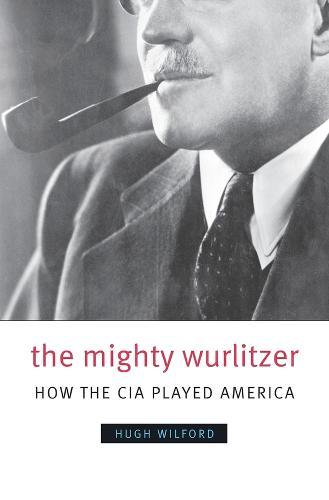
In 1967 the magazine Ramparts ran an exposé revealing that the Central Intelligence Agency had been secretly funding and managing a wide range of citizen front groups intended to counter communist influence around the world. In addition to embarrassing prominent individuals caught up, wittingly or unwittingly, in the secret superpower struggle for hearts and minds, the revelations of 1967 were one of the worst operational disasters in the history of American intelligence and presaged a series of public scandals from which the CIA's reputation has arguably never recovered. CIA official Frank Wisner called the operation his ""mighty Wurlitzer,"" on which he could play any propaganda tune. In this illuminating book, Hugh Wilford provides the first comprehensive account of the clandestine relationship between the CIA and its front organizations. Using an unprecedented wealth of sources, he traces the rise and fall of America's Cold War front network from its origins in the 1940s to its Third World expansion during the 1950s and ultimate collapse in the 1960s. Covering the intelligence officers who masterminded the CIA's fronts as well as the involved citizen groups--émigrés, labor, intellectuals, artists, students, women, Catholics, African Americans, and journalists--Wilford provides a surprising analysis of Cold War society that contains valuable lessons for our own age of global conflict.
Full Product Details
Author: Hugh Wilford
Publisher: Harvard University Press
Imprint: Harvard University Press
Dimensions:
Width: 14.40cm
, Height: 2.50cm
, Length: 22.90cm
Weight: 0.544kg
ISBN: 9780674032569
ISBN 10: 067403256
Pages: 384
Publication Date: 01 May 2009
Audience:
General/trade
,
Adult education
,
General
,
Further / Higher Education
Format: Paperback
Publisher's Status: Active
Availability: Out of stock

The supplier is temporarily out of stock of this item. It will be ordered for you on backorder and shipped when it becomes available.
Reviews
No one has written a more comprehensive or sophisticated account of the pro-American fronts from their creation in the late 1940s to the investigative report 20 years later in Ramparts magazine that first exposed the CIA's cultural offensive and left people such as [Gloria] Steinem with a bit of explaining to do. - Michael Kazin, Washington Post Book World There were indeed fronts directly established by the C.I.A. for a particular goal, and the story Wilford tells of them in The Mighty Wurlitzer is fascinating, involving a surprising collection of well-known figures in American life... Wilford has mastered an enormously complex tale in almost every detail. - Nathan Glazer, New York Times Book Review
By turns hilarious and horrifying, the story of the CIA's attempts to disseminate anticommunist propaganda through a variety of front organizations...This superb account will provide CIA aficionados with some welcome comic relief. Kirkus Reviews 20071001 Hugh Wilford has unearthed from archives the myriad links between the CIA and various citizen front groups attempting to counter communist influence in The Mighty Wurlitzer: How the CIA Played America. Coming forty years after the magazine Ramparts exposed the CIA propaganda program, this book is sure to be relevant to our own era of ""hearts and minds"" campaigning. Bookforum 20071201 [An] elegantly written, diligently researched examination of the CIA's glory days...The fronts that Wisner built were more errors than terrors, shrill tunes on that tin whistle--which Hugh Wilford plays with sentient skill. -- Peter Preston The Observer 20080203 [A] brisk yet thorough narrative...No one has written a more comprehensive or sophisticated account of the pro-American fronts from their creation in the late 1940s to the investigative report 20 years later in Ramparts magazine that first exposed the CIA's cultural offensive and left people such as [Gloria] Steinem with a bit of explaining to do. -- Michael Kazin Washington Post Book World 20080127 Hugh Wilford has given us the first comprehensive and thorough report of how the CIA--modeling its policies on the Comintern's creation of Communist front groups--created their own fronts, with recipients who included not only the white male writers and artists who made up much of the postwar cultural establishment, but women, African-Americans, students, the labor movement, Catholics, and journalists. Mr. Wilford undermines rather than bolsters the boast made by CIA man Frank Wisner, who called his agency a ""Mighty Wurlitzer,"" a mass of information and intelligence capable of playing the tunes the rest of the world would dance to. The old view, that the Agency was composed of ""puppet masters"" and that its recipients were simple marionettes, is not only inaccurate, but highly misleading. Mr. Wilford carefully shows that in almost all the cases, those funded understood the high stakes of the Cold War with the Soviets. Rather than following CIA orders, most used whatever funds they received to carry on the work they had already started, and often discarded the advice of the Agency handlers...[A] first-rate book. It is doubtful whether another survey of this subject will ever be necessary. One can differ with his own conclusion that covert funding ""stained the reputation"" of America and still find the book of immeasurable merit. -- Ronald Radosh New York Sun 20080206 Remarkably detailed and researched...There were indeed fronts directly established by the C.I.A. for a particular goal, and the story Wilford tells of them in The Mighty Wurlitzer is fascinating, involving a surprising collection of well-known figures in American life...There is a great deal to be learned from this book. Wilford has consulted an astonishing number of scholarly and popular accounts, along with the papers and records of some of the central participants and organizations. He's done a remarkable job of research...Wilford has mastered an enormously complex tale in almost every detail. -- Nathan Glazer New York Times Book Review 20080120 [A] superb new account of the underground combat in ideas and checkbooks that unfolded in the 1950s and early '60s...One important insight Wilford brings to this history is that it wasn't necessarily ignoble to promote American values in the face of a menacing communist alternative in those two decades. -- Charles Trueheart Bloomberg.com 20080222 Wilford provides a comprehensive account of the clandestine relationship between the CIA and its front organizations, tracing the rise and fall of America's front network from its origins in the 1940s to its collapse in the 1960s. Times Higher Education Supplement 20080228 The term ""Mighty Wurlitzer"" was coined by CIA agent Frank Wisner to describe the network of small organizations and magazines that the agency used to propagate its message during the Cold War. With meticulous research Hugh Wilford has unpicked the seams of CIA cultural influence, revealing a surprisingly complex picture of divided loyalties and tangled motives. London Review of Books 20080306 An astonishing account of the CIA's front operations in the United States during the Cold War. -- Will Podmore Tribune Magazine 20080411 In framing my review or observations, I would like to ask Frank Wisner what he thinks of this book. My feeling is that he would give it a High Pass...Mr. Wilford's index is tantalizing. It invites our interest and suggests that if we spend the time to decode it, we might deduce the substance and flair undertaken in his research and the breadth of his own investigative skill...Mr. Wilford writes clearly and without the inbred pomposity of so many popular historians and journalists. -- Dan Pinck ossreborn.com 20080411 Fascinating...The book represents a sophisticated integration of intelligence history with social and cultural history. Above all it is very well written; it engages the reader from the outset through clandestine operations to the heights of culture and celebrity. -- David Ryan International Affairs 20080701 The title of Wilford's engaging book comes from CIA official Frank Wisner's comment that his operation was a ""mighty Wurlitzer"" organ on which he could play any propaganda tune. Wilford traces the history of how the CIA funded and employed front groups in its contest against the Soviet Union from the inception of George Kennan's Office of Policy Coordination under Wisner in 1949 as the prime instrument of psychological political warfare through the exposure of these clandestine activities by the radical muckraking Ramparts magazine in 1967. The book discusses the colorful characters that designed, created, and implemented the various programs, and the different venues targeted and used--including the postwar emigre community, labor organizations, journalists, intellectuals, artists and others of the cultural front, student organizations, women, blacks, Catholics, and others. The expense in dollars was considerable, but the author also considers the costs to democracy, the nation's reputation, and individual lives far too great a price to bear. -- J. P. Dunn Choice 20080901 In contrast to most previous discussions of the CIA's front-group operations, which have tended to concentrate narrowly on culture and the arts, The Mighty Wurlitzer covers a much wider range of activities. Wilford is especially good, for example, on the agency's dealings with sympathetic American journalists like the political columnist Joseph Alsop and Arthur Hays Sulzberger, who served as publisher of the New York Times from 1935 to 1961. -- Terry Teachout Commentary 20080301
"By turns hilarious and horrifying, the story of the CIA's attempts to disseminate anticommunist propaganda through a variety of front organizations...This superb account will provide CIA aficionados with some welcome comic relief. Kirkus Reviews 20071001 Hugh Wilford has unearthed from archives the myriad links between the CIA and various citizen front groups attempting to counter communist influence in The Mighty Wurlitzer: How the CIA Played America. Coming forty years after the magazine Ramparts exposed the CIA propaganda program, this book is sure to be relevant to our own era of ""hearts and minds"" campaigning. Bookforum 20071201 [An] elegantly written, diligently researched examination of the CIA's glory days...The fronts that Wisner built were more errors than terrors, shrill tunes on that tin whistle--which Hugh Wilford plays with sentient skill. -- Peter Preston The Observer 20080203 [A] brisk yet thorough narrative...No one has written a more comprehensive or sophisticated account of the pro-American fronts from their creation in the late 1940s to the investigative report 20 years later in Ramparts magazine that first exposed the CIA's cultural offensive and left people such as [Gloria] Steinem with a bit of explaining to do. -- Michael Kazin Washington Post Book World 20080127 Hugh Wilford has given us the first comprehensive and thorough report of how the CIA--modeling its policies on the Comintern's creation of Communist front groups--created their own fronts, with recipients who included not only the white male writers and artists who made up much of the postwar cultural establishment, but women, African-Americans, students, the labor movement, Catholics, and journalists. Mr. Wilford undermines rather than bolsters the boast made by CIA man Frank Wisner, who called his agency a ""Mighty Wurlitzer,"" a mass of information and intelligence capable of playing the tunes the rest of the world would dance to. The old view, that the Agency was composed of ""puppet masters"" and that its recipients were simple marionettes, is not only inaccurate, but highly misleading. Mr. Wilford carefully shows that in almost all the cases, those funded understood the high stakes of the Cold War with the Soviets. Rather than following CIA orders, most used whatever funds they received to carry on the work they had already started, and often discarded the advice of the Agency handlers...[A] first-rate book. It is doubtful whether another survey of this subject will ever be necessary. One can differ with his own conclusion that covert funding ""stained the reputation"" of America and still find the book of immeasurable merit. -- Ronald Radosh New York Sun 20080206 Remarkably detailed and researched...There were indeed fronts directly established by the C.I.A. for a particular goal, and the story Wilford tells of them in The Mighty Wurlitzer is fascinating, involving a surprising collection of well-known figures in American life...There is a great deal to be learned from this book. Wilford has consulted an astonishing number of scholarly and popular accounts, along with the papers and records of some of the central participants and organizations. He's done a remarkable job of research...Wilford has mastered an enormously complex tale in almost every detail. -- Nathan Glazer New York Times Book Review 20080120 [A] superb new account of the underground combat in ideas and checkbooks that unfolded in the 1950s and early '60s...One important insight Wilford brings to this history is that it wasn't necessarily ignoble to promote American values in the face of a menacing communist alternative in those two decades. -- Charles Trueheart Bloomberg.com 20080222 Wilford provides a comprehensive account of the clandestine relationship between the CIA and its front organizations, tracing the rise and fall of America's front network from its origins in the 1940s to its collapse in the 1960s. Times Higher Education Supplement 20080228 The term ""Mighty Wurlitzer"" was coined by CIA agent Frank Wisner to describe the network of small organizations and magazines that the agency used to propagate its message during the Cold War. With meticulous research Hugh Wilford has unpicked the seams of CIA cultural influence, revealing a surprisingly complex picture of divided loyalties and tangled motives. London Review of Books 20080306 An astonishing account of the CIA's front operations in the United States during the Cold War. -- Will Podmore Tribune Magazine 20080411 In framing my review or observations, I would like to ask Frank Wisner what he thinks of this book. My feeling is that he would give it a High Pass...Mr. Wilford's index is tantalizing. It invites our interest and suggests that if we spend the time to decode it, we might deduce the substance and flair undertaken in his research and the breadth of his own investigative skill...Mr. Wilford writes clearly and without the inbred pomposity of so many popular historians and journalists. -- Dan Pinck ossreborn.com 20080411 Fascinating...The book represents a sophisticated integration of intelligence history with social and cultural history. Above all it is very well written; it engages the reader from the outset through clandestine operations to the heights of culture and celebrity. -- David Ryan International Affairs 20080701 The title of Wilford's engaging book comes from CIA official Frank Wisner's comment that his operation was a ""mighty Wurlitzer"" organ on which he could play any propaganda tune. Wilford traces the history of how the CIA funded and employed front groups in its contest against the Soviet Union from the inception of George Kennan's Office of Policy Coordination under Wisner in 1949 as the prime instrument of psychological political warfare through the exposure of these clandestine activities by the radical muckraking Ramparts magazine in 1967. The book discusses the colorful characters that designed, created, and implemented the various programs, and the different venues targeted and used--including the postwar emigre community, labor organizations, journalists, intellectuals, artists and others of the cultural front, student organizations, women, blacks, Catholics, and others. The expense in dollars was considerable, but the author also considers the costs to democracy, the nation's reputation, and individual lives far too great a price to bear. -- J. P. Dunn Choice 20080901 In contrast to most previous discussions of the CIA's front-group operations, which have tended to concentrate narrowly on culture and the arts, The Mighty Wurlitzer covers a much wider range of activities. Wilford is especially good, for example, on the agency's dealings with sympathetic American journalists like the political columnist Joseph Alsop and Arthur Hays Sulzberger, who served as publisher of the New York Times from 1935 to 1961. -- Terry Teachout Commentary 20080301"
Author Information
Hugh Wilford is Associate Professor of History at California State University, Long Beach.