Overview
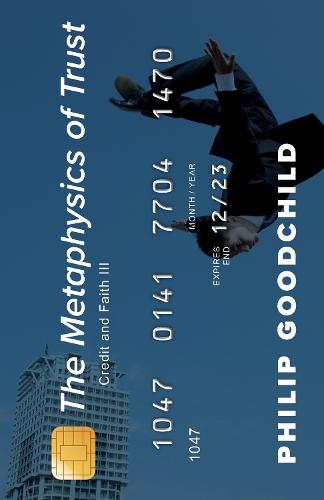
Following Credit and Faith and Economic Theology, this third volume in the series develops a metaphysics which is missing when trust is ordered around economic theories and institutions. Human existence may be conceived according to its temporal dimensions of appropriation, participation, and offering. Engaging with the Western philosophical tradition from the Neo-Pythagoreans and Plato to Heidegger and Arendt, drawing especially from Augustine and Weil, Goodchild offers striking reconstructions of the meanings of economic, political and religious dimensions of life. The outcome is an elaboration of conceptions of wealth, power, contingency, necessity and grace which give a new orientation to human life and endeavour. Goodchild situates this discussion within the current historical era of the breakdown of global financial capitalism. He draws from the Financial Revolution in England as a time of crisis which illuminates our own. Faced with a range of global crises, Goodchild proposes an alternative between strategies for survival: either submission before a Great Machine of Credit as an autonomous, unthinking system for regulating human behaviour or accession to the necessity of grace as a way of empowering the pursuit of wealth, justice and thought.
Full Product Details
Author: Philip Goodchild
Publisher: Bloomsbury Publishing PLC
Imprint: Rowman & Littlefield International
Dimensions:
Width: 16.00cm
, Height: 2.60cm
, Length: 22.80cm
Weight: 0.535kg
ISBN: 9781786614292
ISBN 10: 1786614294
Pages: 240
Publication Date: 29 June 2021
Audience:
Professional and scholarly
,
Professional & Vocational
Format: Hardback
Publisher's Status: Active
Availability: Manufactured on demand

We will order this item for you from a manufactured on demand supplier.
Reviews
Philip Goodchild’s work has long been recognised as the epitome of a creative thinking that flouts all disciplinary ghettos—and The Metaphysics of Trust is no exception. Through a heady combination of the critical, the speculative and the poetic, Goodchild here completes his longstanding project of displacing Western metaphysics by way of a thoughtful attention to trust. -- Daniel Whistler, reader in modern european philosophy, Royal Holloway, University of London His groundbreaking work Theology of Money established Philip Goodchild among the foremost theoreticians of the religion of capitalism. In this analysis of the slippery and yet indispensable concept of trust, at once grounded in the classics of the biblical and Western traditions and close to life, Goodchild reimagines philosophy of religion as a critical discipline and a way of life. -- Adam Kotsko, Shimer Great Books School, North Central College In this monumental conclusion to his magisterial trilogy, Philip Goodchild passes from the critique of economic theology to the construction of a metaphysical economics, one that reveals modernity and its nihilistic economics of necessity, grounded in mistrust, as the chimera of that which is never necessary but always potent: trust itself. Thus Goodhcild offers a compelling pragmatic metaphysics in lieu of the false immediacies of economic rationality, reintroducing the unlimited, the immeasurable, and the interminable into the heart of thought and life. -- Joshua Ramey, Visiting Assistant Professor of Peace, Justice, and Human Rights, Haverford College, USA
In this monumental conclusion to his magisterial trilogy, Philip Goodchild passes from the critique of economic theology to the construction of a metaphysical economics, one that reveals modernity and its nihilistic economics of necessity, grounded in mistrust, as the chimera of that which is never necessary but always potent: trust itself. Thus Goodhcild offers a compelling pragmatic metaphysics in lieu of the false immediacies of economic rationality, reintroducing the unlimited, the immeasurable, and the interminable into the heart of thought and life.--Joshua Ramey, Visiting Assistant Professor of Peace, Justice, and Human Rights, Haverford College, USA His groundbreaking work Theology of Money established Philip Goodchild among the foremost theoreticians of the religion of capitalism. In this analysis of the slippery and yet indispensable concept of trust, at once grounded in the classics of the biblical and Western traditions and close to life, Goodchild reimagines philosophy of religion as a critical discipline and a way of life.--Adam Kotsko, Shimer Great Books School, North Central College Philip Goodchild's work has long been recognised as the epitome of a creative thinking that flouts all disciplinary ghettos--and The Metaphysics of Trust is no exception. Through a heady combination of the critical, the speculative and the poetic, Goodchild here completes his longstanding project of displacing Western metaphysics by way of a thoughtful attention to trust.--Daniel Whistler, reader in modern european philosophy, Royal Holloway, University of London
His groundbreaking work Theology of Money established Philip Goodchild among the foremost theoreticians of the religion of capitalism. In this analysis of the slippery and yet indispensable concept of trust, at once grounded in the classics of the biblical and Western traditions and close to life, Goodchild reimagines philosophy of religion as a critical discipline and a way of life.--Adam Kotsko, Shimer Great Books School, North Central College Philip Goodchild's work has long been recognised as the epitome of a creative thinking that flouts all disciplinary ghettos--and The Metaphysics of Trust is no exception. Through a heady combination of the critical, the speculative and the poetic, Goodchild here completes his longstanding project of displacing Western metaphysics by way of a thoughtful attention to trust.--Daniel Whistler, reader in modern european philosophy, Royal Holloway, University of London
Author Information
Philip Goodchild is professor of religion and philosophy at the University of Nottingham.