Overview
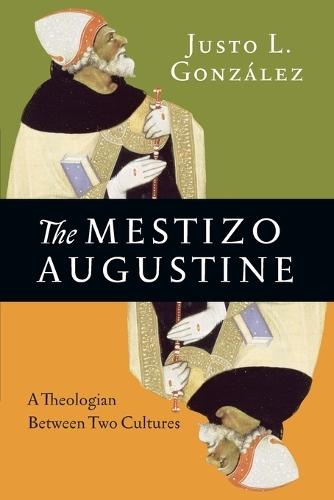
Few thinkers have been as influential as Augustine of Hippo. His writings, such as Confessions and City of God, have left an indelible mark on Western Christianity. He has become so synonymous with Christianity in the West that we easily forget he was a man of two cultures: African and Greco-Roman. The mixture of African Christianity and Greco-Roman rhetoric and philosophy gave his theology and ministry a unique potency in the cultural ferment of the late Roman empire.Augustine experienced what Latino/a theology calls mestizaje, which means being of a mixed background. Cuban American historian and theologian Justo González looks at the life and legacy of Augustine from the perspective of his own Latino heritage and finds in the bishop of Hippo a remarkable resource for the church today. The mestizo Augustine can serve as a lens by which to see afresh not only the history of Christianity but also our own culturally diverse world.
Full Product Details
Author: Justo L. González
Publisher: InterVarsity Press
Imprint: Inter-Varsity Press,US
Dimensions:
Width: 15.40cm
, Height: 1.20cm
, Length: 23.00cm
Weight: 0.257kg
ISBN: 9780830851508
ISBN 10: 083085150
Pages: 176
Publication Date: 01 November 2016
Audience:
Professional and scholarly
,
Professional & Vocational
Format: Paperback
Publisher's Status: Active
Availability: Available To Order

We have confirmation that this item is in stock with the supplier. It will be ordered in for you and dispatched immediately.
Reviews
I am deeply pleased to see the new book by Justo Gonzalez on Augustine, which places him rightly in the African context. The author's theme of the crosscultural intricacies of Augustine's life illumines many other issues Christians face today. It is an extremely readable book by a distinguished church historian. --Thomas C. Oden, emeritus professor, Drew University, executive director, Center for Early African Christianity, general editor of the Ancient Christian Commentary on Scripture
Gonzalez has a gift for understanding context and nuance, and the result is a vivid and sympathetic portrayal of Augustine and a person and thinker. --Mark Clavier, Journal of Reformed Theology, 2018 Gonzalez's historical analysis has a liberatory theological aim: to embolden his readers to recognize the depth of their own mestizaje and embrace it as the future. His volume, which builds on the work of Virgilio Elizondo and other Hispanic theologians, is a timely and necessary contribution to Augustinian studies, patristic studies, and church history. --Melanie Webb, Reading Religion, October 26, 2017
In a fresh, masterful, and highly readable way, Justo Gonzalez shows the ongoing relevance and importance of the multicultural St. Augustine engaging his own contexts from a place between and within cultures. Gonzalez provides new lenses for us to appreciate the mestizo Augustine as a resource for theology, ministry, and emerging ways of being church for our own contemporary multicultural, multiethnic, and globalized contexts in a racialized society. --Edwin David Aponte, executive director, Louisville Institute
In this delightful study of Augustine's life and intellectual legacy, Justo Gonzalez, a doyen of church historians in the Americas, demonstrates the rich fruit of a lifetime of scholarly research. If one were to ask, how could anything new be said about Augustine?, Gonzalez replies that it is the man's fundamental context that has so far been severely neglected. Augustine was a colonial author, well aware of his situation, poised in a tensile relation between the Numidian and Romano-Latin worlds, in an overextended empire that was coming to a crisis point in his own lifetime. This constitutes him, as Gonzalez persuasively argues, as fundamentally a mestizo theologian: a man fixed in a tension of perspectives, origins, and goals that formed the energized background of his mind and work. After too many generations that have pretended Augustine was a white European, it is refreshing to read this elegant study of one of the giants of the Western Christian tradition. --John A. McGuckin, Columbia University, New York I am deeply pleased to see the new book by Justo Gonzalez on Augustine, which places him rightly in the African context. The author's theme of the crosscultural intricacies of Augustine's life illumines many other issues Christians face today. It is an extremely readable book by a distinguished church historian. --Thomas C. Oden, emeritus professor, Drew University, executive director, Center for Early African Christianity, general editor of the Ancient Christian Commentary on Scripture In a fresh, masterful, and highly readable way, Justo Gonzalez shows the ongoing relevance and importance of the multicultural St. Augustine engaging his own contexts from a place between and within cultures. Gonzalez provides new lenses for us to appreciate the mestizo Augustine as a resource for theology, ministry, and emerging ways of being church for our own contemporary multicultural, multiethnic, and globalized contexts in a racialized society. --Edwin David Aponte, executive director, Louisville Institute
"""González has a gift for understanding context and nuance, and the result is a vivid and sympathetic portrayal of Augustine and a person and thinker."" --Mark Clavier, Journal of Reformed Theology, 2018 ""Gonzalez's historical analysis has a liberatory theological aim: to embolden his readers to recognize the depth of their own mestizaje and embrace it as the future. His volume, which builds on the work of Virgilio Elizondo and other Hispanic theologians, is a timely and necessary contribution to Augustinian studies, patristic studies, and church history."" --Melanie Webb, Reading Religion, October 26, 2017 ""In a particularly insightful study, Justo González both introduces the breadth of St. Augustine's thought to modern readers and explains why his theology should be considered mestizaje (characterized by in-between-ness). Augustine--as both Roman and African, as a mediator between early Christianity and medieval Christianity--becomes a potent model for the many others, like González himself, who stand between worlds, cultures, and perspectives. It is a fine book."" --Mark Noll, Francis A. McAnaney Professor of History emeritus, University of Notre Dame, author of Protestantism: A Very Short History ""Justo González provides us with a unique and compelling retelling of the life of Augustine. He focuses on the mestizajes of Augustine's life to show us that his rich theology was born at the crossroads of peoples, languages, cultures, ethnicities, and social change. It is here that we encounter the deepest tensions of human existence but also where we can reflect most deeply on our understanding of God and our relationships with each other. We can thank González for reminding us through the life of Augustine that the mestizajes that we try to forestall or even deny 'may well be a sign of the future from which God is calling us.'"" --Juan Francisco Martínez, vice president for diversity and international ministries, Fuller Theological Seminary ""Justo L. González ranks among the most important and influential interpreters of Christian history in our era. The Mestizo Augustine is yet one more outstanding achievement. This groundbreaking study of Augustine offers compelling new insights into the life and thought of the great North African theologian and pastor from the perspective of mestizaje while advancing the overall project of mestizaje theology itself to a significant degree."" --Dale T. Irvin, president and professor of world Christianity, New York Theological Seminary ""There are many fine introductions to Augustine's life and thought. But it is hard to think of one more timely for a new generation of readers than The Mestizo Augustine. With concise elegance and critical appreciation, Justo González recasts our imagination for Augustine's restless pilgrimage as the struggle and the wisdom of a mestizo. In doing so, he offers a compelling theological portrait of this massively influential figure of late antiquity and, importantly, of his continued relevance for our own era tempted by misplaced rage for purity."" --Eric Gregory, Princeton University"
Gonzalez's historical analysis has a liberatory theological aim: to embolden his readers to recognize the depth of their own mestizaje and embrace it as the future. His volume, which builds on the work of Virgilio Elizondo and other Hispanic theologians, is a timely and necessary contribution to Augustinian studies, patristic studies, and church history. --Melanie Webb, Reading Religion, October 26, 2017
Author Information
Justo L. González is an ordained United Methodist minister, a retired professor of historical theology and author of the highly praised three-volume History of Christian Thought and the two-volume The Story of Christianity. He previously taught at the Evangelical Seminary of Puerto Rico and the Candler School of Theology of Emory University. Besides his continued research and publication, he spends most of his energy promoting the theological education of Latino and Latina leaders.