Awards
- Commended for Doody's Core Titles 2022.
- Commended for Doody’s Core Titles 2022.
- Winner of Doody’s Core Titles 2022.
Overview
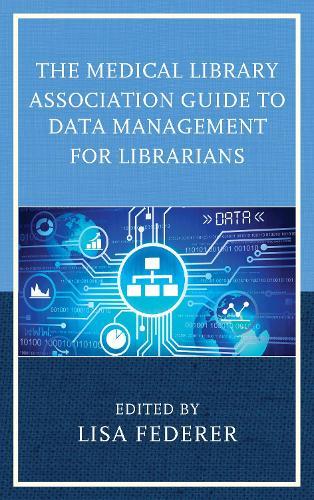
Technological advances and the rise of collaborative, interdisciplinary approaches have changed the practice of research. The 21st century researcher not only faces the challenge of managing increasingly complex datasets, but also new data sharing requirements from funders and journals. Success in today’s research enterprise requires an understanding of how to work effectively with data, yet most researchers have never had any formal training in data management. Libraries have begun developing services and programs to help researchers meet the demands of the data-driven research enterprise, giving librarians exciting new opportunities to use their expertise and skills. The Medical Library Association Guide to Data Management for Librarians highlights the many ways that librarians are addressing researchers’ changing needs at a variety of institutions, including academic, hospital, and government libraries. Each chapter ends with “pearls of wisdom,” a bulleted list of 5-10 takeaway messages from the chapter that will help readers quickly put the ideas from the chapter into practice. From theoretical foundations to practical applications, this book provides a background for librarians who are new to data management as well as new ideas and approaches for experienced data librarians.
Full Product Details
Author: Lisa Federer
Publisher: Bloomsbury Publishing Plc
Imprint: Rowman & Littlefield
Dimensions:
Width: 17.50cm
, Height: 1.50cm
, Length: 25.50cm
Weight: 0.513kg
ISBN: 9781442264274
ISBN 10: 1442264276
Pages: 242
Publication Date: 15 September 2016
Audience:
Professional and scholarly
,
Professional & Vocational
Format: Paperback
Publisher's Status: Active
Availability: Manufactured on demand

We will order this item for you from a manufactured on demand supplier.
Reviews
The Medical Library Association Guide to Data Management comes at a great time for libraries interested in data management services. Its strength is the breadth of its discussion - theoretical underpinning of data management through the pragmatism of case studies. There is a broader picture of the subject than is offered in other books covering similar topics. This book addresses theory within the context of every day decisions by researchers and addresses the role the library in providing a larger service related to data management and the changing landscape of research. -- Rikke Ogawa, Team Leader for Research, Instruction, and Collection Services, UCLA, Louise M. Darling Biomedical Library
Federer's book is most useful in helping readers gain a better understanding of the broad range of interrelated issues that fall under the general heading of data management. . . . Federer is a highly regarded research data informationist at the National Institutes of Health (NIH) Library, and she has assembled a stellar group of authors. . . .[The book is] successful in painting a picture of the broad complexity of issues involved in dealing with research data. There are excellent chapters on the rise of data journals, the principles of data science, the relationship of traditional archival practices to the challenges of data curation, and the tools and practices for effectively visualizing data. . . . As sourcebooks, both volumes can serve as excellent reference materials. With Henderson's many practical examples and extensive bibliographies in particular, it is difficult to imagine a question that a data librarian (or aspiring data librarian) might have that they won't be able to find some help with here. . . .Regardless of where a librarian may be in their own grasp of data management issues, they will surely benefit from spending time with either or both of these books. (Reviewed jointly with Data Management: A Practical Guide for Librarians) * Journal of eScience Librarianship * The Medical Library Association Guide to Data Management comes at a great time for libraries interested in data management services. Its strength is the breadth of its discussion - theoretical underpinning of data management through the pragmatism of case studies. There is a broader picture of the subject than is offered in other books covering similar topics. This book addresses theory within the context of every day decisions by researchers and addresses the role the library in providing a larger service related to data management and the changing landscape of research. -- Rikke Ogawa, Team Leader for Research, Instruction, and Collection Services, UCLA, Louise M. Darling Biomedical Library
Federer's book is most useful in helping readers gain a better understanding of the broad range of interrelated issues that fall under the general heading of data management... Federer is a highly regarded research data informationist at the National Institutes of Health (NIH) Library, and she has assembled a stellar group of authors...[The book is] successful in painting a picture of the broad complexity of issues involved in dealing with research data. There are excellent chapters on the rise of data journals, the principles of data science, the relationship of traditional archival practices to the challenges of data curation, and the tools and practices for effectively visualizing data... As sourcebooks, both volumes can serve as excellent reference materials. With Henderson's many practical examples and extensive bibliographies in particular, it is difficult to imagine a question that a data librarian (or aspiring data librarian) might have that they won't be able to find some help with here...Regardless of where a librarian may be in their own grasp of data management issues, they will surely benefit from spending time with either or both of these books. (Reviewed jointly with Data Management: A Practical Guide for Librarians) Journal of eScience Librarianship The Medical Library Association Guide to Data Management comes at a great time for libraries interested in data management services. Its strength is the breadth of its discussion - theoretical underpinning of data management through the pragmatism of case studies. There is a broader picture of the subject than is offered in other books covering similar topics. This book addresses theory within the context of every day decisions by researchers and addresses the role the library in providing a larger service related to data management and the changing landscape of research. -- Rikke Ogawa, Team Leader for Research, Instruction, and Collection Services, UCLA, Louise M. Darling Biomedical Library
Author Information
Lisa M. Federer is Research Data Informationist at the National Institutes of Health (NIH) Library, where she provides training and support in the management, organization, and re-use of biomedical research data for researchers in the NIH’s Intramural Research Program. She received her Masters of Library and Information Studies from the University of California, Los Angeles in 2011 and also holds an MA in English. She has also completed graduate certifications in data visualization from New York University and data science from Georgetown University.