Overview
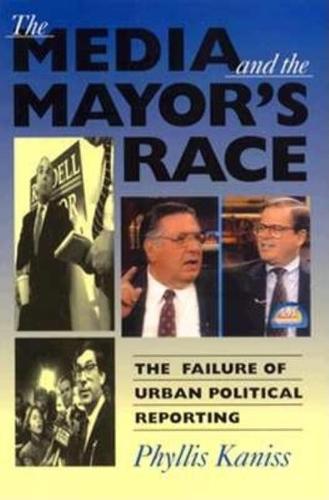
[We are trying to secure a blurb.] This close-up of the 1991 Philadelphia mayor's race gives an unsettling look into the lamentable state of media coverage of politics today. Phyllis Kaniss followed reporters on the campaign trail, talked with them about their decisions in reporting the news, saw how they related to each other and to the candidates. She analyzed local newscasts and newspaper stories to find out what made the news, and spoke with the candidates and their campaign staffs about trying to get - and even control - media coverage. The result is a fast-paced, insider's view of local news and local politics, of the forces that drive political reportage, and of how the way the media cover local elections has profound implications for all citizens. Students of political reportage will find it fascinating, and it belongs on every journalist's reading list.
Full Product Details
Author: Phyllis Kaniss
Publisher: Indiana University Press
Imprint: Indiana University Press
Dimensions:
Width: 15.60cm
, Height: 2.90cm
, Length: 23.50cm
Weight: 0.594kg
ISBN: 9780253209320
ISBN 10: 0253209323
Pages: 410
Publication Date: 22 February 1995
Audience:
Professional and scholarly
,
Professional & Vocational
Format: Paperback
Publisher's Status: Out of Print
Availability: Awaiting stock 
Table of Contents
Acknowledgments PART I: The Primary 1. From the Ritz to the Roller Rink January 23, 1991, 5:30 p.m. 2. ItOs a UsersO Business January 1991 3. The Right Stuff February 1991 4. Feeding the Story February 1991 5. Sex, Lies, and the Loquacious Candidate February 1991 6. OIf I Am Rejected...O February 7, 1991 7. The Reluctant Warrior February 13, 1991 8. OMarijuana Smoking? Peace Activist?O Feburary 19, 1991 9. Saving Philadelphia February 1991 10. The Candidates on Hollywood Squares February 27, 1991 11. Waiting for Wilson March 8, 1991 12. Defining the Enemy March 12, 1991 13. The Defensive Witness March 22, 1991 14. Eight Weeks Out March 26, 1991 15. The Lethal Blow March 27, 1991 16. The Slugfest April 2, 1991 17. The Third-Base Coach Aril 16, 1991 18. One Floor Up April 29, 1991 19. The Trap Door May 1, 1991 20. Magic Tricks May 6, 1991 21. Fold Up the Podium May 14, 1991, 3:00 p.m. 22. Nobody Landed a Blow May 14, 1991, 6:30 p.m. 23. Pumping It Up May 16, 1991 24. Fatal Attraction May 21, 1991 25. What Did It All Mean? May 22, 1991 26. OMayor? Mayor? Frank!O July 16, 1991 PART II: The General Election 27. RIZZO IS DEAD July 1991 28. By Unanimous Vote August 1, 1991 29. The Search for Scandal August 29, 1991 30. The Big Question September 3, 1991 31. Politics Is a Funny Business September 6, 1991 32. The Dog and Pony Show October 4, 1991 33. Voicing-over the Election October 15, 1991 34. Have You Had Enough? November 1, 1991 35. The Men from the Boys November 5, 1991, 2:00 p.m. 36. The Night the Reporters Danced November 5, 1991, 8:00 p.m. Conclusion Epilogue Appendix: How the Book Was Researched and Written Selected Bibliography Index
Reviews
A worthy but exhausting case study of the 1991 Philadelphia mayoral election, in which reporters emphasized the horse race over substantive issues. Kaniss (assistant dean, Annenberg School for Communication, Univ. of Pennsylvania; Making Local News, not reviewed) draws on observations of campaign events, interviews with journalists and politicos, and analysis of articles and newscasts to assemble a media-angled narrative of the mayor's race. While Kaniss's style is quite readable, her chronological account seems overstuffed. Still, she has some good set pieces: querying the Philadelphia Inquirer's editorial board on their endorsement logic; describing how an advisor coached candidate Frank Rizzo during a TV interview; showing how an aggressive political reporter can find dubious scandal. And she has several savvy observations: Inexperienced TV reporters often rely on the major local newspaper and its lead reporter - in this case, the Inquirer's Sal Paolantonio - for direction; TV news coverage values personality conflicts over issues; a live TV campaign forum may be the only time a candidate's words are heard directly by voters; coverage of black candidates that focuses on race rather than issues can itself appear to be a form of racism. The author also describes some folkways of reporting, showing how the ambitious Paolantonio cultivates his sources. The book's best part is its concluding chapter. Inquirer editor Maxwell King, informed that most coverage slighted issues, sounds genuinely concerned, which Kaniss takes as a sign that the shallowness of newspaper political reporting is not necessarily a deliberate objective [but]...the result of day-to-day decisions by a complex cast of actors. A television news director, by contrast, expresses no regret. Kaniss finds hope in two national TV trends: the truth squads news programs employed during the 1992 presidential campaign and the growth of local all-news cable stations like New York City's Channel One. Very thorough. News junkies, except those from Philadelphia, may want to skim. (Kirkus Reviews)
Author Information
PHYLLIS KANISS is Assistant Dean at the Annenberg School for Communication and author of Making Local News.
Tab Content 6
Author Website:
Countries Available
All regions
|