Overview
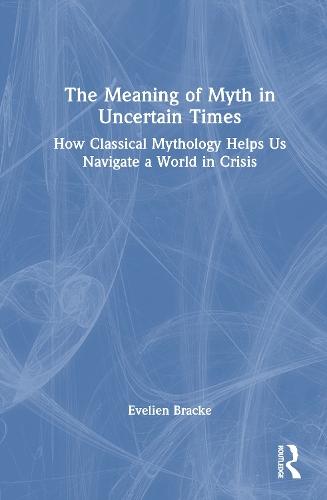
This book examines how ancient mythology forms part of the stories we tell ourselves about today's uncertain times, not only in popular culture but also in sociocultural and political debates. It particularly explores the ways in which classical myths shape how our modern secular societies think about the interconnected geopolitical, technological, and ecological issues we are facing, and our potential futures. Classical myths like those of Achilles, Medea, and Odysseus are everywhere, from films and novels to social media and games. But how and why are we still fascinated with them, particularly now? Can these strange and often painful stories from societies so radically different from our own offer us genuine insights today? This expanded English edition of Evelien Bracke’s award-winning Dutch book Leidraad door het labyrint explores how and why Greek and Roman myths, despite their ancient origins, are surprisingly meaningful in these times of uncertainty. Bracke offers a contextualization and literary analysis of classical mythology, looking at both texts and visual media. This allows readers to gain a better understanding of how people draw inspiration from the past in their attempt to create a better future, and how these stories provide both collective and individual guidance in navigating the turbulent 21st century. The Meaning of Myth in Uncertain Times is suitable for students, scholars, teachers, and general readers interested in mythology and ancient Greek and Roman history and culture, providing insights that are relevant to the challenges we all face today.
Full Product Details
Author: Evelien Bracke
Publisher: Taylor & Francis Ltd
Imprint: Routledge
Weight: 0.540kg
ISBN: 9781041028642
ISBN 10: 1041028644
Pages: 192
Publication Date: 29 December 2025
Audience:
College/higher education
,
Tertiary & Higher Education
Format: Hardback
Publisher's Status: Active
Availability: Not yet available

This item is yet to be released. You can pre-order this item and we will dispatch it to you upon its release.
Reviews
Praise for the Dutch edition: ""[The book] testifies to a deep-seated conviction that classical mythology not only bridges Antiquity and the present but also offers a way of thinking about the fundamental big questions of our time. In times of uncertainty and major social challenges, such as the climate crisis, the author offers mythological stories as a guide to existential thinking: how do we keep hope when the world is changing? How do we find direction in a maze of complex problems?"" - OIKOS (Onderzoeksinstituut Klassieke Oudheidstudiën) Praise for the English edition: ""Evelien Bracke’s new book ‘The Meaning of Myth in uncertain times’ is a breathtaking read, providing unexpected, subtle, and brilliant analyses of the power classical mythology holds in a globalized and digital world. From a submarine named Agamemnon to the Minotaur as a symbol for climate change, and from Young Adult-Persephone to Kamala Harris as Medea: myth can be made to send all kinds of political messages, also destructive ones. Yet, like Ariadne, Bracke also throws us a lifeline, demonstrating how these same myths can be dynamic and hopeful instruments for thinking about the many ‘wicked problems’ of our own times."" - Jacqueline Klooster, Professor of Greek Philology, Albert-Ludwigs-Universität Freiburg
Author Information
Evelien Bracke is an award-winning scholar of classical mythology and education. Through her research and public engagement, she is committed to widening access to the study of antiquity and demonstrating the enduring impact of ancient stories on modern life. She is currently affiliated with Ghent University, Belgium, and University College Dublin, Ireland.