Overview
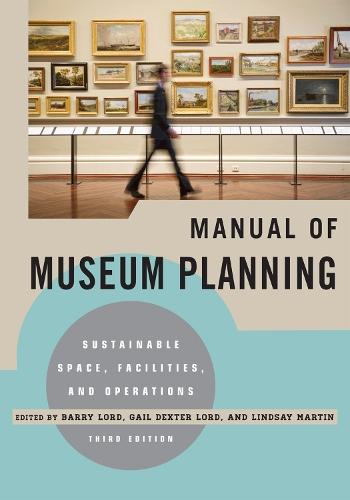
As museums have taken on more complex roles in their communities and the number of museum stakeholders has increased to include a greater array of people, effective museum planning is more important than ever. The Manual of Museum Planning has become the definitive text for museum professionals, trustees, architects, and others who are concerned with the planning, design, construction, renovation, or expansion of a public gallery or museum. Rewritten and reorganized, the third edition features revised sections on planning for visitors, collections, and the building itself, and new sections on operations and implementation, which have become an essential part of the planning process. This new edition of the Manual of Museum Planning has been updated to meet the needs of professional museum practice in the 21st century and includes contributions by leading museum professionals. This manual is intended to be used as a guide for museum professionals, board members or trustees, government agencies, architects, designers, engineers, cost consultants, or other specialist consultants embarking on a capital project—expansion, renovation, or new construction of museum space.
Full Product Details
Author: Barry Lord ,
Gail Dexter Lord ,
Lindsay Martin
Publisher: AltaMira Press
Imprint: AltaMira Press
Edition: 3rd edition
Dimensions:
Width: 18.80cm
, Height: 4.40cm
, Length: 26.60cm
Weight: 1.411kg
ISBN: 9780759121454
ISBN 10: 0759121451
Pages: 720
Publication Date: 29 March 2012
Audience:
Professional and scholarly
,
Professional & Vocational
Format: Hardback
Publisher's Status: Active
Availability: In Print

This item will be ordered in for you from one of our suppliers. Upon receipt, we will promptly dispatch it out to you. For in store availability, please contact us.
Reviews
This highly readable and greatly revised third edition updates the 2001 second edition, edited by G. Lord and B. Lord. As stated in the introduction, this manual has been considered a classic of museum literature for nearly 30 years. This latest edition is sure to continue that tradition. Its subtitle sums up the 21st-century changes to the volume. Authoritative, definitive, and dense, the volume offers up-to-date information and serves as the go-to resource for best practices for both beginners and seasoned museum practitioners. Of special note are the changes from earlier editions, which were divided into three parts covering people, collections, and construction. This new edition is in five parts: Planning for People, Planning for Collections, Planning for Operations, Planning for the Building, and Implementation. Each part features several chapters, for a total of 21 chapters that are further subdivided by section. Included are extensive and descriptive figures and tables. The list of contributors reads like a Who's Who in the museum field, making the volume a very approachable essay collection. Chapters address such issues as sustainability, planning documents, facility strategies, site selection, design and construction processes, project management, and the issue of right sizing new facilities. Of special note is the introduction by the editors, covering what to look for in the new edition and how to use the manual, along with a discussion of the dimensions of sustainability. Summing Up: Highly recommended. CHOICE The third edition of the Manual of Museum Planning is a welcome addition to cultural leaders around the world. Barry Lord, Gail Dexter Lord, and the team of experts from Lord Cultural Resources are the foremost global cultural thought leaders. The new edition's emphasis on sustainability is timely and will help guide cultural institutions well into the 21st century. The new edition of the Manual of Museum Planning will definitely be a permanent fixture on my desk and nightstand. -- Paul B. Redman, director of Longwood Gardens After the first glow of razzle-dazzle, museums have to work, and no one understands better how to see to it that a museum will work for the long run than Barry and Gail Lord. This work is a bible for museum survival. -- Robert A. M. Stern, founder and senior partner, Robert A.M. Stern Architects, and Dean of the Yale School of Architecture There are no short cuts to successful and sustainable museum development. The Manual of Museum Planning provides a comprehensive and systematic approach to planning museums as developed over the past 30 years by the world's leading museum planning firm. An invaluable resource now in its third updated edition, the Manual demonstrates how LORD Cultural Resources continue to learn and innovate. -- Duncan Grewcock, course director, MA in Museum and Gallery Studies, School of Art and Design History, Faculty of Art, Design and Architecture, Kingston University, U.K. [A] 720-page compendium specifically designed to be a comprehensive instruction manual for any group wanting to establish, upgrade, or expand their museum...Informed, informative, comprehensive, and thoroughly 'user friendly', the Manual Of Museum Planning will prove to be indispensable and is highly recommended addition to museum, historical society, community, and academic library reference collections. The Midwest Book Review
"This highly readable and greatly revised third edition updates the 2001 second edition, edited by G. Lord and B. Lord. As stated in the introduction, this manual has been considered a classic of museum literature for nearly 30 years. This latest edition is sure to continue that tradition. Its subtitle sums up the 21st-century changes to the volume. Authoritative, definitive, and dense, the volume offers up-to-date information and serves as the go-to resource for best practices for both beginners and seasoned museum practitioners. Of special note are the changes from earlier editions, which were divided into three parts covering people, collections, and construction. This new edition is in five parts: ""Planning for People,"" ""Planning for Collections,"" ""Planning for Operations,"" ""Planning for the Building,"" and ""Implementation."" Each part features several chapters, for a total of 21 chapters that are further subdivided by section. Included are extensive and descriptive figures and tables. The list of contributors reads like a Who's Who in the museum field, making the volume a very approachable essay collection. Chapters address such issues as sustainability, planning documents, facility strategies, site selection, design and construction processes, project management, and the issue of ""right sizing"" new facilities. Of special note is the introduction by the editors, covering what to look for in the new edition and how to use the manual, along with a discussion of the dimensions of sustainability. Summing Up: Highly recommended. * CHOICE * The third edition of the Manual of Museum Planning is a welcome addition to cultural leaders around the world. Barry Lord, Gail Dexter Lord, and the team of experts from Lord Cultural Resources are the foremost global cultural thought leaders. The new edition’s emphasis on sustainability is timely and will help guide cultural institutions well into the 21st century. The new edition of the Manual of Museum Planning will definitely be a permanent fixture on my desk and nightstand. -- Paul B. Redman, director of Longwood Gardens After the first glow of razzle-dazzle, museums have to ""work,"" and no one understands better how to see to it that a museum will work for the long run than Barry and Gail Lord. This work is a bible for museum survival. -- Robert A. M. Stern, founder and senior partner, Robert A.M. Stern Architects, and Dean of the Yale School of Architecture There are no short cuts to successful and sustainable museum development. The Manual of Museum Planning provides a comprehensive and systematic approach to planning museums as developed over the past 30 years by the world’s leading museum planning firm. An invaluable resource now in its third updated edition, the Manual demonstrates how LORD Cultural Resources continue to learn and innovate. -- Duncan Grewcock, course director, MA in Museum and Gallery Studies, School of Art and Design History, Faculty of Art, Design and Architecture, Kingston University, U.K. [A] 720-page compendium specifically designed to be a comprehensive instruction manual for any group wanting to establish, upgrade, or expand their museum....Informed, informative, comprehensive, and thoroughly 'user friendly', the ""Manual Of Museum Planning"" will prove to be indispensable and is highly recommended addition to museum, historical society, community, and academic library reference collections. * Midwest Book Review *"
The third edition of the Manual of Museum Planning is a welcome addition to cultural leaders around the world. Barry Lord, Gail Dexter Lord, and the team of experts from Lord Cultural Resources are the foremost global cultural thought leaders. The new edition's emphasis on sustainability is timely and will help guide cultural institutions well into the 21st century. The new edition of the Manual of Museum Planning will definitely be a permanent fixture on my desk and nightstand. -- Paul B. Redman, director of Longwood Gardens After the first glow of razzle-dazzle, museums have to work, and no one understands better how to see to it that a museum will work for the long run than Barry and Gail Lord. This work is a bible for museum survival. -- Robert A. M. Stern, founder and senior partner, Robert A.M. Stern Architects, and Dean of the Yale School of Architecture There are no short cuts to successful and sustainable museum development. The Manual of Museum Planning provides a comprehensive and systematic approach to planning museums as developed over the past 30 years by the world's leading museum planning firm. An invaluable resource now in its third updated edition, the Manual demonstrates how LORD Cultural Resources continue to learn and innovate. -- Duncan Grewcock, course director, MA in Museum and Gallery Studies, School of Art and Design History, Faculty of Art, Design and Architecture, Kingston University, U.K.
The third edition of the Manual of Museum Planning is a welcome addition to cultural leaders around the world. Barry Lord, Gail Dexter Lord, and the team of experts from Lord Cultural Resources are the foremost global cultural thought leaders. The new edition,s emphasis on sustainability is timely and will help guide cultural institutions well into the 21st century. The new edition of the Manual of Museum Planning will definitely be a permanent fixture on my desk and nightstand. -- Paul B. Redman, director of Longwood Gardens After the first glow of razzle-dazzle, museums have to work, and no one understands better how to see to it that a museum will work for the long run than Barry and Gail Lord. This work is a bible for museum survival. -- Robert A. M. Stern, founder and senior partner, Robert A.M. Stern Architects, and Dean of the Yale School of Architecture There are no short cuts to successful and sustainable museum development. The Manual of Museum Planning provides a comprehensive and systematic approach to planning museums as developed over the past 30 years by the world,s leading museum planning firm. An invaluable resource now in its third updated edition, the Manual demonstrates how LORD Cultural Resources continue to learn and innovate. -- Duncan Grewcock, course director, MA in Museum and Gallery Studies, School of Art and Design History, Faculty of Art, Design and Architecture, Kingston University, U.K.
Author Information
Barry Lord and Gail DexterLord are the founders and presidents of Lord Cultural Resources, an international cultural planning firm. Lindsay Martin is a senior consultant at Lord Cultural Resources.