Overview
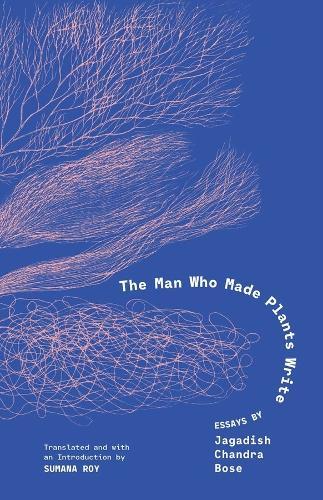
An internationally celebrated poet and critic brings Jagadish Chandra Bose's revolutionary writings on plant sentience and communication to English readers for the first time Jagadish Chandra Bose (1858–1937) was a Bengali scientist and polymath who developed a theory of plant communication more than a century before Western scientists began to explore such ideas. Bose suggested that plants had their own vocabulary, an ""unvoiced life"" that he recorded as a ""script"" with a crescograph and other devices he invented to measure how plants respond to each other and their environments. Inviting readers into the ""resounding silence of the green plant kingdom,"" he described an underlying unity beneath the multiplicity of phenomena, and a world in which ""endless music is sung everywhere."" Dismissed as idiosyncratic and unscientific when he was alive, Bose provocatively challenged the hierarchy of living beings, which relegated plants to the bottom, and created a mesmerizing body of work on nonhuman intelligence whose originality and significance we at last are able to appreciate today. Through her lyrical translations and selections from Bose's essay collection Abyakta (The Unsaid; 1922), Sumana Roy reveals the revolutionary character of his mind, as poetic and philosophical as it was scientific. Roy, the author of How I Became a Tree, shows how Bose's work can shape how we understand ourselves as a species living alongside and inside the plant world.
Full Product Details
Author: Jagadish Chandra Bose ,
Sumana Roy
Publisher: Yale University Press
Imprint: Yale University Press
ISBN: 9780300278408
ISBN 10: 0300278403
Pages: 144
Publication Date: 17 March 2026
Audience:
General/trade
,
General
Format: Hardback
Publisher's Status: Active
Availability: Awaiting stock

The supplier is currently out of stock of this item. It will be ordered for you and placed on backorder. Once it does come back in stock, we will ship it out for you.
Reviews
“J. C. Bose was a true polymath, whose science was propelled by reason and passion. In this wonderful collection of essays—first published in Bengali a hundred years ago—he persuasively represents plants as living beings, bearing witness to their emotional life, their memories of the stimuli they receive and the injuries they suffer. In Sumana Roy’s elegant translation, Bose’s arguments remain fresh, vivid, and compelling to those reading his book in English today.”—Ramachandra Guha, author of Speaking with Nature: The Origins of Indian Environmentalism “Sumana Roy's The Man Who Made Plants Write is a fine introduction to the literary oeuvre of the scientist who pioneered the study of plant sentience.”–Amitav Ghosh, the author of: Wild Fictions: Essays on Literature, Empire and the Environment “In these pages, we glimpse the possibility of a science with heart and soul—and receive a powerful inspiration to take the Bengali intellectual and cultural world of the turn of the last century with new seriousness.”—Matthew Battles, Harvard University “This collection exposes readers across the globe to the visionary originality and breadth of Bose’s thought.”—Amit Baishya, University of Oklahoma “An exceptionally readable page-turner …”—Jayson Maurice Porter, University of Maryland, College Park
Author Information
Jagadish Chandra Bose (1858–1937) was a pioneer in radio waves, electromagnetism, and plant science. His books published in English include Response in the Living and Non-Living (1902) and The Nervous Mechanism of Plants (1926). Sumana Roy is the author of How I Became a Tree, Provincials, and Plant Thinkers of Twentieth-Century Bengal, among other books.