Overview
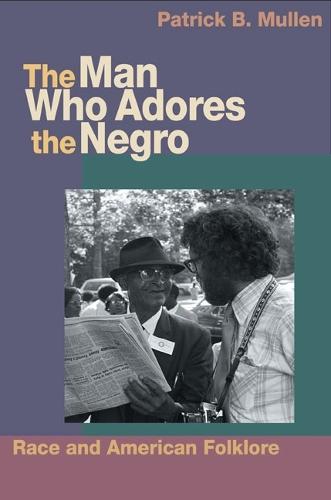
Drawing on over thirty-five years of fieldwork, Patrick B. Mullen considers how African American cultural representations in folklore relate to racial dynamics in the United States. Providing insight into white folklorists\u2019 relationships with black consultants, The Man Who Adores the Negro describes the personal experiences of both fieldworkers and ethnographic subjects. Mullen explores how folklorists such as John Lomax, Newbell Niles Puckett, Alan Lomax, and Roger Abrahams have been implicated in creating the popular concept of African Americans as folk and how this depiction has created notions of blackness and whiteness. Illuminating central aspects of African American cultural history, the author discusses a wide range of folklore that includes work songs, hymns, voodoo rituals, animal tales, jokes, toasts, and children's games and rhymes. In relating folkloric research to white mimicry of black style in such expressions as blues, rock and roll, and hip-hop culture, Mullen contends that both folk performers and folklorists participate in ongoing cultural change when they mix received values and attitudes in producing new interpretations.
Full Product Details
Author: Patrick B Mullen
Publisher: University of Illinois Press
Imprint: University of Illinois Press
Dimensions:
Width: 15.20cm
, Height: 1.30cm
, Length: 22.90cm
Weight: 0.313kg
ISBN: 9780252074868
ISBN 10: 0252074866
Pages: 224
Publication Date: 18 March 2008
Audience:
College/higher education
,
Undergraduate
Format: Paperback
Publisher's Status: Active
Availability: Out of stock

The supplier is temporarily out of stock of this item. It will be ordered for you on backorder and shipped when it becomes available.
Reviews
Mullen's book will stimulate plenty of discussion. . . . Highly recommended. -- Choice
Mullen's book will stimulate plenty of discussion... Highly recommended. --Choice In The Man Who Adores the Negro, Mullen has written, essentially, two books. The first is a critical history of folklorists' work with African American informants-an account of the success, and failure, of well-intentioned scholars operating in a charged racial environment. And the second is a manual on ethnographic practice-a reflection on the politics of representation and on the potential value and limitations of contemporary fieldwork methodology. Neither book can be separated from the other; they work collaboratively, in tandem. And both, in the end, are well worth the read. --Journal of Folklore Research Marks an important contribution to the study of folklore scholarship on African Americans and the role this scholarship has played in the national discourse on constructions of race. --The Journal of Southern History
Marks an important contribution to the study of folklore scholarship on African Americans and the role this scholarship has played in the national discourse on constructions of race. --The Journal of Southern History In The Man Who Adores the Negro, Mullen has written, essentially, two books. The first is a critical history of folklorists' work with African American informants-an account of the success, and failure, of well-intentioned scholars operating in a charged racial environment. And the second is a manual on ethnographic practice-a reflection on the politics of representation and on the potential value and limitations of contemporary fieldwork methodology. Neither book can be separated from the other; they work collaboratively, in tandem. And both, in the end, are well worth the read. --Journal of Folklore Research Mullen's book will stimulate plenty of discussion. . . . Highly recommended. --Choice
"""Mullen's book will stimulate plenty of discussion... Highly recommended.""--Choice ""In The Man Who Adores the Negro, Mullen has written, essentially, two books. The first is a critical history of folklorists' work with African American informants-an account of the success, and failure, of well-intentioned scholars operating in a charged racial environment. And the second is a manual on ethnographic practice-a reflection on the politics of representation and on the potential value and limitations of contemporary fieldwork methodology. Neither book can be separated from the other; they work collaboratively, in tandem. And both, in the end, are well worth the read.""--Journal of Folklore Research ""Marks an important contribution to the study of folklore scholarship on African Americans and the role this scholarship has played in the national discourse on constructions of race.""--The Journal of Southern History"
""Mullen's book will stimulate plenty of discussion... Highly recommended.""--Choice ""In The Man Who Adores the Negro, Mullen has written, essentially, two books. The first is a critical history of folklorists' work with African American informants-an account of the success, and failure, of well-intentioned scholars operating in a charged racial environment. And the second is a manual on ethnographic practice-a reflection on the politics of representation and on the potential value and limitations of contemporary fieldwork methodology. Neither book can be separated from the other; they work collaboratively, in tandem. And both, in the end, are well worth the read.""--Journal of Folklore Research ""Marks an important contribution to the study of folklore scholarship on African Americans and the role this scholarship has played in the national discourse on constructions of race.""--The Journal of Southern History
Author Information
Patrick Mullen is Emeritus Professor of English and Folklore at Ohio State University and author of Listening to Old Voices: Folklore, Life Stories, and the Elderly.