Overview
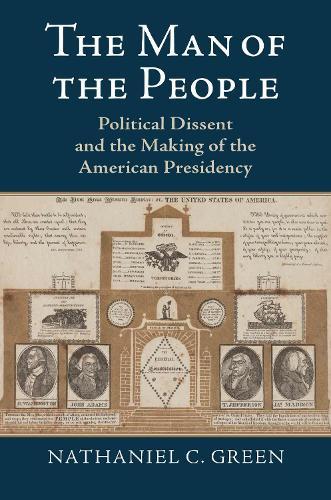
Donald Trump's election has forced the United States to reckon with not only the political power of the presidency, but also how he and his supporters have used the office to advance their shared vision of America: one that is avowedly nationalist, and unrepentantly rooted in nativism and white supremacy. It might be easy to attribute this dark vision, and the presidency's immense power to reflect and reinforce it, to the singular character of one particular president - but to do so, this book tells us, would be to ignore the critical role the American public played in making the president 'the man of the people' in the nation's earliest decades. Beginning with the public debate over whether to ratify the Constitution in 1787 and concluding with Andrew Jackson's own contentious presidency, Nathaniel C. Green traces the origins of our conception of the president as the ultimate American: the exemplar of our collective national values, morals, and 'character.' The public divisiveness over the presidency in these earliest years, he contends, forged the office into an incomparable symbol of an emerging American nationalism that cast white Americans as dissenters - lovers of liberty who were willing to mobilize against tyranny in all its forms, from foreign governments to black 'enemies' and Indian 'savages* - even as it fomented partisan division that belied the promise of unity the presidency symbolized. With testimony from private letters, diaries, newspapers, and bills, Green documents the shaping of the disturbingly nationalistic vision that has given the presidency its symbolic power. This argument is about a different time than our own. And yet it shows how this time, so often revered as a mythic 'founding era' from which America has precipitously declined, was in fact the birthplace of the president-centered nationalism that still defines the contours of politics to this day. The lessons of The Man of the People contextualize the political turmoil surrounding the presidency today. Never in modern US history have those lessons been more badly needed.
Full Product Details
Author: Nathaniel C. Green
Publisher: University Press of Kansas
Imprint: University Press of Kansas
Dimensions:
Width: 16.20cm
, Height: 3.30cm
, Length: 23.80cm
Weight: 0.745kg
ISBN: 9780700629954
ISBN 10: 0700629955
Pages: 408
Publication Date: 23 October 2020
Audience:
Professional and scholarly
,
Professional & Vocational
Format: Hardback
Publisher's Status: Active
Availability: Temporarily unavailable

The supplier advises that this item is temporarily unavailable. It will be ordered for you and placed on backorder. Once it does come back in stock, we will ship it out to you.
Reviews
This is a new and compelling historical interpretation of the presidency. Instead of focusing on personality, institutions, or circumstances, Green has elucidated how the presidency is made and re-made in the public debates among critics, and critics of critics.--Reviews in American HistoryGreen provides a much-needed update to our thinking of the overall cultural image of the presidency.--Presidential Studies Quarterly In detailing conflicts within early presidential administrations in considerable detail, Green draws from a wide variety of sources, by both those who considered support of the president a patriotic necessity and a prerequisite for national unity, and those who viewed dissent from weak or unwise executive policies to be equally consistent with the US's revolutionary tradition.--Choice This 'Man of the People' makes a compelling argument that the emergence of the presidency was a collaborative venture, a 'duet' between presidents and the people themselves who insisted on playing their role in the development of the office. At the center of those exchanges were episodes of dissent embodied in popular protest movements in which a spectrum of citizens helped create an interactive understanding of the presidency. Richly detailed and effectively argued, this book establishes the ongoing role of dissent in the rise of the institution and represents an important intervention in the literature.--Todd Estes, professor of history, Oakland University Green tells an exciting story about the complicated, intertwined relationship between the American public and the presidency as well as the centuries-long battle to determine what 'We the People' actually means, who belongs, and the president's relationship to that vision. The Man of the People demonstrates how this struggle began during the Revolution, endured as a central part of the American experience, and continues to define politics in the twenty-first century.--Lindsay M. Chervinsky, author of The Cabinet: George Washington and the Creation of an American Institution Nathaniel Green's book is a learned and insightful history of how the austere executive described in the Constitution became the 'man of the people' in the first years of the nation's existence. First envisioned as the embodiment of American national character and the place where American aspirations could be unified, the presidency quickly became the central focus of the country's partisan and regional divisions, the ultimate prize in heavily divided political contests, and, consequently, the magnet for popular dissent. Green turns our attention away from exclusive focus on the intentions, policy positions, and achievements of the men who occupied the office and instead offers readers a richer and fuller understanding of how the presidency has always been a dynamic and mutually reciprocal collaboration between president and people.--Brian D. Steele, associate professor of history, University of Alabama at Birmingham In this thoughtful and deeply researched book, Nathaniel Green writes a history of the early American presidency that does not focus on the actions and words of the presidents themselves. Instead, Green beautifully shows that it was the observations and, more typically, the arguments among Americans of all regions, parties, and backgrounds about what those presidents did and did not do that shaped the office. Among other discoveries, Green brilliantly shows that the very ability to criticize a sitting president became a key part of what it meant to be an American in the early republic, for it underscored the degree to which they, the people, were truly sovereign. Drawing from both the printed materials that abounded in the new republic--newspapers, pamphlets, broadsides--as well as private letters, diaries, and other personal observations, Green is able to plumb the ways that Americans thought, talked, and wrote about the highest office in the land. This will be an essential book for all those seeking to understand the American presidency and the American character.--Kevin Butterfield, executive director, Fred. W. Smith National Library for the Study of George Washington
This 'Man of the People' makes a compelling argument that the emergence of the presidency was a collaborative venture, a 'duet' between presidents and the people themselves who insisted on playing their role in the development of the office. At the center of those exchanges were episodes of dissent embodied in popular protest movements in which a spectrum of citizens helped create an interactive understanding of the presidency. Richly detailed and effectively argued, this book establishes the ongoing role of dissent in the rise of the institution and represents an important intervention in the literature. - Todd Estes, professor of history, Oakland University Green tells an exciting story about the complicated, intertwined relationship between the American public and the presidency as well as the centuries-long battle to determine what 'We the People' actually means, who belongs, and the president's relationship to that vision. The Man of the People demonstrates how this struggle began during the Revolution, endured as a central part of the American experience, and continues to define politics in the twenty-first century. - Lindsay M. Chervinsky, author of The Cabinet: George Washington and the Creation of an American Institution Nathaniel Green's book is a learned and insightful history of how the austere executive described in the Constitution became the 'man of the people' in the first years of the nation's existence. First envisioned as the embodiment of American national character and the place where American aspirations could be unified, the presidency quickly became the central focus of the country's partisan and regional divisions, the ultimate prize in heavily divided political contests, and, consequently, the magnet for popular dissent. Green turns our attention away from exclusive focus on the intentions, policy positions, and achievements of the men who occupied the office and instead offers readers a richer and fuller understanding of how the presidency has always been a dynamic and mutually reciprocal collaboration between president and people. - Brian D. Steele, associate professor of history, University of Alabama at Birmingham In this thoughtful and deeply researched book, Nathaniel Green writes a history of the early American presidency that does not focus on the actions and words of the presidents themselves. Instead, Green beautifully shows that it was the observations and, more typically, the arguments among Americans of all regions, parties, and backgrounds about what those presidents did and did not do that shaped the office. Among other discoveries, Green brilliantly shows that the very ability to criticize a sitting president became a key part of what it meant to be an American in the early republic, for it underscored the degree to which they, the people, were truly sovereign. Drawing from both the printed materials that abounded in the new republic - newspapers, pamphlets, broadsides - as well as private letters, diaries, and other personal observations, Green is able to plumb the ways that Americans thought, talked, and wrote about the highest office in the land. This will be an essential book for all those seeking to understand the American presidency and the American character. - Kevin Butterfield, executive director, Fred. W. Smith National Library for the Study of George Washington
Author Information
Nathaniel C. Green is professor of history at Northern Virginia Community College.