Overview
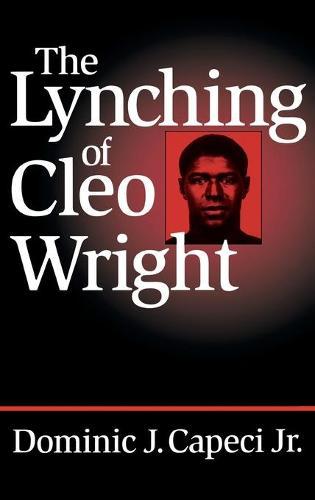
On January 20, 1942, black oil mill worker Cleo Wright assaulted a white woman in her home and nearly killed the first police officer who tried to arrest him. An angry mob then hauled Wright out of jail and dragged him through the streets of Sikeston, Missouri, before burning him alive. Wright's death was, unfortunately, not unique in American history, but what his death meant in the larger context of life in the United States in the twentieth-century is an important and compelling story. After the lynching, the U.S. Justice Department was forced to become involved in civil rights concerns for the first time, provoking a national reaction to violence on the home front at a time when the country was battling for democracy in Europe. Dominic Capeci unravels the tragic story of Wright's life on several stages, showing how these acts of violence were indicative not only of racial tension but the clash of the traditional and the modern brought about by the war. Capeci draws from a wide range of archival sources and personal interviews with the participants and spectators to draw vivid portraits of Wright, his victims, law-enforcement officials, and members of the lynch mob. He places Wright in the larger context of southern racial violence and shows the significance of his death in local, state, and national history during the most important crisis of the twentieth-century.
Full Product Details
Author: Dominic J. Capeci
Publisher: The University Press of Kentucky
Imprint: The University Press of Kentucky
Dimensions:
Width: 15.20cm
, Height: 2.40cm
, Length: 22.90cm
Weight: 0.658kg
ISBN: 9780813120485
ISBN 10: 0813120489
Pages: 352
Publication Date: 08 May 1998
Audience:
College/higher education
,
General/trade
,
Undergraduate
,
General
Format: Hardback
Publisher's Status: Active
Availability: Out of stock

The supplier is temporarily out of stock of this item. It will be ordered for you on backorder and shipped when it becomes available.
Reviews
Illustrates the national significance of Cleo Wright's murder. -- Southern Historian His extensive research, including interviews with survivors, is evident in his intricate and engrossing perspective, especially when describing the lynching and the bloodshed that led to it. -- Publishers Weekly For the first time, the U.S. Justice Department intervened in a lynching, although it failed to secure any indictments. -- Library Journal Capeci skillfully dissects the thoughts and actions of supporters and white opponents of the mob. -- Georgia Historical Quarterly A creatively conceptualized anatomy of a lynching. Capeci places the lynching of Cleo Wright within the context of the city of Sikeston, the state of Missouri, and the nation. -- Arvarh E. Strickland A painstaking and valuable study of these tragic events that confirms and extends the findings of other recent scholars of lynching. -- American Historical Review Concludes that the Sikeston event contributed more to the subsequent history of civil rights and race relations than any other in the state.... A fascinating book packed with surprises. -- Richard S. Kirkendall A valuable complement to broader-gauged scholarship, because Capeci constructed it so patiently and assiduously. -- Reviews in American History A cogent guide and a milepost for understanding the history of lynching in Missouri. -- Missouri Historical Review A meticulous and dynamic examination of a pivotal incident during the age of lynching. -- Journal of American History Capeci's account of a lynching in the small city of Sikeston, Missouri, in 1942 adds to a growing list of investigations into the relationship between mob justice and race relations. -- Choice Capeci touches on the social forces behind the attack and the reactions that followed. -- Booklist
-Illustrates the national significance of Cleo Wright's murder.- -- Southern Historian
<p> Illustrates the national significance of Cleo Wright's murder. -- Southern Historian
<p> Winner of the 1999 Missouri History Award given by the State Historical Society of Missouri. --
Concludes that the Sikeston event contributed more to the subsequent history of civil rights and race relations than any other in the state.... A fascinating book packed with surprises. -- Richard S. Kirkendall A cogent guide and a milepost for understanding the history of lynching in Missouri. -- Missouri Historical Review A meticulous and dynamic examination of a pivotal incident during the age of lynching. -- Journal of American History Capeci skillfully dissects the thoughts and actions of supporters and white opponents of the mob. -- Georgia Historical Quarterly Capeci touches on the social forces behind the attack and the reactions that followed. -- Booklist Illustrates the national significance of Cleo Wright's murder. -- Southern Historian A valuable complement to broader-gauged scholarship, because Capeci constructed it so patiently and assiduously. -- Reviews in American History His extensive research, including interviews with survivors, is evident in his intricate and engrossing perspective, especially when describing the lynching and the bloodshed that led to it. -- Publishers Weekly For the first time, the U.S. Justice Department intervened in a lynching, although it failed to secure any indictments. -- Library Journal Capeci's account of a lynching in the small city of Sikeston, Missouri, in 1942 adds to a growing list of investigations into the relationship between mob justice and race relations. -- Choice A creatively conceptualized anatomy of a lynching. Capeci places the lynching of Cleo Wright within the context of the city of Sikeston, the state of Missouri, and the nation. -- Arvarh E. Strickland A painstaking and valuable study of these tragic events that confirms and extends the findings of other recent scholars of lynching. -- American Historical Review
A pat, scholarly reconstruction and analysis of the 1942 incident that occasioned the first federal investigation of lynching. Just weeks after America entered WWII, a black oil-mill worker named Cleo Wright assaulted a white woman and a white police officer in Sikeston, Mo., severely injuring both. Wright was seized by an angry mob, dragged across town behind a car, doused with gasoline, and burned alive. Such brazen savagery - at a time when unity against a supposedly barbaric totalitarian enemy was considered a matter of national survival - ignited public censure nationwide (though not, significantly, in Sikeston). It also, Capeci (History/Southwest Missouri State Univ.) notes, raised pressing questions about personal responsibility and civic duty in a democratic society founded upon law and order. While Capeci delves into the sociological and psychological roots of Wright's violent crime and the violent reaction it instigated, he relies too much on the jargon of those disciplines and too little on original interpretation. His most provocative assertion (that the Wright case marked the beginning of a long federal activism that ultimately culminated with the prosecution of the murderers of civil rights workers Schwemer, Cheney, and Goodman in the 1960s) is undercut by a chapter detailing the way in which Wright's lynching was both demographically divergent from and similar to other Missouri lynchings. That chapter highlights the book's awkward straddle between a micro-view (which analyzes the lynching as just one of 85 in Missouri between 1889 and 1942) and the macro-view (which posits it as a benchmark of Progressive-era federal activism). Capeci does a service in shining the light of history on the little-known incident that signaled the beginning of the end of one kind of racial oppression, but it raises more questions than it answers about the pivotal, lasting impact of Wright's lynching. (Kirkus Reviews)
Illustrates the national significance of Cleo Wright's murder. -- Southern Historian
Illustrates the national significance of Cleo Wright's murder. -- <i>Southern Historian</i></p>
Author Information
Dominic J. Capeci, Jr., professor of history at Southwest Missouri State University, is the author of Layered Violence: The Detroit Rioters of 1943 and Race Relations in Wartime Detroit.