|
|
|||
|
||||
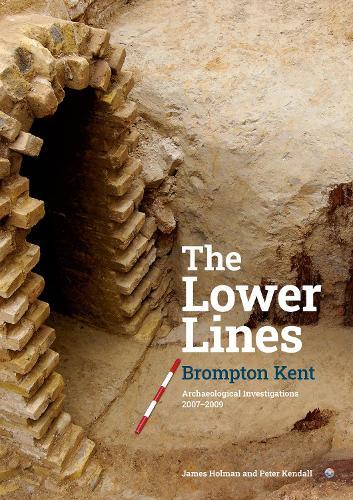
OverviewThe Lower Lines formed a key part of the defences of Chatham Dockyard during the early part of the nineteenth century. While they were never used in combat, they became the focus for siege training during the later part of the century, and for the development of innovative new military technologies by the Royal Engineers. Latterly they were repurposed during the Second World War as part of the land defences for the Nore Command. The archaeological work undertaken between 2007 and 2009 focussed on two sites, at Mid Kent College and the Black Lion Leisure Centre. This work allowed study of the defences, but also provided an opportunity to investigate how the Royal Engineers were using the area. They constructed elaborate siege exercises, involving many hundreds of men while also experimenting with new technologies such as electric searchlights. The archaeology together with contemporary records allow an intimate picture of what was taking place on the site throughout the nineteenth and into the twentieth centuries. Full Product DetailsAuthor: James Holman , Peter KendallPublisher: Canterbury Archaeological Trust Ltd Imprint: Canterbury Archaeological Trust Ltd ISBN: 9781870545419ISBN 10: 1870545419 Pages: 112 Publication Date: 31 August 2023 Audience: College/higher education , Postgraduate, Research & Scholarly Format: Paperback Publisher's Status: Active Availability: In Print This item will be ordered in for you from one of our suppliers. Upon receipt, we will promptly dispatch it out to you. For in store availability, please contact us. Table of ContentsChapter 1 _x000D_ _x000D_ Introduction_x000D_ _x000D_ A brief background_x000D_ _x000D_ Site location, geology and topography_x000D_ _x000D_ Project design, methodology and archive_x000D_ _x000D_ ┬á_x000D_ _x000D_ Chapter 2 _x000D_ _x000D_ The 1803 addition of Lower Lines and barracks at Chatham_x000D_ _x000D_ Overview_x000D_ _x000D_ The construction of the Lower Lines_x000D_ _x000D_ The rampart_x000D_ _x000D_ The ditch_x000D_ _x000D_ The glacis_x000D_ _x000D_ The Field of Fire_x000D_ _x000D_ Countermining_x000D_ _x000D_ ┬á_x000D_ _x000D_ Chapter 3_x000D_ _x000D_ The 1812 Royal Engineers establishment and siege training_x000D_ _x000D_ Overview_x000D_ _x000D_ The use of the Chatham Lines for training_x000D_ _x000D_ Interpreting the evidence_x000D_ _x000D_ The end of siege training at the Lower Lines_x000D_ _x000D_ ┬á_x000D_ _x000D_ Chapter 4_x000D_ _x000D_ Technological developments of the late nineteenth century_x000D_ _x000D_ Overview_x000D_ _x000D_ The development of searchlights_x000D_ _x000D_ Early experimentation at the Chatham Lines_x000D_ _x000D_ Further experimentation_x000D_ _x000D_ ┬á_x000D_ _x000D_ Chapter 5_x000D_ _x000D_ The Twentieth Century_x000D_ _x000D_ Overview_x000D_ _x000D_ Admiralty House_x000D_ _x000D_ The First World War_x000D_ _x000D_ The Second World War_x000D_ _x000D_ Post 1945 ÔÇô Cold War period_x000D_ _x000D_ ┬á_x000D_ _x000D_ Chapter 6 _x000D_ _x000D_ Overview_x000D_ _x000D_ ┬á_x000D_ _x000D_ Glossary_x000D_ _x000D_ BibliographyReviewsAuthor InformationJames has worked for C*A*T as a field archaeologist and latterly a project manager for twenty years, though he is originally from Norfolk. His main area of interest is medieval urban archaeology, particularly that relating to small towns such as New Romney. Tab Content 6Author Website:Countries AvailableAll regions |
||||