Overview
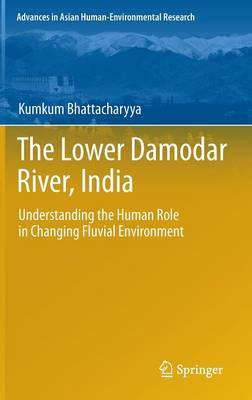
Interweaving the human aspects of river control with analysis of hydro-physical data, including historical data over the last few centuries, this monograph is a comprehensive evaluation of the Damodar’s lower reaches. While the Damodar River isn’t an exceptional tropical river, nor does it feature classic examples of river control structures, it is unusual and worthy of study due to the fact that nowhere else in the tropical world have riverine sandbars been used as a resource base as well as for permanent settlements. Based on their knowledge of river stages, the inhabitants have fine-tuned their land use to flood events, applying a concept of flood zoning to the riverbed. Every available space has been utilized rationally and judiciously. This rare human-environmental study analyzes the remarkable way in which immigrants unfamiliar with the riverine environment have adapted to the altered hydrologic regime of the river. In doing so they have demonstrated a sophisticated understanding of the flood regime and the vagaries of an unpromising environment in their land use, cropping and settlement patterns. Spurred on by restricted social and economic mobility and sometimes political constraints, these self-settled refugees have learned to adapt to their environment and live with the floods. Bhattacharyya’s text is particularly timely, as anthropogenic processes of this kind have not been adequately studied by geographers.
Full Product Details
Author: Kumkum Bhattacharyya
Publisher: Springer
Imprint: Springer
Edition: 2011 ed.
Volume: 3
Dimensions:
Width: 15.50cm
, Height: 2.30cm
, Length: 23.50cm
Weight: 0.738kg
ISBN: 9789400704664
ISBN 10: 9400704666
Pages: 308
Publication Date: 31 March 2011
Audience:
Professional and scholarly
,
Professional & Vocational
Format: Hardback
Publisher's Status: Active
Availability: In Print

This item will be ordered in for you from one of our suppliers. Upon receipt, we will promptly dispatch it out to you. For in store availability, please contact us.
Reviews
Endorsement: Bhattacharyya's superb study describes and analyzes the interrelationship of geomorphic setting, resource base, perceived environment and social space as well as the role of legal structures, economic geography and infrastructure in accounting for the way society has adapted to, altered and utilized a once natural dynamic environment. Through historical reconstruction of the riverine scene along with marshalling of data on river behavior and social change, including the presentation of detailed studies of settlements within the alluvial bottomland brought to life with excellent maps, the author makes clear how people, ranging from refugees to local settlers have transformed the landscape driven by diverse cultural, economic, religious, and political forces. The author's description of the sophisticated way in which environment, social status, and culture are interwoven in the distribution of crops and associated microtopography is masterful . (Prof. M. Gordon Wolman, Department of Geography and Environmental Engineering, The Johns Hopkins University, Baltimore, MD, USA)
From the reviews: The material presented in this book is based on the author's seven years of extensive research and is supported by an extensive literature review. The book will be a good addition to the library of engineers, policy makers, geographers, geomorphologists, environmentalists, and ecologists who are concerned with river training and control. ... The author should be complimented for preparing a well-written treatise on a most interesting topic-the role humans play in changing the fluvial environment. (Vijay P. Singh and C. Prakash Khedun, Journal of Hydrologic Engineering, Vol. 19, March, 2014)
Endorsement: Bhattacharyya's superb study describes and analyzes the interrelationship of geomorphic setting, resource base, perceived environment and social space as well as the role of legal structures, economic geography and infrastructure in accounting for the way society has adapted to, altered and utilized a once natural dynamic environment. Through historical reconstruction of the riverine scene along with marshalling of data on river behavior and social change, including the presentation of detailed studies of settlements within the alluvial bottomland brought to life with excellent maps, the author makes clear how people, ranging from refugees to local settlers have transformed the landscape driven by diverse cultural, economic, religious, and political forces. The author's description of the sophisticated way in which environment, social status, and culture are interwoven in the distribution of crops and associated microtopography is masterful . (Prof. M. Gordon Wolman, Department of Geography and Environmental Engineering, The Johns Hopkins University, Baltimore, MD, USA)