Overview
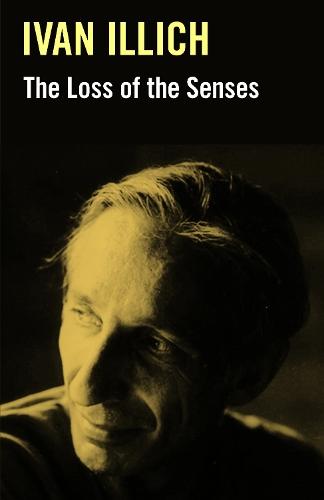
The Loss of the Senses comprises seventeen essays that Ivan Illich (1926-2022) wrote between 1987 and 1998 and continued to edit until the end of his life. This collection is unknown to the English-speaking world. The essays cut across academic disciplines and range over different facets of contemporary life. Included among the many topics are the roots of the service economy, the history of the gaze, the idea of technology as a Western invention, and the co-related eclipse of the university and the text in the twenty-first century. Despite the variety of subjects treated, these essays cohere for two reasons. As Illich’s Deschooling Society and Medical Nemesis did before, they confirm that being immersed in a technological milieu disables our native capacities to learn, heal, and move. Furthermore, they imply that we must deeply historicize the present to rightly understand the nature and effects of present-day socio-technical systems. The Loss of the Senses holds up “the mirror of the past,” in which Illich recognizes the looming figure of the contemporary man without senses. He incisively argues that the techno-scientific cloud that now envelops us withers the realm of our felt experience. For example, our “age of the show” yokes the ubiquitous screen to an eye that can no longer see but, like a camera, can only record what it is shown. Illich also reminds us of the ever-present possibility of “ascetical practices” that can enliven our senses and thwart the dissolution of our embodied sensibilities.
Full Product Details
Author: Ivan Illich
Publisher: Equinox Publishing Ltd
Imprint: Equinox Publishing Ltd
ISBN: 9781800508644
ISBN 10: 1800508646
Pages: 180
Publication Date: 01 May 2026
Audience:
College/higher education
,
Postgraduate, Research & Scholarly
Format: Paperback
Publisher's Status: Forthcoming
Availability: Not yet available

This item is yet to be released. You can pre-order this item and we will dispatch it to you upon its release.
Author Information
Ivan Illich (1926-2002) was one of the most original social and religious thinkers of the 20th Century. Ordained a Roman Catholic priest in 1951, he became an advocate of a “new Church” and a critic of the existing form of the Roman Church which he called “a giant that begins to totter before it collapses.” The novelty of his ideas antagonized conservative forces in the Church, and he ended the controversy his advocacy had stirred up at the Vatican by announcing in 1969 that he would suspend the exercise of his priesthood and proceed, in future, “as a simple faithful Christian.” There followed a sequence of five books, beginning with 1970’s Celebration of Awareness, calling for “institutional revolution,” or sometimes “cultural revolution.” Industrial institutions, from education (Deschooling Society) to medicine (Limits to Medicine), Illich wrote, were crossing a threshold into “counter-productivity,” a condition in which they would get in their own way and defeat their own purposes He also suggested that crucial personal and cultural competencies were being lost to growing professional and institutional predominance. When the institutional revolution Illich proposed did not take place, he turned to the study of history in an attempt to unearth the roots of the “certainties” that had prevented reform. In books like Shadow Work, Gender and In the Vineyard of the Text, he explored how modern civilization took shape and tried, as he once said, to “observe the emergence of those assumptions which, by going unexamined, have turned into today’s certainties.” (Ivan Illich in Conversation, pp. 134-135). In his last years, Illich also began to speak and write about the role of the Christian Church in the formation of the modern West, putting forward the idea that the unique features of modernity are only explainable as a perverse mutation of Christian inspiration. “When I look for the roots of modernity,” he said, “I find them in the attempts of the churches to institutionalize, legitimize and manage Christian vocation” (The Rivers North of the Future, p. 48).