Overview
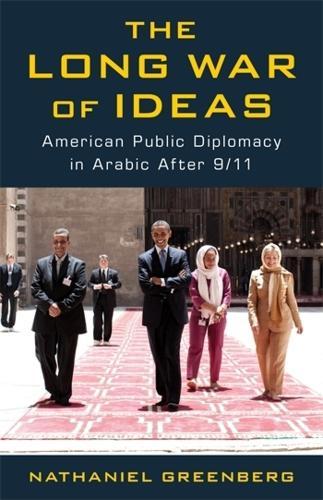
In the wake of the September 11 attacks, US officials identified the so-called battle for hearts and minds as the “second front” in the war on terror. A wave of funding flowed into public diplomacy in the Middle East, seeking to change views of the United States through Arabic-language communications—often while hiding the traces of American origins. To what extent did this vast propaganda apparatus sway Arab public opinion? Which ideas and actors shaped American public diplomacy in this period? What are the lessons for information strategy today? This groundbreaking book tells the story of American propaganda campaigns in the Middle East after 9/11, drawing on in-depth interviews with key players and previously classified documents. Nathaniel Greenberg shows how the United States tried to control perceptions of its response to 9/11 through news and entertainment, and reveals that Arab governments and unofficial actors were involved—knowingly or not—in distributing US propaganda. He explores the institutions, strategy, and rhetoric deployed in the war on terror, placing them in the context of American and Soviet influence campaigns during the Cold War. Greenberg argues that US government-backed broadcasting laid the groundwork for global information warfare, such as the rise of competing Russian and Chinese state media operations. Shedding light on the ideological underpinnings of American propaganda in Arabic after 9/11, The Long War of Ideas offers new insight into soft power in the twenty-first century.
Full Product Details
Author: Nathaniel Greenberg
Publisher: Columbia University Press
Imprint: Columbia University Press
ISBN: 9780231215961
ISBN 10: 0231215967
Pages: 352
Publication Date: 03 March 2026
Audience:
Professional and scholarly
,
Professional & Vocational
Format: Paperback
Publisher's Status: Forthcoming
Availability: Not yet available

This item is yet to be released. You can pre-order this item and we will dispatch it to you upon its release.
Reviews
Written with deep knowledge of Middle East culture, Greenberg’s book is a meticulous deconstruction of a largely futile public diplomacy campaign. This is an exemplary work that needs to be read by scholars of US foreign policy and the Arab world and anyone interested in public diplomacy. -- Nicholas J. Cull, author of <i>Public Diplomacy: Foundations for Global Engagement in the Digital Age</i> The Long War of Ideas presents a riveting, deeply researched and often entertaining tour of decades of open and covert American efforts to influence Arab public opinion through the media. It is essential reading for anyone seeking to understand why those expensive programs have so often failed—and how the United States might better engage with the world. -- Marc Lynch, author of <i>The New Arab Wars: Anarchy and Uprising in the Middle East</i>
Written with deep knowledge of Middle East culture, Greenberg’s book is a meticulous deconstruction of a largely futile public diplomacy campaign. This is an exemplary work that needs to be read by scholars of US foreign policy and the Arab world and anyone interested in public diplomacy. -- Nicholas J. Cull, author of <i>Public Diplomacy: Foundations for Global Engagement in the Digital Age</i> The Long War of Ideas presents a riveting, deeply researched and often entertaining tour of decades of open and covert American efforts to influence Arab public opinion through the media. It is essential reading for anyone seeking to understand why those expensive programs have so often failed -- and how the US might better engage with the world. -- Marc Lynch, author of <i>The New Arab Wars: Anarchy and Uprising in the Middle East</i>
Author Information
Nathaniel Greenberg is associate professor of Arabic at George Mason University. His books include How Information Warfare Shaped the Arab Spring: The Politics of Narrative in Tunisia and Egypt (2019).