Overview
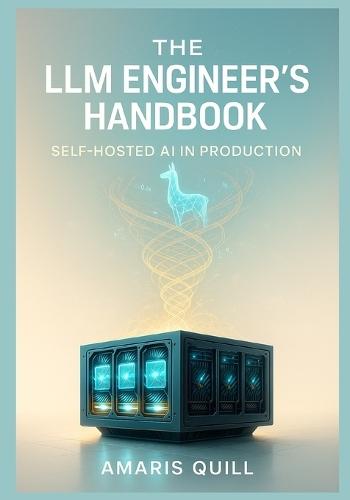
Master the complete lifecycle of self-hosted large language model deployments-from infrastructure design to production operations. In an era where data sovereignty, security compliance, and cost control are paramount, organizations are increasingly moving away from cloud-based API services toward self-hosted AI infrastructure. The LLM Engineer's Handbook is the definitive technical guide for engineers, architects, and technical leaders who need to deploy, optimize, and maintain production-grade LLM systems within their own infrastructure. This comprehensive resource bridges the gap between theoretical AI concepts and real-world implementation, providing battle-tested strategies for running models like LLaMA, Mistral, and other open-source language models in secure, on-premises environments. Whether you're building HIPAA-compliant healthcare systems, implementing air-gapped deployments for government applications, or optimizing inference costs for high-throughput enterprise services, this book delivers the practical knowledge you need. What You'll Learn: Infrastructure Design: Plan and build GPU clusters with optimal hardware configurations, network topologies, and cooling systems for cost-effective, high-performance deployments Security & Compliance: Implement enterprise-grade security frameworks including air-gapped architectures, encryption standards, and compliance tracking for GDPR, HIPAA, and SOC 2 Model Optimization: Master quantization techniques (GPTQ, GGUF, AWQ) to reduce memory footprint while preserving model quality, and implement advanced inference optimizations like Flash Attention and speculative decoding Production Serving: Design robust API gateways, implement load balancing strategies, and deploy inference servers (vLLM, TGI, Triton) that scale from prototype to production Fine-Tuning at Scale: Apply LoRA, QLoRA, and RLHF techniques to customize models for domain-specific applications while managing distributed training infrastructure Advanced Architectures: Build RAG systems with vector databases, implement multi-model routing strategies, and orchestrate complex agent-based workflows Operations Excellence: Establish comprehensive monitoring, observability, and incident response procedures to maintain reliable production systems Who This Book Is For: Machine learning engineers transitioning from cloud APIs to self-hosted infrastructure DevOps and platform engineers building AI infrastructure for their organizations Technical architects designing secure, compliant AI systems for regulated industries Data scientists seeking to understand production deployment considerations Engineering leaders evaluating build-vs-buy decisions for LLM capabilities Unlike generic AI tutorials focused on high-level concepts or cloud-hosted solutions, this handbook provides the deep technical detail required for successful self-hosted deployments. Every chapter includes practical implementation guidance, architectural decision frameworks, and real-world trade-off analysis to help you navigate the complexities of production LLM systems. From selecting the right GPU hardware and configuring quantization parameters to implementing fault-tolerant training pipelines and debugging inference bottlenecks, The LLM Engineer's Handbook equips you with the expertise to build AI systems that meet enterprise requirements for performance, security, and reliability-all while maintaining complete control over your data and infrastructure.
Full Product Details
Author: Amaris Quill
Publisher: Independently Published
Imprint: Independently Published
Dimensions:
Width: 17.80cm
, Height: 1.40cm
, Length: 25.40cm
Weight: 0.463kg
ISBN: 9798277720141
Pages: 264
Publication Date: 06 December 2025
Audience:
General/trade
,
General
Format: Paperback
Publisher's Status: Active
Availability: Available To Order

We have confirmation that this item is in stock with the supplier. It will be ordered in for you and dispatched immediately.