Overview
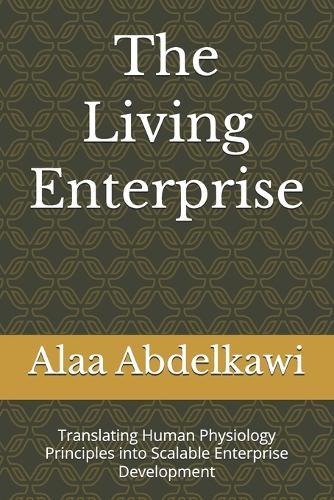
In an era defined by volatility, uncertainty, complexity, and ambiguity (VUCA), the enduring question for leaders is no longer simply how to manage an organization, but how to cultivate an organization that can truly live - that is, adapt, evolve, and thrive. Traditional management paradigms, often rooted in mechanical or industrial-era thinking, treat organizations as machines. They focus on efficiency, control, and predictable outcomes, viewing human capital as a resource to be optimized, rather than as the vital, dynamic component it truly is. The stark reality is that this mechanistic approach often leads to brittle structures, slow adaptation, and a disconnect from the very humans who power these entities. Organizations designed like machines break under pressure; they falter when faced with unexpected environmental shifts, and they struggle to foster the genuine innovation required for long-term viability. The failures are evident all around us: companies that are too rigid to respond to market shifts, communication breakdowns that cripple decision-making, cultures that stifle creativity, and workforces that are disengaged. These are not merely tactical errors; they are systemic pathologies, symptomatic of organizational designs that lack inherent resilience and adaptive intelligence. Why do so many organizations struggle to thrive, even with brilliant strategies and dedicated people? The answer, we propose lies in our underlying conceptual models. We have been trying to build living entities with blueprints designed for inanimate objects. This book offers a radical yet profoundly practical re-framing: the human body as the ultimate blueprint for organizational design. For eons, biological systems, particularly the human organism, have perfected the art of complex coordination, resilience, and adaptation. They achieve homeostasis, maintain intricate communication networks, process vast amounts of information, renew themselves, and respond dynamically to internal and external stimuli - all while pursuing a fundamental purpose: survival and propagation. By drawing parallels between the intricate physiological systems of the body and the core functions of an organization, we can unlock powerful insights for building more effective, adaptable, and enduring enterprises. This interdisciplinary approach is not an exercise in poetic metaphor; it is a pragmatic framework for understanding and improving organizational dynamics. By applying biological principles such as self-organization, emergent properties, and homeostatic regulation to organizational challenges, leaders can move beyond superficial fixes to engineer deeper, more sustainable solutions. We will explore how a company's supply chain issues can be viewed as a circulatory blockage, how a lack of clear communication mirrors a dysfunctional nervous system, or how a rigid hierarchy is akin to ossified bones, hindering agility. The promise of this 'living enterprise' paradigm is substantial. It offers a vision of enterprises that are not only efficient but also agile; not just profitable but also resilient; not merely structured but also dynamic. It leads to organizations that can sense and respond to change, foster genuine innovation, and cultivate deeply engaged workforces. This book is an invitation to see your organization through a new lens, to understand its complex biological underpinnings, and to lead it toward a future of sustained vitality and purpose.
Full Product Details
Author: Alaa Abdelkawi
Publisher: Independently Published
Imprint: Independently Published
Dimensions:
Width: 15.20cm
, Height: 1.70cm
, Length: 22.90cm
Weight: 0.413kg
ISBN: 9798243356404
Pages: 308
Publication Date: 10 January 2026
Audience:
General/trade
,
General
Format: Paperback
Publisher's Status: Active
Availability: Available To Order

We have confirmation that this item is in stock with the supplier. It will be ordered in for you and dispatched immediately.