|
|
|||
|
||||
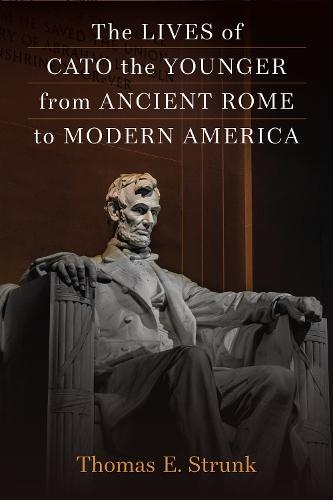
OverviewThe Lives of Cato the Younger from Ancient Rome to Modern America traces the reception and influence of Cato from his suicide at the fall of the Roman Republic to the twenty-first century. In preferring death to Julius Caesar’s dictatorship, Cato became a symbol of resistance to tyrannical rulers during the Roman Empire. In the years that followed, three interpretations of Cato became predominant: Cato lived and died with the resolve of a philosopher; he was a traitor to Caesar’s legitimate rule; or he was a republican statesman defending liberty. Beginning with these interpretations, Thomas E. Strunk explores Cato’s reception in antiquity with chapters on Tacitus and Plutarch; and he later discusses medieval Christian writers such as Augustine, who considered Cato’s suicide sinful, and Dante, who made him the noble guardian of Purgatory. In Europe, playwrights composed dramas on Cato’s death that ignited the revolutionary spirit of the age, later inspiring American General George Washington and his soldiers. Abolitionists such as Frederick Douglass invoked Cato and his revolutionary spirit, yet after the American Civil War, Cato’s name was appropriated as a symbol of allegiance for Confederates and their descendants, and lines memorializing Cato were inscribed on the Confederate Memorial at Arlington Cemetery. As the first book to provide an in-depth study of Cato and his lasting influence, Strunk’s study seeks to explore the contemporary nature of his principles and their influence on present-day American politics. Full Product DetailsAuthor: Thomas E. StrunkPublisher: The University of Michigan Press Imprint: The University of Michigan Press ISBN: 9780472133642ISBN 10: 0472133640 Pages: 276 Publication Date: 06 January 2026 Audience: College/higher education , Postgraduate, Research & Scholarly Format: Hardback Publisher's Status: Active Availability: In Print This item will be ordered in for you from one of our suppliers. Upon receipt, we will promptly dispatch it out to you. For in store availability, please contact us. Table of ContentsAcknowledgments List of Illustrations I. Introduction: A Life of Cato the Younger II. Pamphleteers and Slanderers: The Three Catos in the Age of Caesar III. The Stoic Philosopher and the Radical Republican: Seneca and Lucan on Cato IV. A Republican under the Caesars: Cato in the Writings of Tacitus and Plutarch V. Sinner or Saint? Cato in Early and Medieval Christian Writers VI. Cato of Utica Takes Center Stage: Cato in 18th Century European Drama VII. Revolutionaries, Abolitionists, and Confederates: Cato in the United States VIII. Conclusion: A Cato for the 21st Century Bibliography Index of Passages Cited General IndexReviewsAuthor InformationThomas E. Strunk is Associate Professor of Classics at Xavier University. He is the author of History after Liberty: Tacitus on Tyrants, Sycophants, and Republicans (2017) and The Fall of the Roman Republic: Lessons for the American People (2022). Tab Content 6Author Website:Countries AvailableAll regions |
||||