Overview
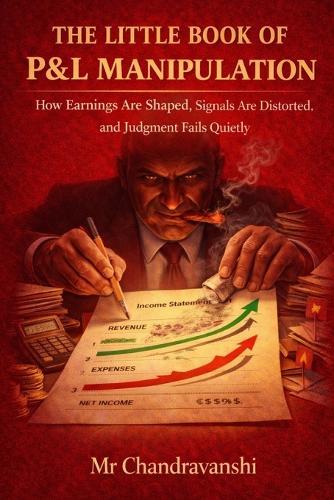
Profits don't fail because they're false. They fail because they're believable. The Little Book of P&L Manipulation is not about fraud. It is not about tricks. And it is not about catching bad actors. It is about something more common-and more dangerous. How earnings are shaped in plain sight. How reasonable choices distort signals. And how judgment quietly fails when numbers feel precise, audited, and complete. Most people think profit-and-loss statements report outcomes. They don't. They report decisions about timing, classification, and tolerance-made long before results appear. Revenue is recognized before cash arrives. Costs are delayed, capitalized, or softened. ""One-time"" items recur. Adjusted numbers become the real numbers. And confidence forms not because reality improved-but because discomfort was postponed. Nothing illegal happens. Nothing dramatic appears early. That is why it works. This book explains why intelligent readers miss risk even when all the information is disclosed. Why stable margins in unstable businesses feel reassuring. Why growth looks earned while demand is borrowed. Why EBITDA comforts instead of clarifies. Why guidance controls expectations rather than predicts outcomes. And why analyst consensus always arrives after flexibility is gone. You will not find formulas here. You will not be told what to buy or sell. You will not be offered protection, certainty, or shortcuts. Instead, you will see the structural mechanics that quietly reshape earnings: - Why profits feel real long before reality is settled - How revenue is a decision, not an event - Where costs are delayed-and why they always return - How margin expansion can hide pressure rather than skill - Why smooth earnings often signal containment, not control - How growth is engineered through timing, not demand - Why ""one-time"" items rarely leave - How segment reporting diffuses accountability - Why clean audits end curiosity, not risk - How quarter ends compress judgment - Why analysts are late by design - How EBITDA, guidance, and adjusted metrics reinforce self-deception - What real strength looks like when earnings are allowed to look ugly - Why boring profits survive cycles that impressive ones don't Every chapter focuses on patterns that repeat across industries and cycles-not because people fail to learn, but because financial systems reward smoothness, continuity, and explainability. Earnings that look orderly calm the mind. Calm ends questioning. And once questioning stops, risk accumulates quietly. This book does not accuse companies. It does not claim manipulation by intent. It does not promise better outcomes. It restores correct attribution. It explains why problems felt manageable for so long. Why delay felt responsible. Why confidence arrived early. And why recognition arrived late. If you are looking for reassurance, this book will disappoint you. If you want to understand why ""nothing felt wrong"" right before outcomes broke, this book will feel uncomfortably familiar. Read it slowly. Not to learn accounting. But to see what earnings allowed you to stop questioning. Because the most dangerous moment is not when profits fall. It's when they look perfectly fine. Regards, Nishant Chandravanshi
Full Product Details
Author: MR Chandravanshi
Publisher: Independently Published
Imprint: Independently Published
Dimensions:
Width: 15.20cm
, Height: 1.70cm
, Length: 22.90cm
Weight: 0.426kg
ISBN: 9798243421591
Pages: 318
Publication Date: 10 January 2026
Audience:
General/trade
,
General
Format: Paperback
Publisher's Status: Active
Availability: Available To Order

We have confirmation that this item is in stock with the supplier. It will be ordered in for you and dispatched immediately.