Overview
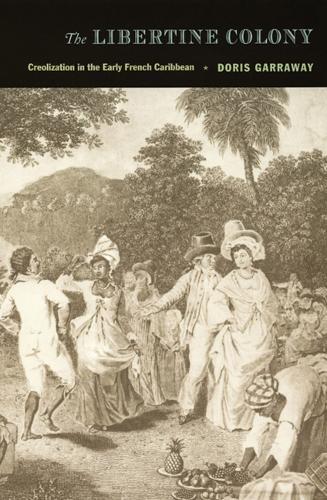
Presenting incisive original readings of French writing about the Caribbean from the inception of colonization in the 1640s until the onset of the Haitian Revolution in the 1790s, Doris Garraway sheds new light on a significant chapter in French colonial history. At the same time, she makes a path-breaking contribution to the study of the cultural contact, creolization, and social transformation that resulted in one of the most profitable yet brutal slaves societies in history. Garraway's readings highlight how French colonial writers characterized the Caribbean as a space of spiritual, social, and moral depravity. While tracing this critique in colonial accounts of Island Carib cultures, piracy, spirit beliefs, slavery, miscegenation, and incest, Garraway develops a theory of ""the libertine colony."" She argues that desire and sexuality were fundamental to practices of domination, laws of exclusion, and constructions of race in the slave societies of the colonial French Caribbean. Among the texts Garraway analyzes are missionary histories by Jean-Baptiste Du Terte, Raymond Breton, and Jean-Baptist Labat; narratives of adventure and transgression written by pirates and others outside the official civil and religious power structure; travel accounts; treatises on slavery and colonial administration in Saint-Domingue; the first colonial novel written in French; and the earliest linguistic description of the native Carib language. Garraway also analyzes legislation--including the Code noir--that codified slavery and other racialized power relations. The Libertine Colony is both a rich cultural history of creolization as revealed in Francophone colonial literature and an important intervention into theoretical arguments about how literary critics and historians should approach colonial discourse and cultural representations of slave societies.
Full Product Details
Author: Doris L Garraway
Publisher: Duke University Press
Imprint: Duke University Press
Dimensions:
Width: 16.00cm
, Height: 3.00cm
, Length: 23.60cm
Weight: 0.753kg
ISBN: 9780822334538
ISBN 10: 0822334534
Pages: 408
Publication Date: 08 July 2005
Audience:
Professional and scholarly
,
Professional & Vocational
Format: Hardback
Publisher's Status: Active
Availability: In Print

This item will be ordered in for you from one of our suppliers. Upon receipt, we will promptly dispatch it out to you. For in store availability, please contact us.
Reviews
Extremely well written, with a wonderful balance between impeccable scholarship and theoretical sophistication, The Libertine Colony is a very important contribution to postcolonial studies and the study of Caribbean literature and history. --Peter Hulme, author of Remnants of Conquest: The Island Caribs and their Visitors, 1877-1998 An inquiry into the limitless ambiguity of violence, lust, and law in the early French Caribbean, The Libertine Colony is a daring scholarly feat. A model of convergence for its contribution across disciplinary boundaries, this book not only challenges how we read Old Regime colonial narratives but prompts us to think again about the proximity of the common and the sacred. In giving a detailed history to the vagaries of colonial slavery, Doris Garraway confronts the gist of torture in those realms that most seem to deny it. In fascinating detail, she rethinks conceits of love as she exhumes rituals of belief. --Joan Dayan, author of Haiti, History, and the Gods Jeremy Popkin, H-France, H-Net Reviews Garraway's enthralling analysis revisits significant seventeenth-and-eighteenth-century texts ... to explore the racial, cultural, and sexual interaction between the French, the swiftly annihilated indigenous population of the West Indies, and imported Africans. --Roger Little, Modern Language Review The Libertine Colony offers complex and varied readings of a series of important primary published texts that many historians have used, more or less critically, to pin down the history of the islands colonized by the French in the seventeenth and eighteenth centuries ... Insighfrul and serious ... --Sue Peabody, Itinerario This excellent book represents a ground-breaking work of scholarship in an essential but long-neglected area of Caribbean Studies: the genesis and construction of those early historical and ethnographic narratives, written largely by members of the clergy and the established social hierarchy from mainland France, that provided the framework for the study of the social inequities, physical brutality, and outright racism that was subsequently to characterize the French colonial encounter in the Caribbean. --H. Adlai Murdoch, Research in African Literatures A dense, imaginative book... Garraway's book deserves to be read and debated because of her admirable immersion in the primary printed and secondary historical literature, and because this brief review cannot plumb the depth and complexities of her work. -- Philip P. Boucher, American Historical Review Garraway's analytical insights are penetrating and sophisticated. The Libertine Colony is a remarkable achievement that transforms our understanding of eighteenth century Caribbean culture... It deserves a wide readership. -- Joe Brooker, Textual Practice
An inquiry into the limitless ambiguity of violence, lust, and law in the early French Caribbean, The Libertine Colony is a daring scholarly feat. A model of convergence for its contribution across disciplinary boundaries, this book not only challenges how we read Old Regime colonial narratives but prompts us to think again about the proximity of the common and the sacred. In giving a detailed history to the vagaries of colonial slavery, Doris Garraway confronts the gist of torture in those realms that most seem to deny it. In fascinating detail, she rethinks conceits of love, as she exhumes rituals of belief. -Joan Dayan, author of Haiti, History, and the Gods Extremely well written, with a wonderful balance between impeccable scholarship and theoretical sophistication, The Libertine Colony is a very important contribution to postcolonial studies and the study of Caribbean literature and history. -Peter Hulme, author of Remnants of Conquest: The Island Caribs and their Visitors, 1877-1998 The Libertine Colony ... is a model scholarly work. The writer excels at keeping the theoretical perspective to a minimum so as not to impede the reading. As a result, the reader is hardly ever overwhelmed by the analytical terminology... The Libertine Colony is an invaluable addition to the field of postcolonial studies. One can only wish that a French translation will soon be available for the benefit of the French-speaking readership. -- Alix Pierre, Caribbean Studies Garraway's analysis will challenge, enlighten, and sometimes stupefy historians... [H]er book deserves to be read and debated because of her admirable immersion in the primary printed and secondary historical literature, and because this brief review cannot plumb the depth and complexities of her work. -- Phillip P. Boucher, American Historical Review This book will prove useful to scholars interested in literature, history, the Caribbean, and colonialism. Garraway's attention to terms and tropes, i.e., the distinction between flibustiers and buccaneers, the etymology of 'cannibal,' and the development of the figure of the 'zombie,' adds to its appeal for use in some undergraduate courses. Also valuable are her examination of images from several print documents and her care to situate authors and provide detailed publishing histories. -- Aletha D. Stahl, French Review
An inquiry into the limitless ambiguity of violence, lust, and law in the early French Caribbean, The Libertine Colony is a daring scholarly feat. A model of convergence for its contribution across disciplinary boundaries, this book not only challenges how we read Old Regime colonial narratives but prompts us to think again about the proximity of the common and the sacred. In giving a detailed history to the vagaries of colonial slavery, Doris Garraway confronts the gist of torture in those realms that most seem to deny it. In fascinating detail, she rethinks conceits of love, as she exhumes rituals of belief. -Joan Dayan, author of Haiti, History, and the Gods Extremely well written, with a wonderful balance between impeccable scholarship and theoretical sophistication, The Libertine Colony is a very important contribution to postcolonial studies and the study of Caribbean literature and history. -Peter Hulme, author of Remnants of Conquest: The Island Caribs and their Visitors, 1877-1998 The Libertine Colony ... is a model scholarly work. The writer excels at keeping the theoretical perspective to a minimum so as not to impede the reading. As a result, the reader is hardly ever overwhelmed by the analytical terminology... The Libertine Colony is an invaluable addition to the field of postcolonial studies. One can only wish that a French translation will soon be available for the benefit of the French-speaking readership. -- Alix Pierre Caribbean Studies Garraway's analysis will challenge, enlighten, and sometimes stupefy historians... [H]er book deserves to be read and debated because of her admirable immersion in the primary printed and secondary historical literature, and because this brief review cannot plumb the depth and complexities of her work. -- Phillip P. Boucher, American Historical Review This book will prove useful to scholars interested in literature, history, the Caribbean, and colonialism. Garraway's attention to terms and tropes, i.e., the distinction between flibustiers and buccaneers, the etymology of 'cannibal,' and the development of the figure of the 'zombie,' adds to its appeal for use in some undergraduate courses. Also valuable are her examination of images from several print documents and her care to situate authors and provide detailed publishing histories. -- Aletha D. Stahl, French Review
Author Information
Doris Garraway is Assistant Professor of French at Northwestern University.